The authors warn that widening U.S. and Israeli strikes against Iranian infrastructure risks inflicting greater civilian suffering without producing strategic victory. Historical cases — from the Gulf War to Kosovo and Ukraine — show that attacks on dual-use infrastructure often harden national resolve rather than force capitulation. The piece cautions that President Trump's apocalyptic threats and an expanding target list raise serious legal, humanitarian and geopolitical risks that policymakers must weigh carefully.
Threatening to Bomb Iran 'Back to the Stone Ages' Is Likely to Backfire — Lessons From Past Wars

Modern conflicts often begin with strikes on military installations and can escalate into deliberate attacks on the infrastructure that sustains civilian life. The United States and Israel opened their campaign against Iran by hitting leadership targets, nuclear sites, command centers, air defenses and missile launch facilities. In recent weeks, strikes have widened to include bridges, rail lines, ports and energy infrastructure.
Historic Pattern: Escalation When Initial Strikes Fail
From Vietnam to Iraq, Kosovo to Ukraine, political and military leaders frequently expect short, decisive campaigns. When early air strikes fail to achieve political objectives, leaders often expand their target lists in the belief that imposing severe economic costs and civilian hardship will force capitulation. In practice, widening strikes usually increases humanitarian suffering without delivering the desired strategic results.
Why Bombing Infrastructure Rarely Produces Capitulation
Scholars of air power, including Robert Pape, have shown that bombing alone seldom compels surrender. Attacks that inflict widespread civilian hardship tend to harden national resolve rather than erode it. British resilience during the Blitz, North Vietnam's endurance under Operation Rolling Thunder, and Ukraine's response to systematic strikes on its electrical grid all illustrate how populations and regimes can rally when vital infrastructure is attacked.
Case Studies
1991 Gulf War. Coalition strikes damaged Iraq's electrical grid, bridges, transport networks, oil facilities and defense industries. Although many targets supported military operations, their destruction also disrupted food distribution, hospitals, water treatment and economic life — imposing long-term civilian costs. Ultimately, a ground invasion was required to expel Iraqi forces from Kuwait.
1999 Kosovo Campaign. NATO began by targeting air defenses and command-and-control nodes. When ethnic cleansing continued, NATO widened strikes to include government ministries, the electrical grid, bridges, refineries and broadcast facilities. Large-scale blackouts disrupted both military communications and essential civilian services, prompting accusations of war crimes; subsequent legal review found no deliberate targeting of civilians but acknowledged serious mistakes and legal ambiguities.
2022 Russia–Ukraine War. After initial battlefield setbacks, Russia expanded attacks on Ukrainian infrastructure to degrade defense production, sap morale and render parts of the country unlivable. Instead of forcing surrender, these attacks strengthened Ukrainian resolve and drew widespread international condemnation, including arrest warrants issued by the International Criminal Court against top Russian officials.
Law of Armed Conflict and Dual-Use Targets
International humanitarian law forbids intentionally targeting civilians or purely civilian infrastructure. Many installations, however, serve both civilian and military functions: railways carry commuters and troops; power plants feed hospitals and radar installations. Such 'dual-use' targets may be attacked only if their destruction offers a definite military advantage and if the expected civilian harm is not excessive in relation to that advantage. In prolonged conflicts, states often broaden their interpretations of what counts as a military objective, increasing legal and moral risks.
Rhetoric, Threats, and Policy Risks
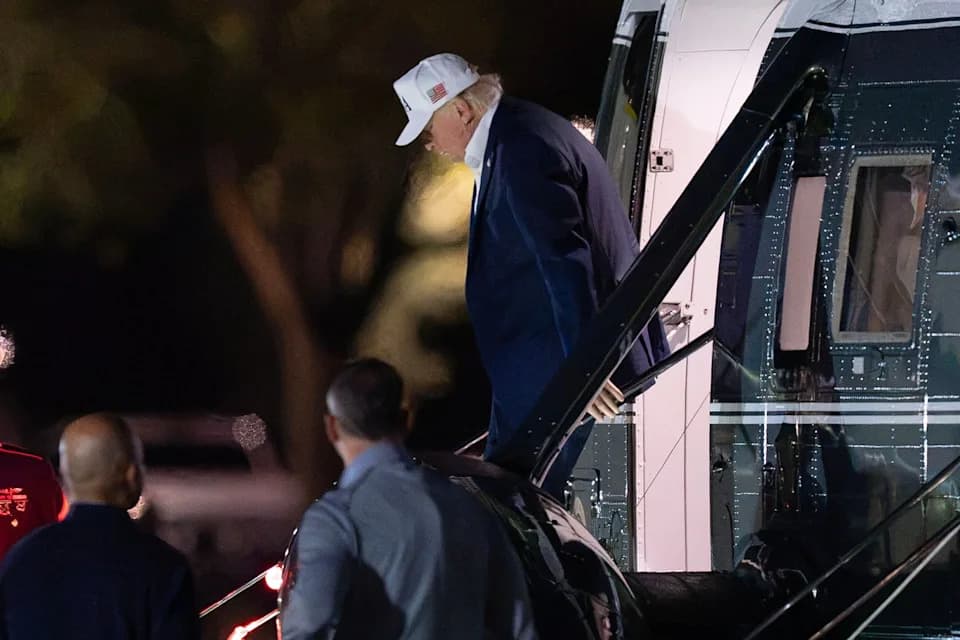
"A whole civilization will die tonight," and threats to bomb Iran "back to the Stone Ages" have been publicly declared by President Trump.
Unlike many predecessors, President Trump has made repeated apocalyptic threats promising near-immediate, wide-ranging destruction. After strikes on Iran last February, he predicted the war would be over in four to five weeks. More recently he vowed to "bomb and destroy" a bridge or power plant for every new Iranian attack on ships in the Strait of Hormuz, even citing targets near Tehran. The Pentagon says it is striking military objectives, but it has declined to release detailed target lists, and the pattern points to an expanding set of targets and growing risks to civilians.
Strategic and Humanitarian Consequences
While aerial campaigns once helped induce concessions in specific contexts — for example, NATO's bombardment contributed to Yugoslav withdrawal from Kosovo amid shifting diplomatic and political pressures — more often targeting infrastructure produces shared victimhood, greater animosity toward attackers, and hardened domestic support for the attacked regimes. Expanded strikes also increase the likelihood of wider regional escalation and of severe global economic disruption.
Policy Recommendation
U.S. policymakers should carefully weigh whether escalating bombardment will end the confrontation or deepen it, potentially drawing in other Middle Eastern actors and inflicting disproportionate civilian harm. Even if Iran's leadership shows little regard for its own people, international actors and policymakers should take humanitarian, legal and geopolitical consequences seriously.
David Wippman is Emeritus President of Hamilton College. Glenn C. Altschuler is The Thomas and Dorothy Litwin Emeritus Professor of American Studies at Cornell University.
Copyright 2026 Nexstar Media, Inc. All rights reserved. This material may not be published, broadcast, rewritten, or redistributed. For the latest news, weather, sports, and streaming video, visit The Hill.
Help us improve.