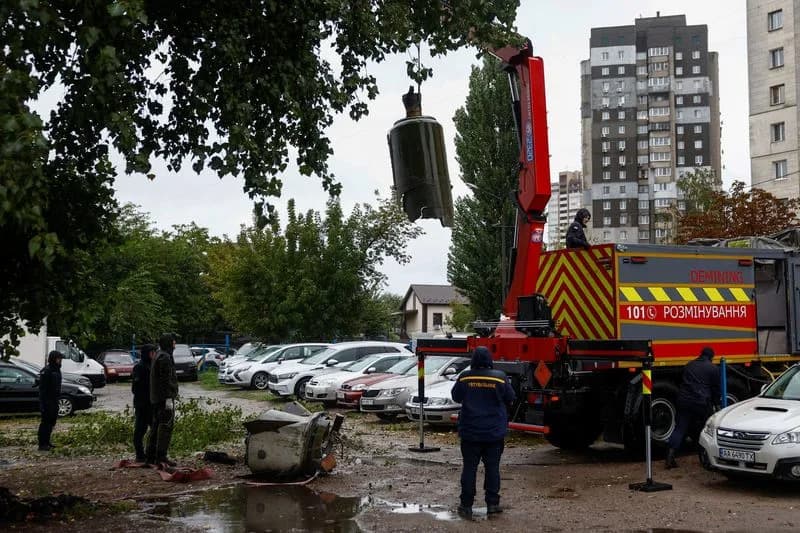
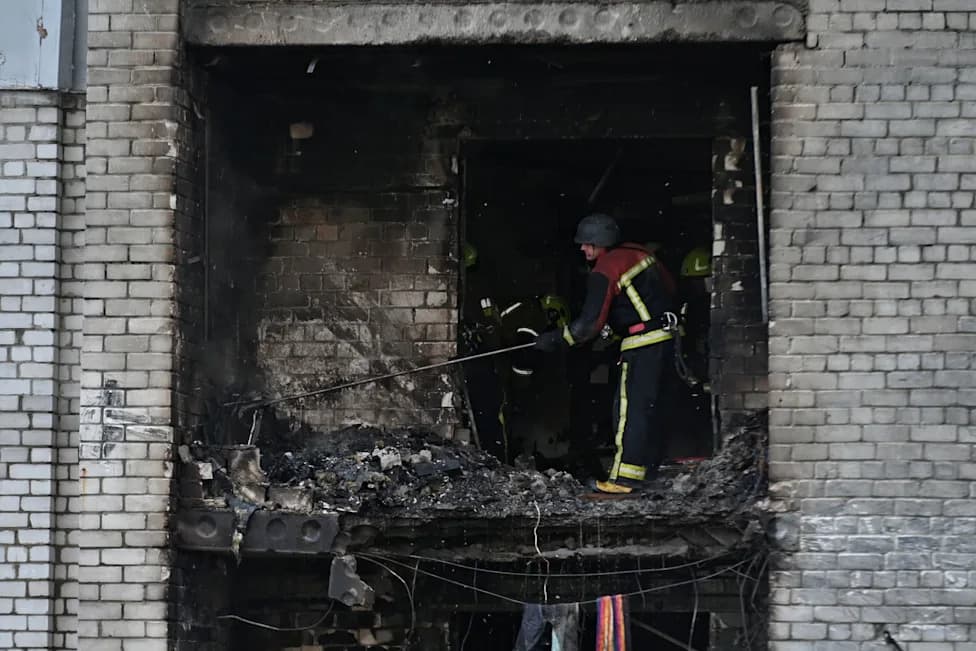
Government data show Ukraine experienced its deadliest month for civilians since April 2022, with at least 377 killed and 2,129 injured amid a surge in ballistic missile, drone and guided-bomb attacks. President Volodymyr Zelensky reported a recent spike in hostile drones, guided bombs and ballistic missiles and reiterated urgent appeals for Patriot and other air-defence systems. Kyiv has struck Russian energy sites, prompting Moscow to extend a diesel export ban, while Russia has targeted fuel facilities and ports in retaliation. Romania shot down a Russian drone over the Black Sea and summoned Moscow's ambassador after repeated airspace violations.
Ukraine Records Deadliest Month For Civilians Since April 2022 Amid Surge In Ballistic Missile And Drone Strikes
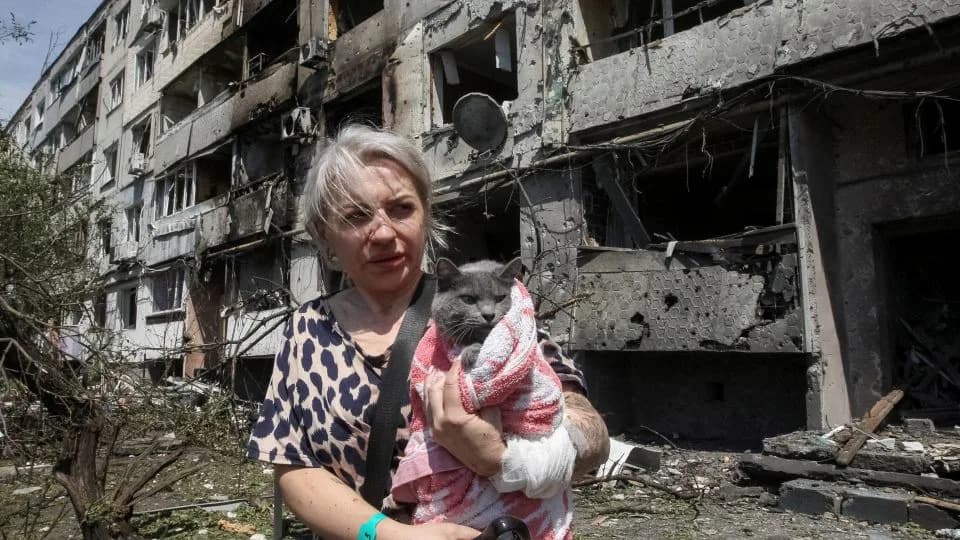
A woman with her cat stands near an apartment building hit by a Russian airstrike in the town of Pavlohrad in eastern Ukraine on July 20. - Stringer/Reuters
Ukraine has suffered its highest civilian toll in more than four years this month, with government figures reporting at least 377 civilians killed and 2,129 injured in renewed Russian strikes, making this the deadliest month for non-combatants since April 2022.
The recent assaults have included a heavy concentration of ballistic missiles—difficult-to-intercept weapons that have struck population centres, including multiple attacks on the capital, Kyiv. Ukrainian President Volodymyr Zelensky said that in the past week Russia deployed nearly 1,700 drones, more than 1,630 guided aerial bombs and over 50 ballistic missiles, illustrating the scale and diversity of the campaign.
"We must undercut Russia's gamble on ballistic terror," Zelensky wrote on X. "Every interceptor missile right now is literally helping save lives if it is here, in Ukrainian systems, not in our partners' warehouses."
Zelensky and Ukrainian officials have repeatedly urged partners to deliver additional Patriot batteries and other long-range air-defence systems capable of engaging ballistic threats. Analysts say interceptors and layered air defences are crucial to limit civilian casualties from ballistic and mass-drone attacks.
Strikes on Energy Infrastructure and Economic Fallout
Ukraine has continued a campaign of drone and missile strikes on Russian energy infrastructure, with several refineries reported hit over the past week. Moscow responded by extending a ban on diesel exports through the end of the year. Russian Deputy Prime Minister Alexander Novak said the ban could be lifted "as the market recovers," signalling any easing will depend on supply conditions.
The Institute for the Study of War (ISW) noted that many areas of Russia and occupied Ukraine still face fuel shortages, even as some Russian officials claim the situation is stabilising. Moscow has also carried out strikes on fuel stations in northern Ukraine and stepped up attacks on Ukrainian ports in the Black Sea and along the Danube.
Regional Tensions: Drones Over the Black Sea
For the third consecutive day, Romania's air force shot down a Russian drone over the Black Sea; Romania's defence ministry said the intercept occurred above Romanian territorial waters. President Nicușor Dan called violations of Romanian airspace "inadmissible and intolerable," and the Russian ambassador in Bucharest was summoned to the Foreign Ministry.
The human cost highlighted by this month’s figures underscores urgent humanitarian and security needs in Ukraine, and has intensified international calls for increased air-defence support and humanitarian assistance.
Sources: Ukrainian government figures; statements by President Volodymyr Zelensky; Russian Deputy Prime Minister Alexander Novak; Institute for the Study of War; Romanian defence ministry.
Help us improve.