
Lebanon's south has been ravaged by Israeli strikes that have killed thousands and forced over a million people from their homes, while a fragile ceasefire offers only temporary respite. On GZERO World, Kim Ghattas argues that disarming Hezbollah by force would risk a new civil war and instead urges Beirut to constrain the group's autonomy through political, security, and diplomatic measures. Lebanon faces steep obstacles—Israel's border posture and Iran's backing of Hezbollah—raising the question of whether sovereignty can be restored without renewed conflict.
Lebanon at a Crossroads: Can the State Reclaim Control Over Hezbollah?
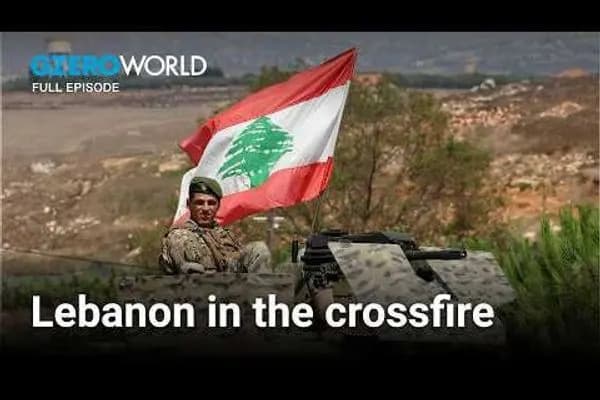
Israel, Hezbollah, and the battle for Lebanon’s future
Lebanon has again been swept into the wider conflict gripping the Middle East. Israeli strikes have devastated large parts of the south, killing thousands and displacing more than a million people, and a fragile ceasefire has only temporarily reduced the violence.
On GZERO World, host Ian Bremmer speaks with Lebanese-born journalist and Middle East analyst Kim Ghattas about the central challenge facing Beirut: what becomes of Hezbollah? Ghattas explains that although the group has been weakened, attempts to disarm it by force risk plunging Lebanon back into civil war. Instead, she argues, Beirut must pursue a political and security strategy that limits Hezbollah's autonomy while restoring confidence in the state.
Why a Military Confrontation Would Be Catastrophic
Ghattas warns that a direct clash between Hezbollah and the Lebanese Army would be disastrous for civilians and institutions alike. A confrontation could shatter a delicate sectarian balance, collapse weak state institutions, and trigger wider regional escalation given Hezbollah's ties to Iran and Israel's security concerns.
Political and Diplomatic Pathways
Rather than a showdown, Ghattas recommends a blend of measures: strengthen the Lebanese state's security and service capacity; pursue diplomatic initiatives that produce tangible gains for Lebanese citizens; and seek regional confidence-building steps that reduce the group's perceived need to remain armed. For any sustainable solution, the government must persuade the public that the state — not an armed 'state within a state' — can protect them.
Structural Obstacles
Lebanon's leverage is limited. Israel continues to hold forces near the southern border and may push to keep a buffer zone in part of the south, while Iran continues to view Hezbollah as a key instrument of regional influence. These external dynamics make negotiations complex: can Beirut rebuild sovereignty without renewed war, and can diplomacy succeed if Hezbollah is excluded from talks?
'I lived through 15 years of civil war in Lebanon as a child, and this is my fifth Israeli military campaign against Lebanon as well,' Ghattas says. 'That's a lot of war. And I can sit here and despair about the state of affairs, but I'm looking for the slivers of light, the slivers of opportunity.'
Whatever path Lebanon pursues, the choices made now will shape the country's stability for years. The immediate imperative is to protect civilians, sustain humanitarian relief, and keep channels open for a political process that reduces the appeal — and perceived necessity — of armed alternatives.
Help us improve.





















