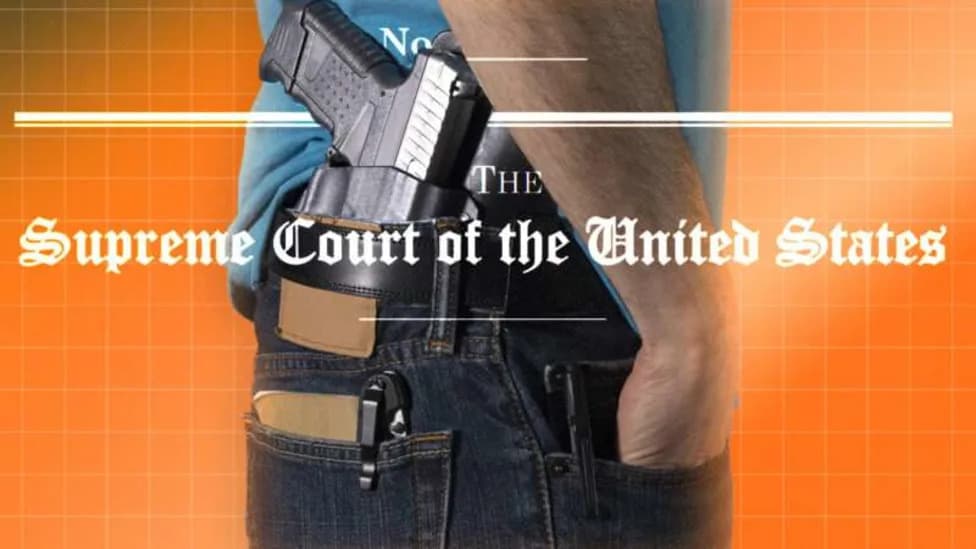
The Supreme Court’s Bruen decision requires modern gun laws to be supported by historical analogues. Two June 2024 rulings reinforced that standard while leaving room for targeted prohibitions, producing a split among lower courts over whether historical rules (including laws on Bowie knives) can justify bans on semiautomatic rifles. The coming Supreme Court review of AR-15–style bans will hinge on how the Court balances historical evidence, modern public-safety concerns, and the weapons’ widespread lawful use.
AR-15 Bans at the Crossroads: How the Supreme Court’s Historical-Analogy Test Could Decide Their Fate
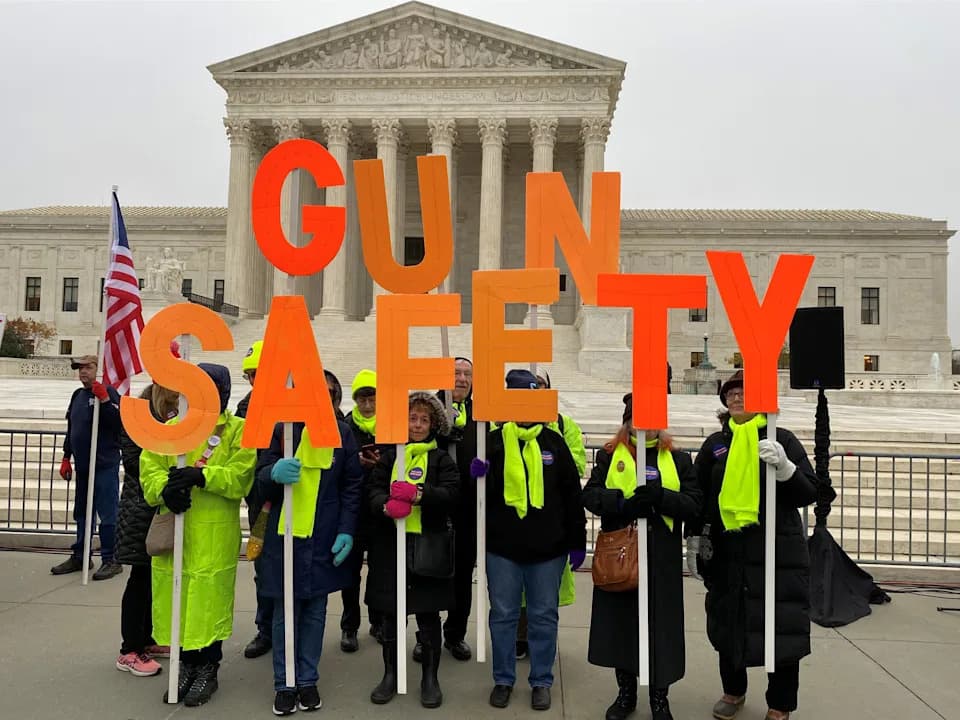
Supporters of gun control laws rally in front of the U.S. Supreme Court on Dec. 2, 2019.
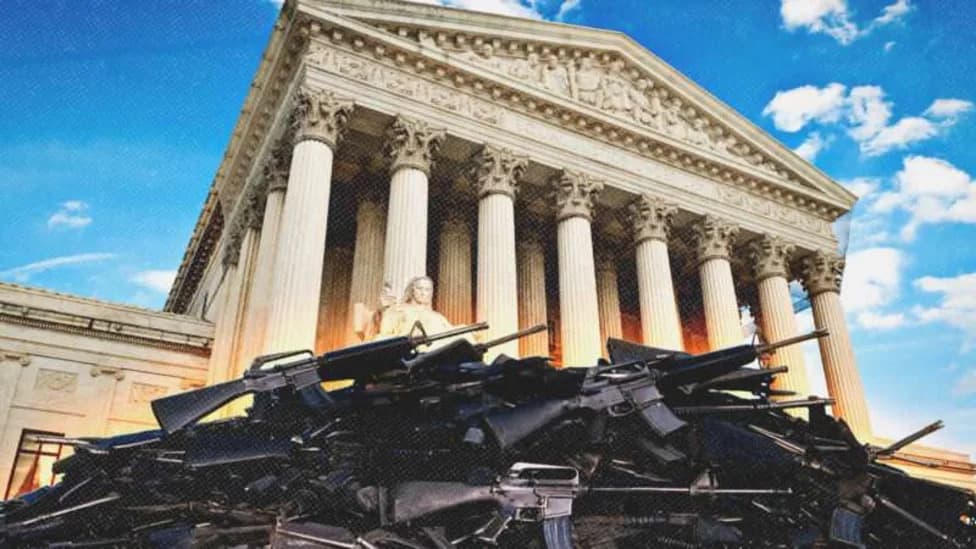
WASHINGTON — The Supreme Court’s 2022 decision in New York State Rifle & Pistol Association v. Bruen created a rigorous new standard for evaluating modern gun regulations: a law restricting firearms must be "consistent with this nation's historical tradition of firearm regulation." That historical-analogy framework has shaped recent rulings and now looms large over a high-stakes case this coming term that could determine the constitutionality of state and local bans on semiautomatic rifles such as the AR-15.

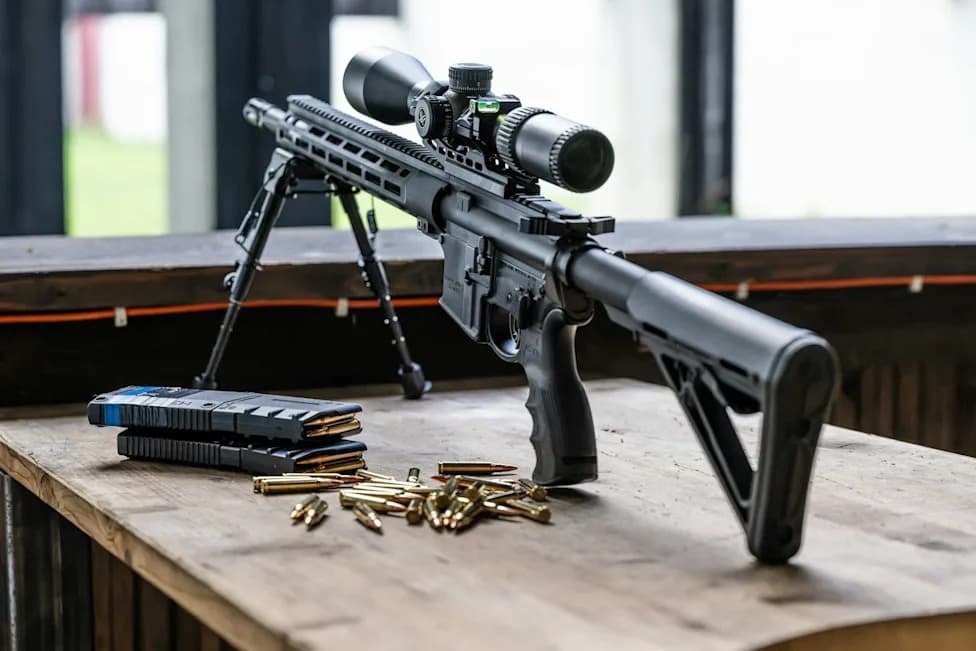
An employee holds an AR-15, a semi-automatic .22 caliber rifle, at Pewnitions Factory on Thursday, March 6, 2025, in Salem, Ore.
Recent High-Profile Decisions
In June, the Court struck down Hawaii’s limits on where guns may be carried in public and invalidated a broad federal prohibition that would disqualify routine marijuana users from owning guns, with majorities finding those measures lacked sufficient historical analogues. Earlier in 2024, however, the Court sustained a law barring certain domestic abusers from possessing firearms in U.S. v. Rahimi — a decision that said a permissible historical "analogue," rather than a precise historical "twin," may suffice in some cases.
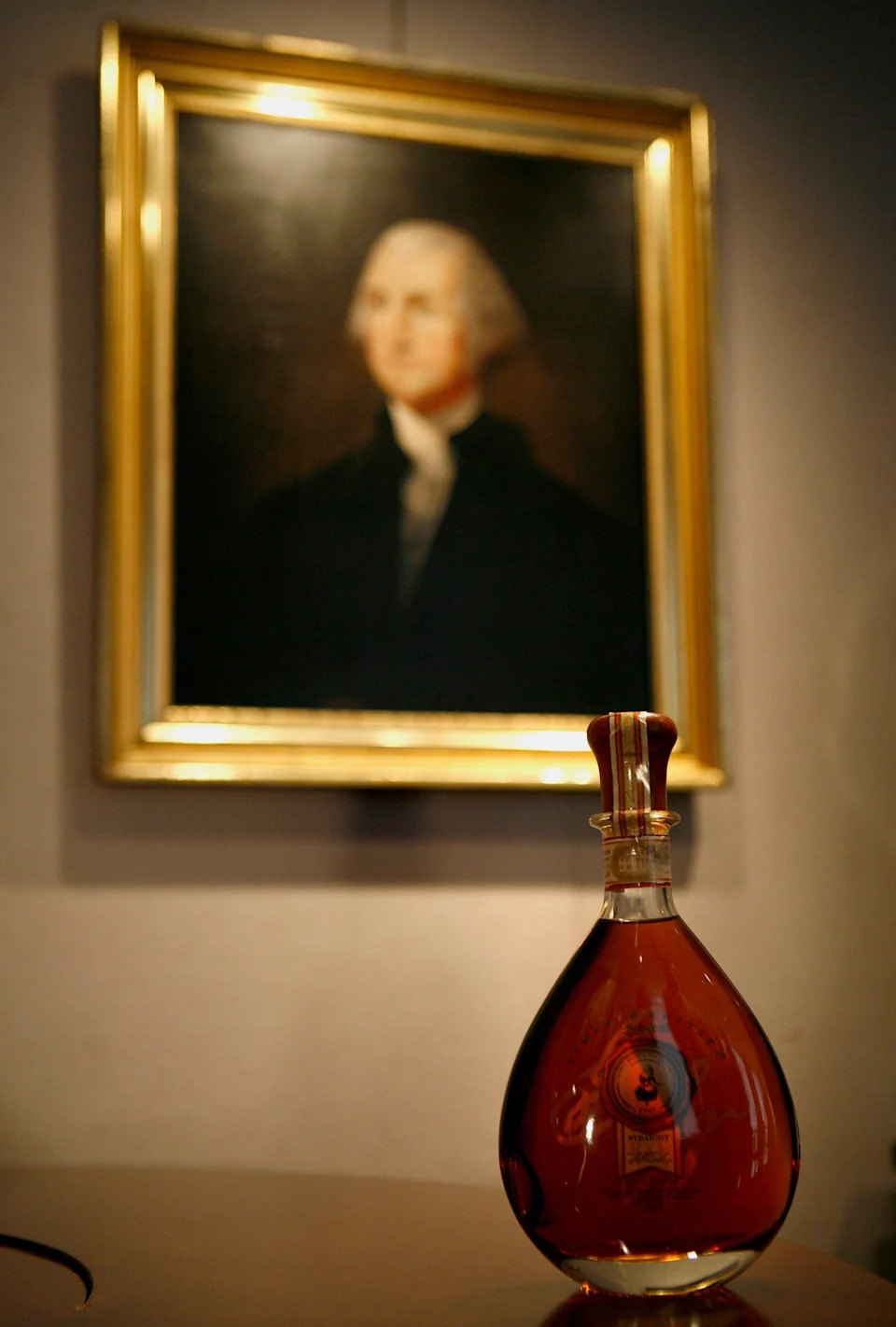
A bottle of straight rye whiskey made from a recipe by George Washington, the first U.S. president, is seen here during a preview for an auction of fine Spirits at Christie's Auction House in New York, December 6, 2007. New York's first liquor auction in nearly a century will take place on Saturday, with one bottle of scotch whiskey expected to fetch as much as $30,000.
What Justices And Experts Are Saying
Legal scholars and advocates see mixed signals. Some — like UCLA’s Adam Winkler — say the Court appears less willing to accept loose historical analogies than observers once hoped. Others, including gun-safety advocates, argue the test still allows room for sensible modern restrictions on especially dangerous weapons.
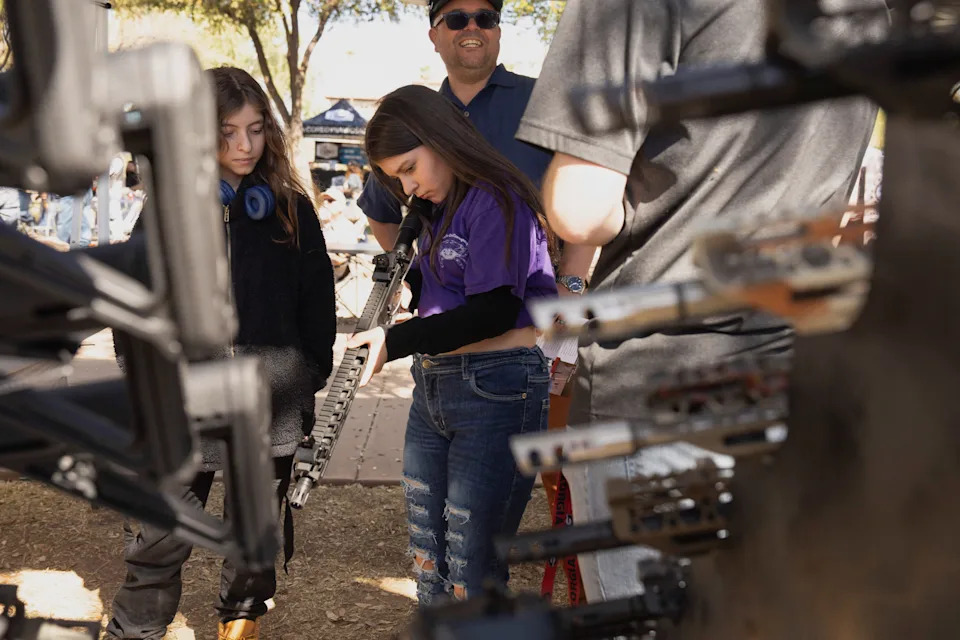
Katherine and Izzy Paczskoski, 14 and 15, look at an AR-15 made by Lifetime Precision, a gun store in Gilbert, Arizona, as their father Tim Paczskoski looks on during Gun Owners of America's Freedom Festival, a celebration of the Second Amendment to the U.S. Constitution, at the Arizona State Capitol in Phoenix, Arizona, U.S., March 1, 2025.
“Nothing in the recent decisions undermines the court's previous rulings that the nation has historically restricted dangerous and unusual weapons,” said Douglas Letter of the Brady Campaign. “We think assault-weapons bans can be constitutional.”
Why AR-15 Bans Present a Difficult Test
Applying Bruen to modern semiautomatic rifles is challenging because AR-15–style firearms are mechanically and functionally far removed from the single-shot, muzzle-loading guns typical of the 18th and early 19th centuries. Courts are split on how to bridge that gap.

John Zogorean displays a Bowie knife he made that was for sale at the Nations Gunshow on November 21, 2009 in Chantilly, Virginia.
In July, a divided 7th U.S. Circuit Court of Appeals upheld Illinois’ ban on certain semiautomatic rifles and high-capacity magazines. The panel likened modern assault-weapons bans to historical restrictions on particularly violent instruments such as Bowie knives — laws that targeted weapons thought to cause especially gruesome harms. Days later, the 3rd U.S. Circuit Court of Appeals reached the opposite conclusion in invalidating New Jersey’s ban, noting substantial contemporary lawful ownership (the opinion cited roughly 24 million AR-15–style rifles in circulation) and questioning whether Bowie-knife analogies fit.
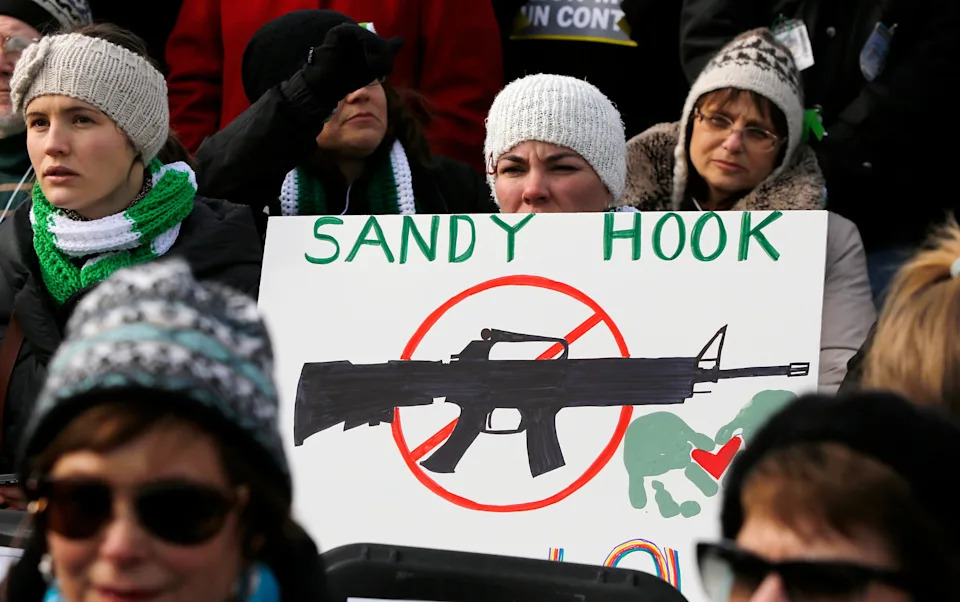
People hold signs memorializing Sandy Hook Elementary School, where 26 children and adults were killed in a mass shooting in December, as they participate in the March on Washington for Gun Control on the National Mall in Washington, January 26, 2013.
Practical and Cultural Stakes
The legal debate is intertwined with public perception: AR-15–style rifles are often associated with mass shootings, yet they are also widely owned and celebrated by many gun owners for their versatility and customization. That combination raises both legal and political stakes for the Supreme Court’s forthcoming review.
Some justices, like Justice Ketanji Brown Jackson, have criticized the historical-analogy test as difficult to apply and potentially unworkable. Others, including those in unanimous rulings against broad gun restrictions, have insisted on strict historical support for modern laws. Critics on both sides of the debate warn that an excessive focus on arcane historical details can make constitutional adjudication feel disconnected from present-day realities.
What to Watch
- How the Court defines an acceptable historical "analogue" for weapons that did not exist in the founding era.
- Whether the justices treat public-safety concerns and the modern prevalence of AR-15–style rifles as persuasive alongside historical evidence.
- Whether the Court issues a broad ruling that resolves the split among federal appeals courts or a narrower decision limited to specific statutory or factual contexts.
Bottom line: The Bruen framework remains the central test for Second Amendment challenges. Its application to semiautomatic rifle bans will force the justices to reconcile historical practice with contemporary technology, public-safety concerns, and deeply held cultural attachments — and their decision is likely to reshape the legal landscape for gun regulation nationwide.
Help us improve.