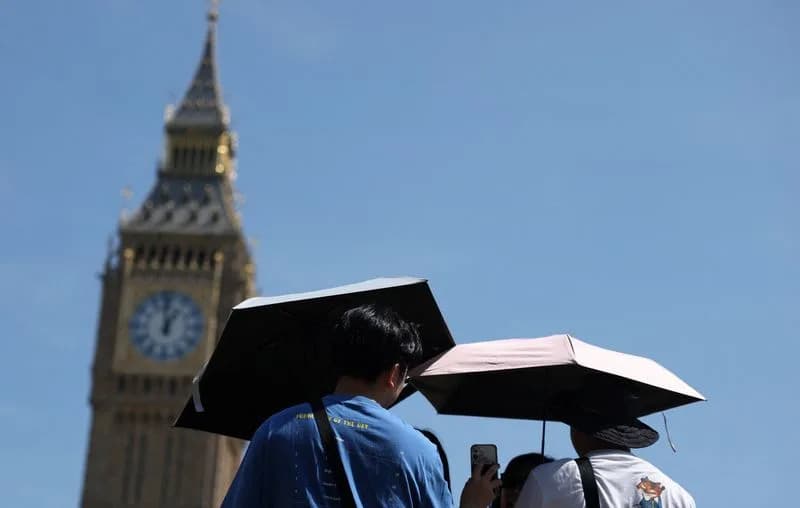
Europe's recent heat wave is increasingly a nighttime problem: unusually warm nights are causing widespread sleep loss, with a study of nearly 318,000 people showing a ~40% higher chance of sleeping under six hours as nights warm from ~54°F (12°C) to 81°F (27°C). Chronic sleep disruption can harm concentration, mood and long-term health, raising risks such as heart disease and diabetes. Experts call for immediate household measures and long-term urban and policy adaptations, including a proposed global sleep task force.
Hot Nights Steal Sleep Across Europe and Raise Long-Term Health Risks

Photo Credit: iStock
Europe's recent heat wave has extended beyond daytime records, following millions of people into their bedrooms and turning nights into a new frontline in the climate crisis. As warm nights persist across western Europe, researchers warn that widespread sleep loss is one of the most pervasive — and often overlooked — consequences of rising temperatures.
Nighttime Heat and Sleep Loss
Europe is warming at more than twice the global average, increasing the frequency of unusually warm nights. During June's heat wave, about 65% of U.K. adults reported trouble sleeping, and nearly half of that group said they lost three or more hours of sleep. At one weather station in Saxony, Germany, the overnight low hit 85°F (29.4°C) — a "tropical" minimum that leaves little opportunity for bodies or buildings to cool down. World Weather Attribution has found that climate change, driven mainly by fossil fuels, has made such overnight extremes roughly 100 times more likely.
What the Research Shows
A July study cited by DW analyzed sleep-tracker data from nearly 318,000 people covering about 165 million nights. It found that when nighttime temperatures increase from roughly 54°F (12°C) to 81°F (27°C), the odds of sleeping less than six hours rise by about 40%. These data provide strong, quantifiable evidence that hotter nights are reducing sleep at scale.
Health and Social Consequences
Short-term sleep loss impairs concentration, mood, memory, workplace performance and driving safety. Over months and years, repeated nighttime disruption can strain cardiovascular and metabolic systems and increase risks of diabetes, depression, heart disease and obesity. Ty Ferguson, a research fellow at the University of Adelaide, warns that people "cannot maintain cognitive function, memory or emotional balance" when regularly getting under seven hours of sleep.
Who Is Most Vulnerable?
Children, older adults, people with chronic illnesses and lower-income households with limited access to cooling face the greatest burden. As Kim van Daalen, an environmental epidemiologist at the University of Cambridge, notes, "It accumulates quietly, night after night," which is why sleep loss can be missed in coverage that focuses on immediate heat-wave deaths and hospitalizations.
Practical and Policy Responses
Experts emphasize that adaptation is needed even as countries work toward net-zero emissions, because temperatures will take decades to decline. Short-term, household-level measures include expanding access to fans or air conditioning, using lighter breathable bedding, blocking daytime sun with shades, ventilating when outdoor air is cooler, and improving insulation.
Longer-term, structural and urban changes can reduce nighttime temperatures: add green spaces, replace heat-trapping concrete with cooler surfaces, use solar-reflective materials, and design buildings for passive cooling with better shade and ventilation. At the policy level, researchers including Kelton Minor of the University of Copenhagen have urged the World Sleep Society to form a global sleep task force to track and prepare for sleep loss linked to warming nights. Experts also recommend flexible work schedules during extreme heat events to reduce health and safety risks.
"Adapting the approximately one-third of our lives that we spend sleeping to nighttime warming already warrants European policy prioritization and adaptive innovation," said Kelton Minor.
Addressing hot nights requires a mix of immediate household support and longer-term urban planning and public-health strategies to protect the most vulnerable and preserve population health.
Help us improve.