Archaeologists and tribal researchers believe they have located the long‑lost 1855 Battle of Hungry Hill near Sunny Valley, Oregon. Using a combination of Native oral histories, military records, archival maps and battlefield artifacts (.69‑caliber musket balls, a lead plug from a gunpowder tin), the team narrowed the site to a field near the Grave Creek Hills. The work restores recognition of Takelma leaders — notably Frances Johnson, Sally Lane and Queen Mary — whose roles were minimized in earlier accounts. The project, begun in 2012 and led by Mark Tveskov, was aided by an archival discovery from Robert Kentta and permission from the Bureau of Land Management to survey the land.
Archaeologists Locate Lost 1855 "Hungry Hill" Battlefield — Restoring Takelma Women's Leadership
Photo Credit: iStock
Beneath the postcard landscape of Sunny Valley, Oregon, archaeologists and tribal researchers say they have likely identified the long-lost site of the 1855 Battle of Hungry Hill, a pivotal engagement in the Rogue River Wars. The discovery combines archaeological evidence, archival research and Native oral histories to restore a fuller account of the conflict — including the leadership roles of Takelma women that were long marginalized in settler narratives.
How the Site Was Found
The search began in 2012 as a project led by archaeologist Mark Tveskov of Southern Oregon University's Laboratory of Anthropology. Researchers used a layered approach: Native oral traditions, U.S. Army records, period maps and field survey. A crucial archival lead came from Robert Kentta of the Confederated Siletz Indian Tribes, who discovered an 1855 New York Herald account that appears to draw on Lieutenant August V. Kautz's contemporaneous description of the fighting. Tveskov has observed that Kautz's letter "repeats, often with the same words as the New York Herald article, the details of the battle's planning and execution."
Archaeological Evidence
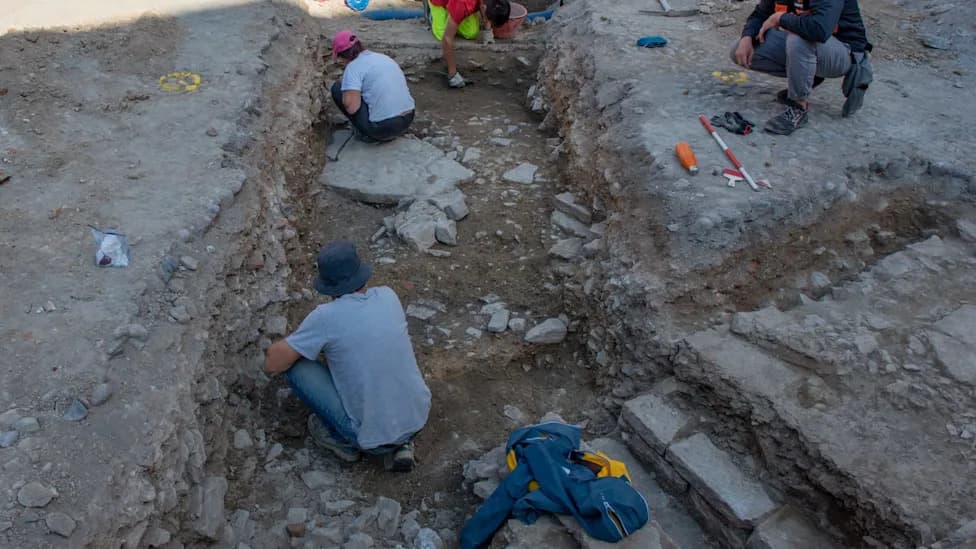
Fieldwork narrowed the likely location to a field near the Grave Creek Hills. Excavations and surface surveys recovered artifacts consistent with mid-19th-century U.S. Army material culture, including .69-caliber musket balls and a lead plug from a gunpowder tin. These finds, when combined with maps and oral testimony, helped confirm the location as the probable battlefield.
Revising the Historical Record
Researchers say the newly identified site challenges versions of the battle shaped by the losing side's narrative of humiliation. Despite having numerical superiority, the settlers, volunteers and Army troops misjudged the Takelma's tactical strength and local knowledge. The project restores attention to Indigenous leaders whose contributions were minimized in many settler-focused accounts, notably Frances Johnson, Sally Lane and Queen Mary (also recorded as Mary Lane).
"It is only in their private letters and unpublished memoirs, some unexamined by scholars until recently, that candid reflections on the battle exist,"
The Bureau of Land Management granted permission for surveys on the suspected battlefield, allowing archaeologists to conduct the necessary fieldwork. Project leaders emphasize that combining tribal knowledge, archival research and archaeological methods provides a more complete and accurate reconstruction of Hungry Hill and its participants.
By recovering evidence from the landscape and elevating oral histories preserved by Native communities, researchers are correcting omissions that have persisted across generations and giving long-overlooked Takelma leaders a clearer place in the historical record.
Help us improve.