Ranchers across the U.S. Rocky Mountains are hauling water daily after the Upper Colorado River Basin recorded its lowest snowpack on record. Families are reducing herd sizes, expanding water-truck fleets, buying more hay and drilling expensive wells to keep livestock alive. A study led by Adrienne Marshall finds human-caused climate change made this snow drought about 14 times more likely, and scientists warn risks will grow if emissions continue to rise.
Hauling Hope: Rocky Mountain Ranchers Fight Record Low Snowpack by Trucking Water
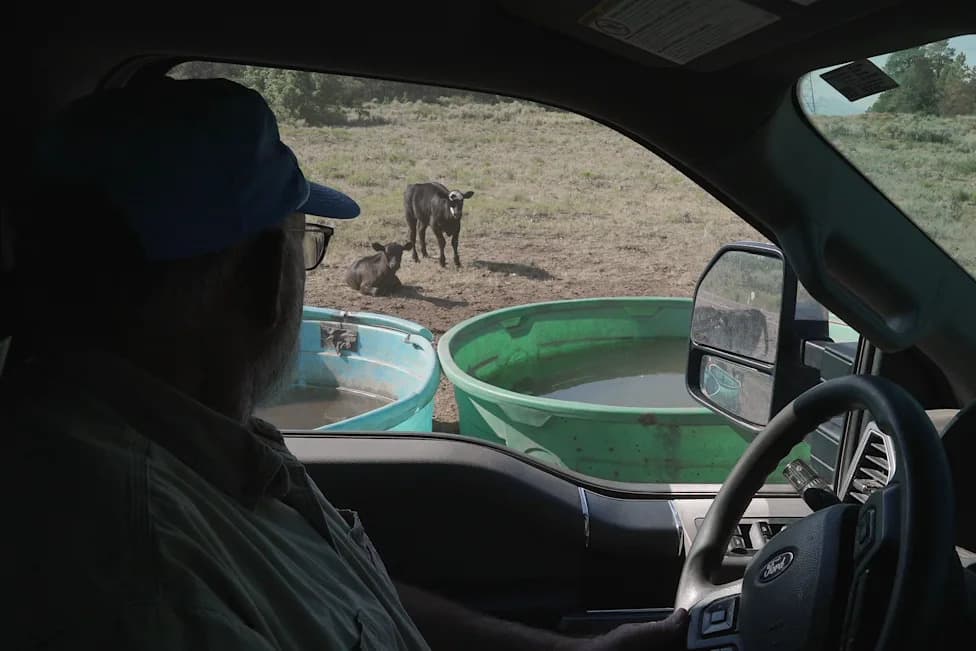
Scott Snyder checks to see how much water his cows have, July 16, 2026 near Montrose, Colo. (AP Photo/Brittany Peterson)(AP Photo/Brittany Peterson)
On a high-country mesa near Montrose, Colorado, water poured into an open stock tank while a thin trickle soaked the dusty ground below. Rancher Scott Snyder stepped out of the shade, fastened a hose and cursed the waste.
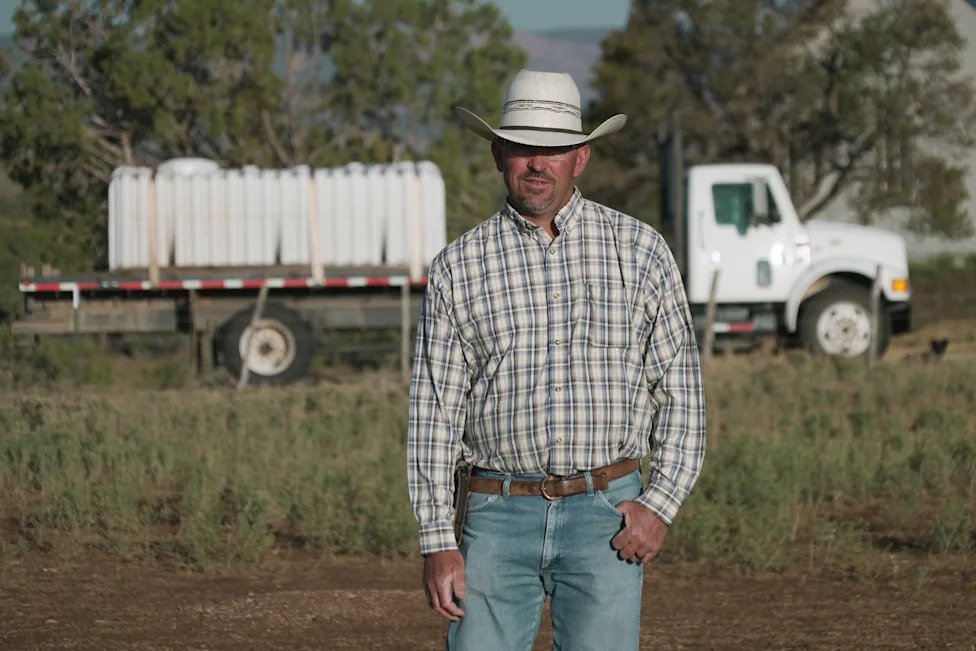
Lance Bray stands in front of a truck he purchased this spring for hauling stock water, July 17, 2026 in Redvale, Colo. (AP Photo/Brittany Peterson)(AP Photo/Brittany Peterson)
"It's just so much work. I hate dropping any of it," Snyder said. He and his family at Mex and Sons Ranch spent nine hours and eight trips in three vehicles under sweltering heat to supply roughly 800 cow-calf pairs with enough water to last a day or two.
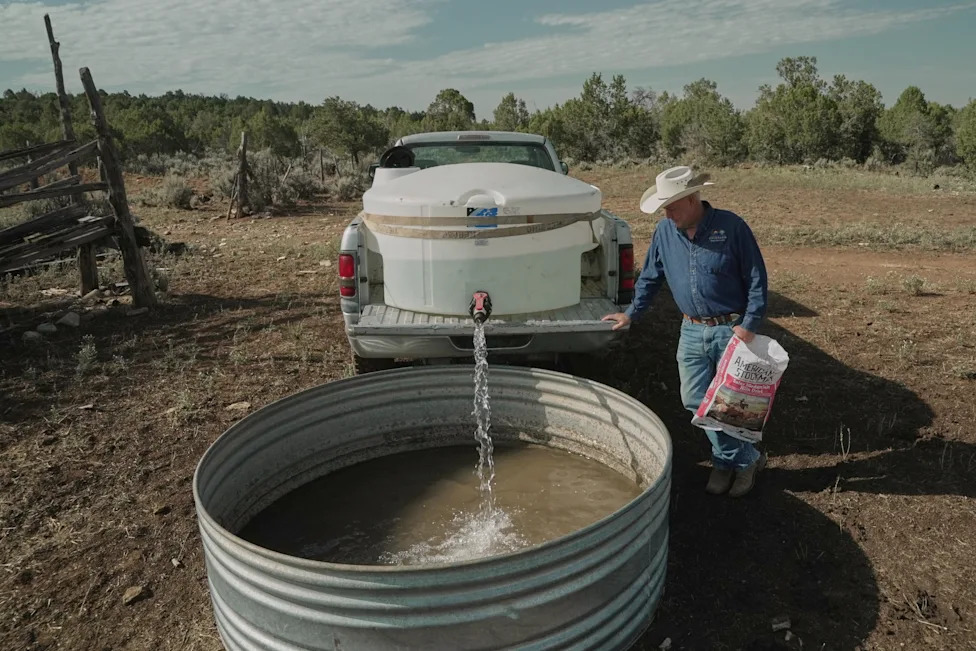
Mark Ragsdale refills a stock tank, July 17, 2026 in Redvale, Colo. (AP Photo/Brittany Peterson)(AP Photo/Brittany Peterson)
Daily Chore Across the Rockies
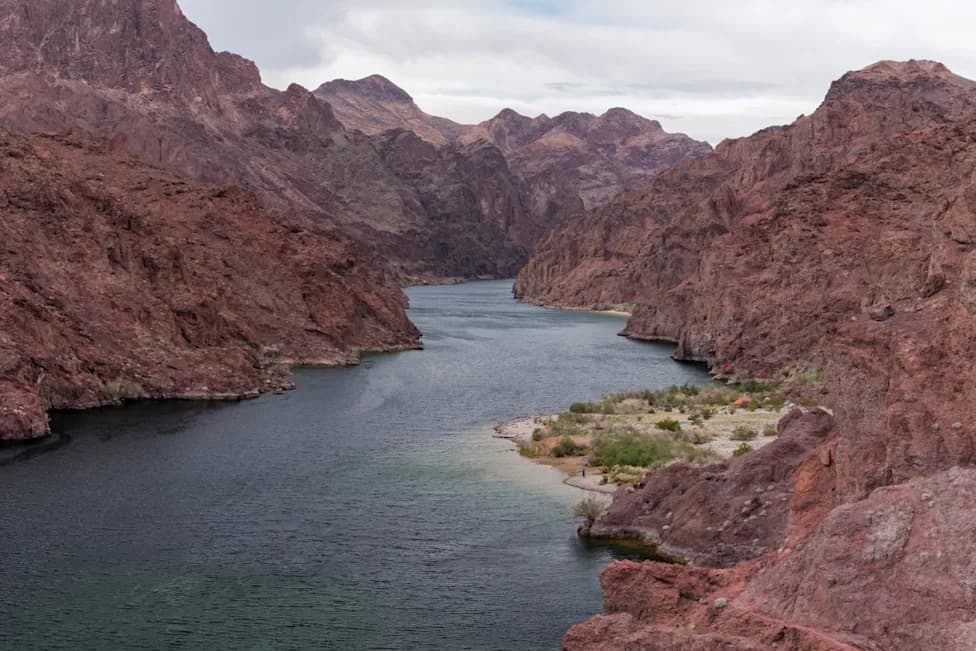
Hauling water over rugged terrain has become routine for many livestock producers across the U.S. Rockies. Historically, ranchers relied on snowmelt to refill stock ponds, springs and creeks through the summer. This year the Upper Colorado River Basin — covering Wyoming, Colorado, Utah and New Mexico — recorded its lowest snowpack on record.
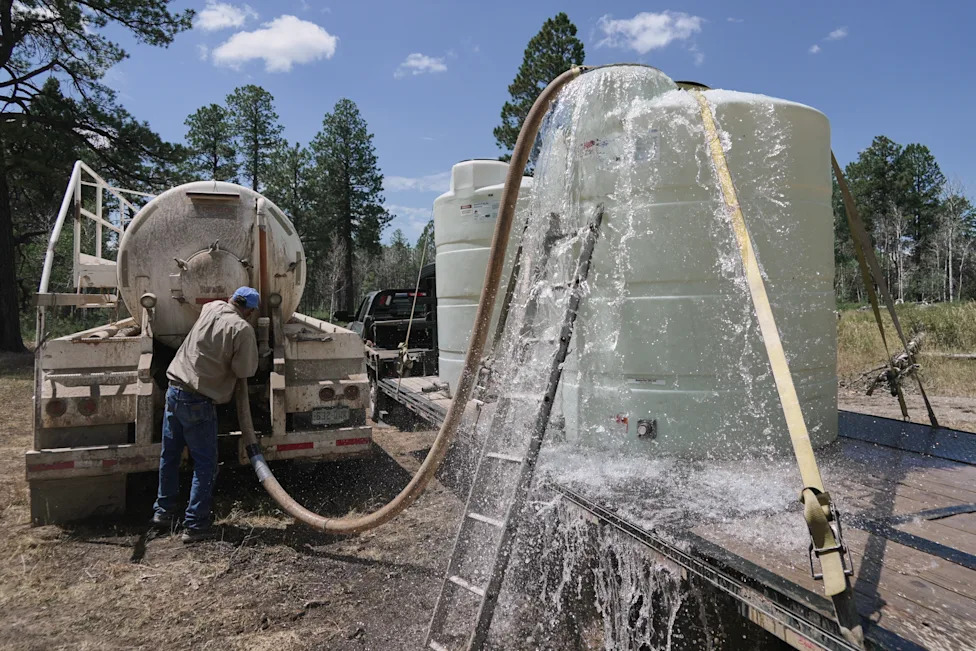
A tank overflows as Scott Snyder transfers water for his cattle, July 16, 2026 near Montrose, Colo. (AP Photo/Brittany Peterson)(AP Photo/Brittany Peterson)
A new study led by Adrienne Marshall, an assistant professor of geology at the Colorado School of Mines, found that human-caused climate change made this snow drought about 14 times more likely.
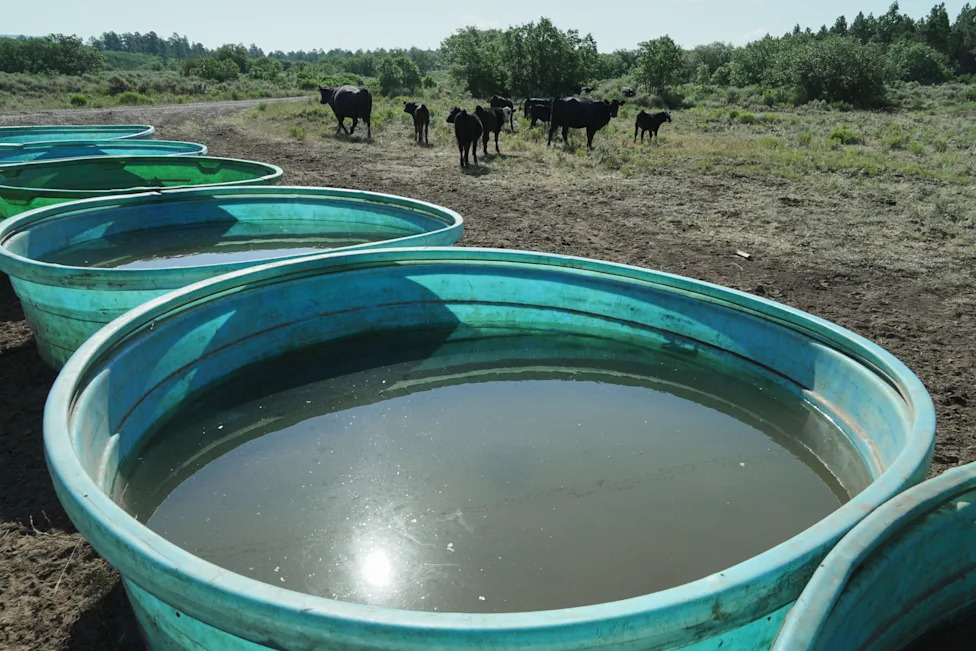
Cattle stand near stock tanks, July 16, 2026, near Montrose, Colo. (AP Photo/Brittany Peterson)(AP Photo/Brittany Peterson)
How Ranchers Are Coping
Producers are adapting in several ways: shrinking herd sizes, buying more hay, moving cattle farther to find grazing, expanding water-truck fleets, drilling wells and constantly watching for wildfire threats. Yet these strategies come with steep costs in time, money and stress.
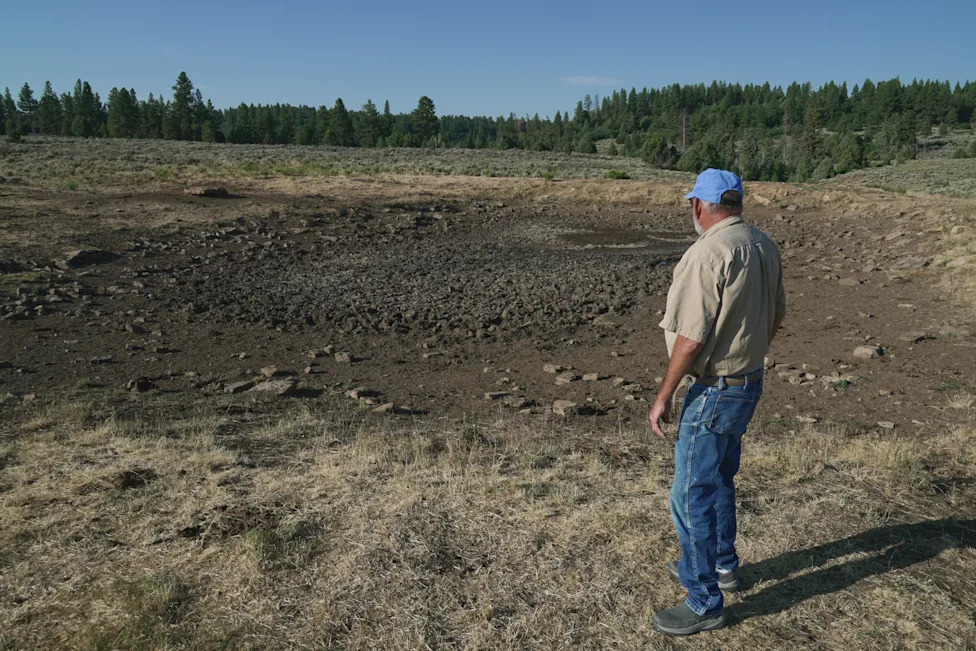
Scott Snyder looks at a dry stock pond on his grazing allotment, July 16, 2026 near Montrose, Colo. (AP Photo/Brittany Peterson)(AP Photo/Brittany Peterson)
"If Mother Nature doesn't want to help out here, we're probably in a lot of trouble," Snyder said.
Some ranchers are fortunate to have nearby water sources that can fill large tankers for a fee. Others, like Mark Ragsdale — who also works as a water commissioner in Norwood — find themselves fielding constant calls from neighbors asking, "Where can I find water?" Ragsdale still gets enough from his solar-powered well to support about 45 cow-calf pairs, for now.
Brothers Lance and Zandon Bray expanded their hauling capacity after the record-low snowpack. Their cattle operation now uses three flatbeds dedicated to carrying water, including an older truck pressed into service to carry a 2,600-gallon tank.
In northern New Mexico, Stanford Salazar has hauled stock water daily for five years as most of his 14 ponds run dry. In central Utah, Jeff Christensen is drilling two 500-foot wells in hopes of reducing future hauling — a costly gamble that can run roughly $20,000 per well, though grants can offset part of the expense.
Policy, Science and the Road Ahead
The U.S. Department of Agriculture offers reimbursement programs to help ranchers cover above-normal costs to transport water and feed during droughts, but no aid replaces the hours of labor lost or the emotional toll. Scientists warn that while a repeat of this extreme snow drought may be unlikely in the immediate future, repeated years of below-normal snowpack will compound impacts, and the odds of extreme events rise if greenhouse gas emissions continue unchecked.
This shift from seasonal snowmelt to trucked water highlights both the resilience and vulnerability of ranching communities across the Rockies: resilient in their ingenuity and commitment, vulnerable to increasing climate stress and rising costs.
Help us improve.