
A viral 15-second video claiming to show a July 19 US strike on Iran’s Darkhovin nuclear site is misattributed. AFP and others verified the clip originates from US‑Israeli strikes in Baharestan, Isfahan, in early April. The IAEA said no nuclear material was stored at Darkhovin and the incident is not believed to pose a radiological risk. The video, bearing an Iran International watermark, was widely reshared despite being months old.
Months-Old Explosion Footage Misrepresented as Recent US Strike on Iran’s Darkhovin Site
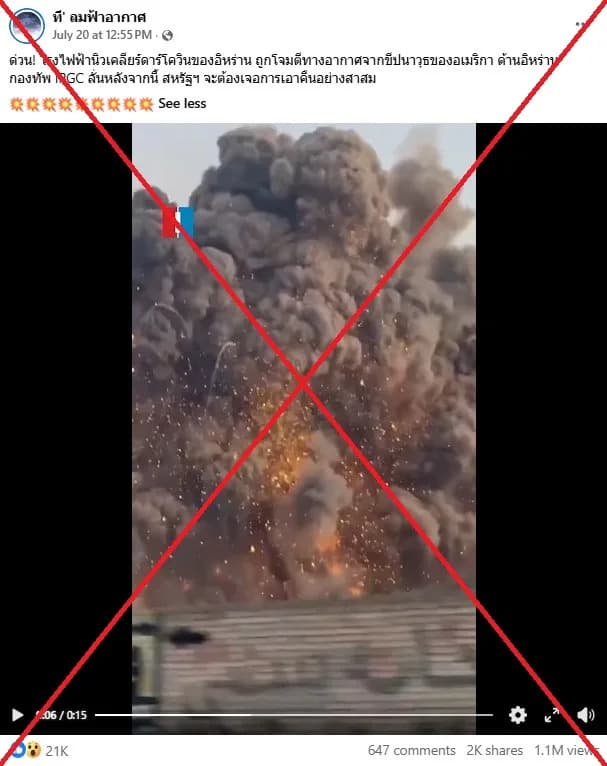
Screenshot of the false post taken on July 23, 2026, with a red X added by AFP
Iranian officials alleged that the United States struck the Darkhovin nuclear power plant construction site on July 19, 2026. A widely shared 15-second video showing a large explosion and thick black smoke circulated on social media as evidence of that strike, but independent verification shows the clip is unrelated to the July incident.
What the Video Actually Shows
AFP and other outlets traced the footage to strikes in early April 2026 in Baharestan, Isfahan province, recording a US‑Israeli exchange that produced a massive blast. The same clip was published by AFP on April 2 after location verification using satellite imagery. The version reposted in July carries a visible Iran International watermark, and reverse-image searches show multiple outlets published the footage in April.
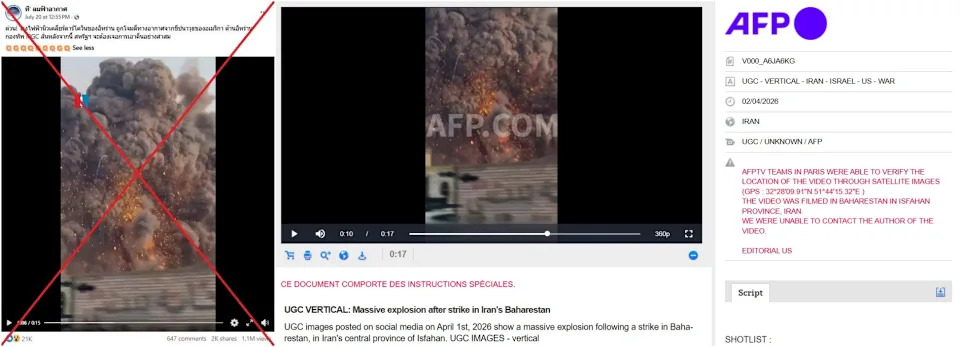
Screenshot comparison of the false post (L) and the video published by AFP
Official Response And Risk Assessment
The footage resurfaced after Iranian authorities said the Darkhovin construction site was hit "with a number of projectiles" on July 19. The International Atomic Energy Agency (IAEA) urged restraint. IAEA Director General Rafael Grossi wrote on X that no nuclear material had been stored at Darkhovin and the incident was "not believed to pose any radiological risk."
Context
Iran’s nuclear program remains a major point of contention with Western governments, who suspect Iran may seek nuclear weapons, while Tehran insists its program is peaceful and for civilian energy needs. The April strikes followed public threats by US President Donald Trump to strike Iran "extremely hard" for several weeks; the April footage predates the July claims by more than three months.
Spread And Impact
The 15-second clip amassed more than a million views after being reshared on platforms such as Facebook, TikTok and others. Fact-checkers, including AFP, have previously debunked recycled or misattributed videos circulated during the wider Middle East conflict; this case is another example of months-old material being repackaged as new evidence.
Bottom Line: The viral explosion video promoted as proof of a July strike on Darkhovin originates from early-April strikes in Baharestan, Isfahan, and is not evidence of the alleged US attack on the Darkhovin site.
Help us improve.





















