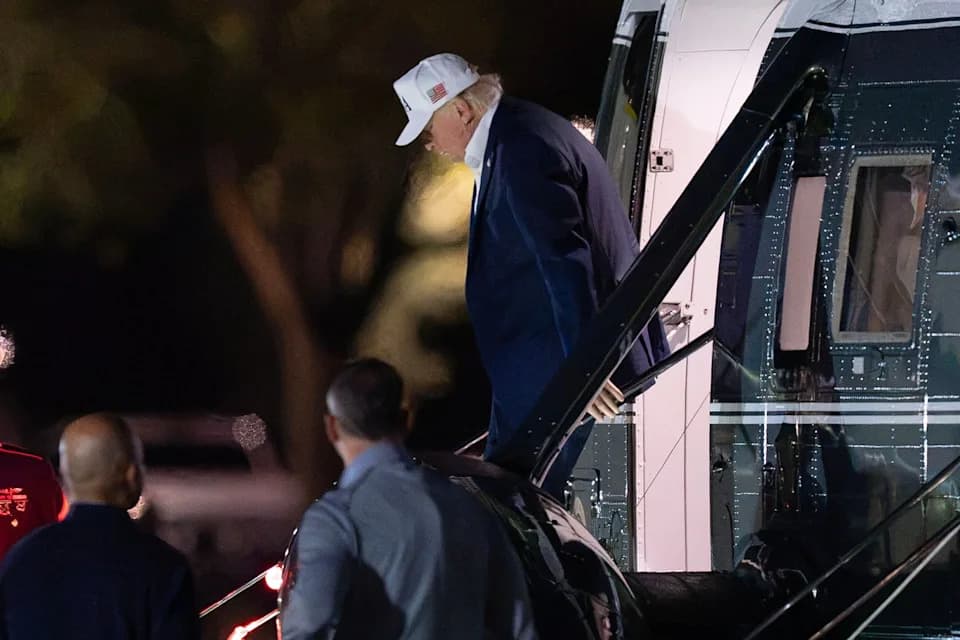
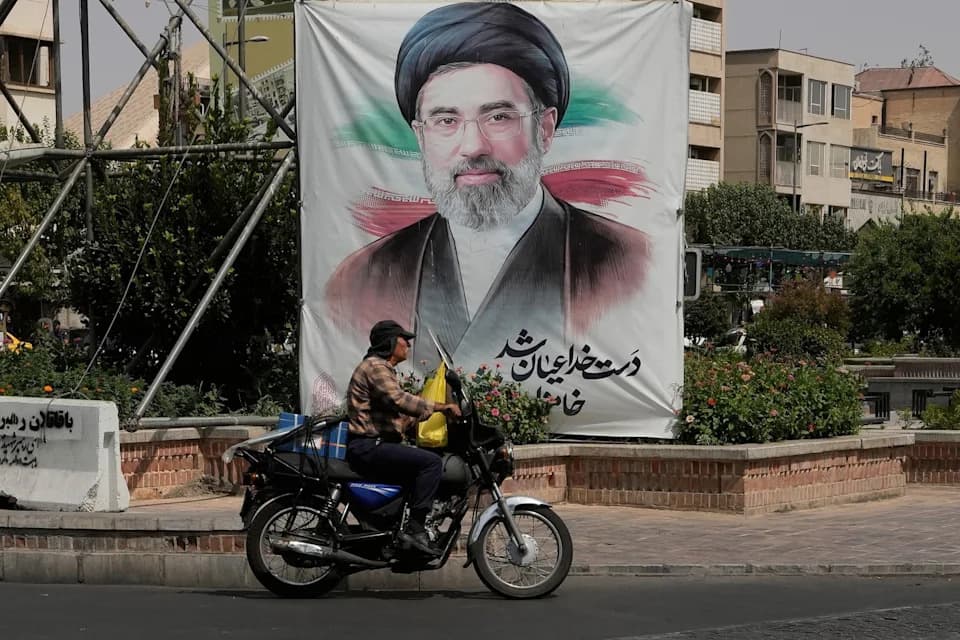
President Trump declined to say whether threatening to bomb civilian power plants and bridges in Iran would qualify as a war crime, and he dismissed a question from a The New York Times reporter. On Truth Social he renewed a warning to destroy an Iranian bridge or power plant if Iran attacks ships in the Strait of Hormuz. CENTCOM said U.S. strikes—carried out for 13 consecutive nights—aim to protect commercial shipping, while Trump said negotiation is preferable but left open the option of heavier military action.
Trump Dodges Question on Bombing Civilian Infrastructure, Repeats Threats to Iran
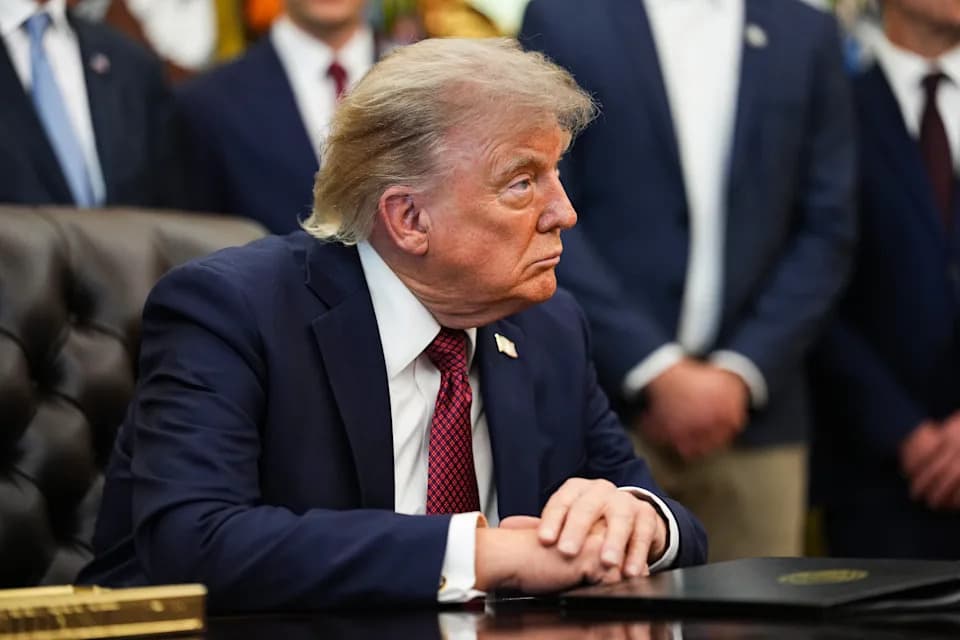
President Donald Trump was asked directly about whether he believed he was threatening war crimes, but he would not answer while speaking in the Oval Office on July 24, 2026. / Eric Lee / Eric Lee/Getty Images
President Donald Trump declined to say whether his public threat to bomb civilian power plants and bridges in Iran would amount to a war crime, then dismissed the question and criticized the reporter’s outlet.
The 80-year-old president was taking questions in the Oval Office when a reporter asked bluntly whether ordering strikes on civilian infrastructure would be considered a war crime.
"You're talking about blowing up civilian power plants and bridges. Much of the civilized world would consider that a war crime. Do you?"
Trump hesitated, then refused to answer directly. "Uhhh, I won't respond to that question," he said, before asking which outlet the reporter represented. When told it was The New York Times, Trump replied, "I figured so; the failing New York Times," and turned away.
Earlier in the week on Truth Social, Trump renewed an explicit threat aimed at Iran’s infrastructure as tensions in the region grew. He wrote:
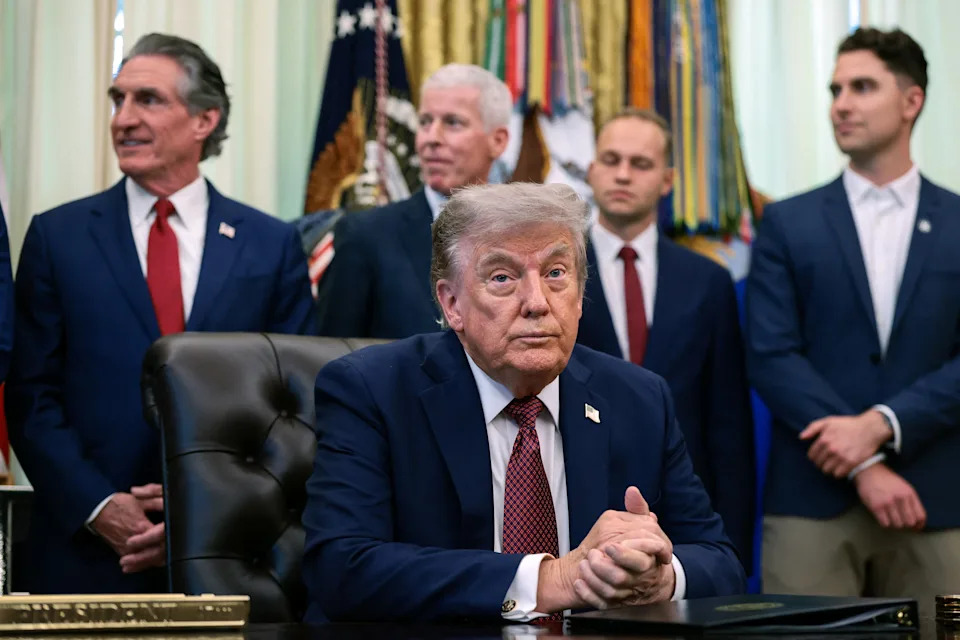
U.S. President Donald Trump looks on as he makes an announcement on American nuclear innovation in the Oval Office at the White House in Washington, D.C., U.S., July 24, 2026. / Evelyn Hockstein / REUTERS
"From this point forward, any time the Islamic Republic of Iran shoots at a ship in the Strait of Hormuz, whether it be by Missile, Rocket, Drone, or any other device or weapon, the United States will bomb and destroy ONE BRIDGE OR POWER PLANT, including those located next to, or in, the Capital City of Tehran."
International humanitarian law distinguishes between legitimate military targets and civilian objects. Deliberately targeting infrastructure used primarily by civilians—such as power plants, hospitals or major bridges—can constitute a war crime when attacks are indiscriminate or disproportionate.
The comments came amid escalating U.S. military action: U.S. forces had carried out 13 consecutive nights of strikes through Thursday, according to CENTCOM, which said the operations aimed to "further diminish the threat Iran poses to civilian mariners and commercial vessels transiting the Strait of Hormuz."
When asked about an exit strategy for the nearly five-month conflict, Trump offered a two-pronged answer that left room for continued escalation. He said a "military exit" could involve sustained or intensified strikes, but called a negotiated deal the "smarter strategy," asserting—without presenting evidence—that Iran wants a deal but is not yet ready.
Trump also claimed negotiations were ongoing, referencing a recent memorandum of understanding that he said would continue talks; that effort, however, reportedly collapsed soon after it was announced.
What’s at stake: Experts warn that explicitly threatening or ordering strikes on civilian infrastructure risks breaching international law, could raise civilian casualties and humanitarian consequences, and would complicate diplomatic and military efforts in the region.
Help us improve.