
SpaceX successfully launched its 13th Super Heavy–Starship test flight, sending a Starship upper stage on a suborbital hop that deployed 20 Starlink satellites while the Super Heavy booster made a harder-than-expected splashdown in the Gulf after fewer engines than planned restarted. Six Starlinks carried cameras to inspect the vehicle's heat shield, and the Starship demonstrated an in-space Raptor restart. The flight gives NASA useful data for its Artemis lunar plans, though the GAO warns of major technical and schedule risks; Blue Origin remains an alternative after a New Glenn test explosion.
SpaceX's 13th Super Heavy–Starship Test: Booster Makes Hard Splashdown, Starship Deploys 20 Starlinks
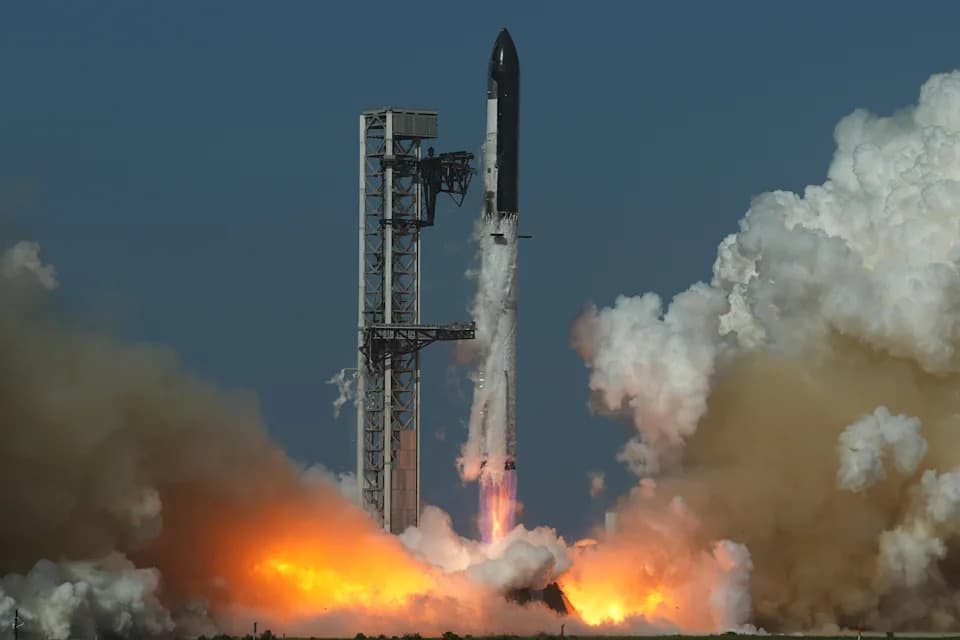
SpaceX's mega rocket Starship lifts off for a test flight from Starbase, Texas, Friday, July 24, 2026. / Credit: Eric Gay / AP Photo
SpaceX launched its 13th Super Heavy–Starship test flight from Starbase, Texas, on Friday at 5:51 p.m. ET. The 397-foot-tall two-stage vehicle, powered by 33 methane-fueled Raptor engines and roughly 16 million pounds of thrust at liftoff, climbed into a mostly clear sky and produced a dramatic display for locals and visitors.
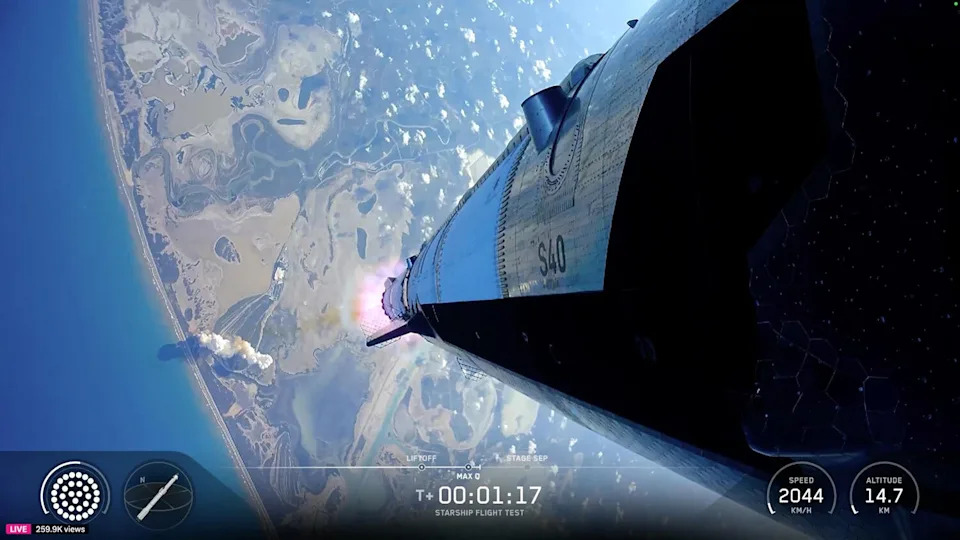
A spectacular view looking down the side of the Super Heavy-Starship a little more than 1 minute after liftoff from SpaceX's Starbase facility on the Texas coast. / Credit: SpaceX
Flight Overview
This mission was the second flight of SpaceX's third-generation (V3) Super Heavy–Starship stack. A July 16 attempt was aborted moments before liftoff after four Raptor engines failed to start correctly; engineers addressed those issues and rescheduled the launch, which was delayed a day by low clouds before proceeding Friday.
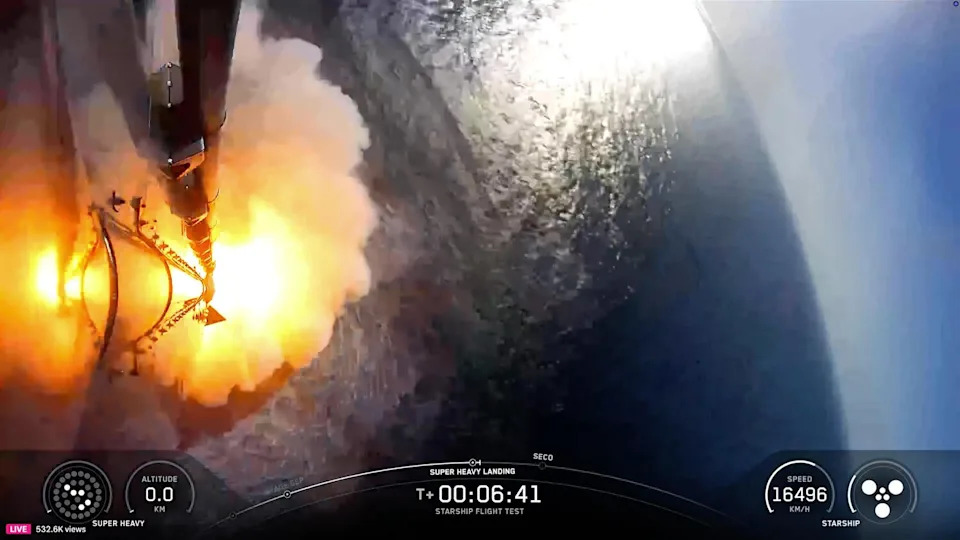
A camera on the first-stage booster captured the moment of splashdown in the Gulf. / Credit: SpaceX
Booster Recovery
The Super Heavy booster appeared to perform normally through ascent and the planned flip maneuver for a tail-first descent after separating from the Starship upper stage. However, fewer engines than planned restarted during descent, and observers reported a "hard" splashdown off the Texas Gulf Coast at a higher velocity than expected. The V3 booster is ultimately designed to return to the launch gantry to be caught by large mechanical arms known as "chopsticks," but early V3 flights have been allowed to end in Gulf splashdowns as a conservative safety measure.
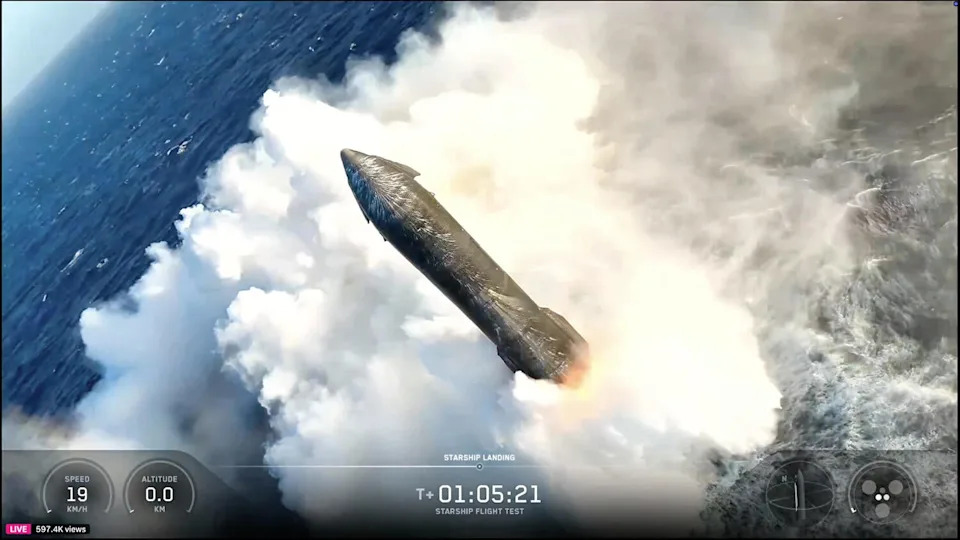
A SpaceX drone captured a dramatic view of the Starship settling to a gentle splashdown in the Indian Ocean an hour and 5 minutes after launch from Texas. / Credit: SpaceX
Upper Stage And Payload
The Starship upper stage performed well: all six of its Raptor engines ran smoothly during ascent, and the vehicle completed a suborbital arc. In space, the upper stage deployed 20 third-generation Starlink satellites one at a time from a Pez-style dispenser near the nose. Six of those satellites carried cameras aimed back at the vehicle to record heat-shield tiles and other hardware for engineering assessment. The Starship also briefly reignited a Raptor engine in space to demonstrate an in-space restart capability that will be necessary for future lunar missions.
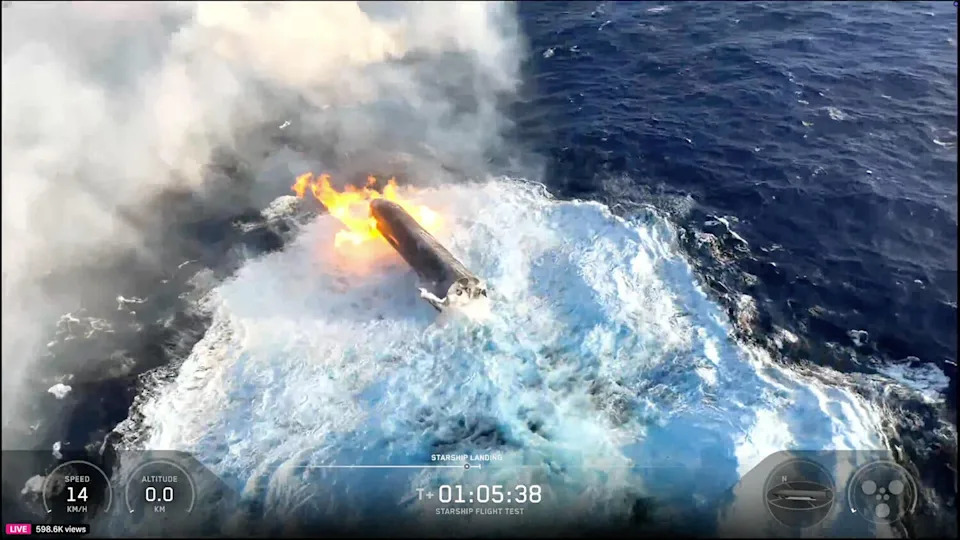
For the first time, the Starship remained fully intact after splashdown, floating serenely on the surface of the Indian Ocean with many of its onboard cameras still working. / Credit: SpaceX
Reentry And Aftermath
After enduring a belly-first reentry heating phase, the Starship flipped upright and conducted a rocket-powered splashdown northwest of Australia about 1 hour and 5 minutes after launch. The Starlink payloads, launched on the same suborbital trajectory, were expected to reenter and burn up in the atmosphere (what SpaceX calls "demise").
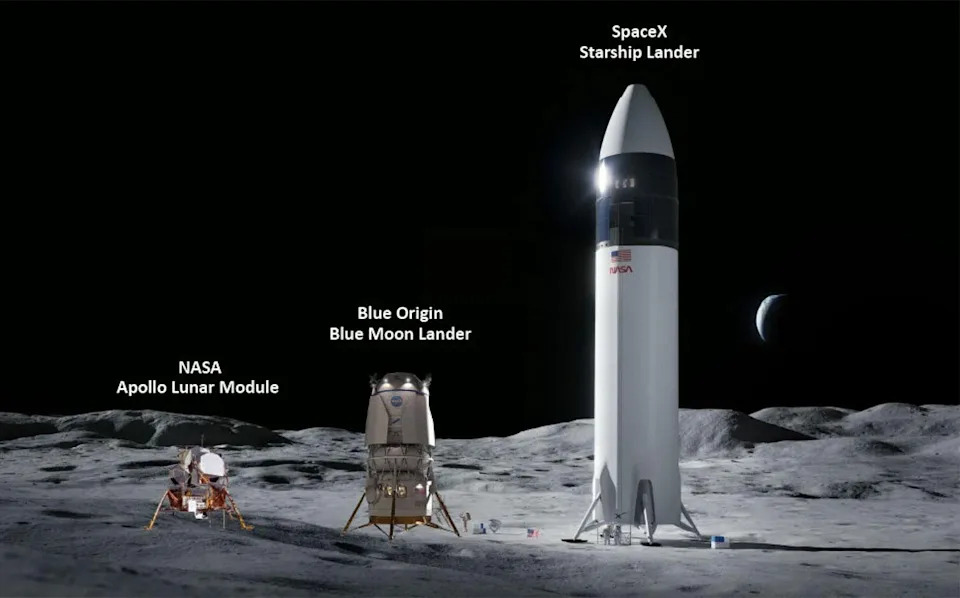
A NASA graphic shows SpaceX's Starship moon lander in comparison with competitor Blue Origin's Blue Moon lander and the Apollo program's long-retired Lunar Excursion Module, or LEM, used to carry six two-man crews to the moon's surface between 1969 and 1972. / Credit: NASA
Implications For Artemis And NASA
The flight yielded useful data for NASA, which plans to use a Starship-derived Human Landing System (HLS) to ferry astronauts to the lunar surface under the Artemis program. SpaceX's concept requires multiple tanker flights—roughly a dozen to 15—to refuel a lunar lander in orbit before it departs for the Moon. To meet a targeted first landing in 2028, SpaceX must accelerate testing and demonstrate reliability for both the booster and the upper stage; to date, no Starship has reached orbit and the moon-lander variant has not yet flown.
Risks, Delays, And Alternatives
A Government Accountability Office report released this week highlighted major technical and schedule risks for SpaceX, calling out cryogenic fuel management for on-orbit refueling, ongoing Raptor engine development, and delays to key milestones such as design reviews and propellant-transfer demonstrations. NASA is hedging by developing alternative options: Blue Origin is building a separate lunar lander to be launched on New Glenn. However, Blue Origin recently suffered a setback when a New Glenn rocket was destroyed during main-engine test firing, heavily damaging its pad and delaying that program.
NASA also plans an interim Artemis orbital test next year to exercise rendezvous and docking procedures. That mission will include an Orion crew of four performing docking tests with a Blue Origin lander and a modified Starship production vehicle (without crew accommodations) to practice the operations needed for future lunar missions.
What Remains: SpaceX must refine booster recovery reliability, complete Raptor upgrades, demonstrate cryogenic propellant transfer in orbit, and increase flight cadence to meet Artemis timelines. The GAO warns the program remains behind schedule and faces significant development challenges.
Help us improve.





















