The Sentencing Project’s report argues that felony-murder laws produce disproportionate and often unjust sentences—sometimes imposing life without parole on defendants who neither intended nor caused a death. These doctrines remain in federal law and 48 states, with some jurisdictions allowing LWOP or even death for unintentional killings. The report recommends repeal or, at minimum, eliminating extreme penalties, narrowing predicate felonies and accomplice liability, and requiring intent-focused standards for murder charges.
When Non-Killers Get Life: How Felony-Murder Laws Produce Extreme, Unjust Sentences
Adani Samat/Envato
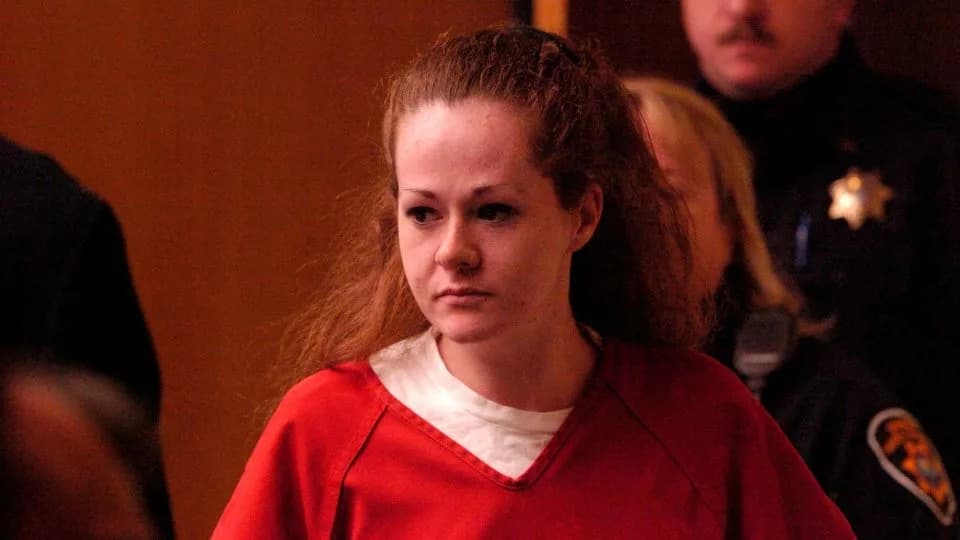
At 19, Jamie Meade took part in a robbery that ended in a death. Although his accomplice fired the fatal shot—later described as an accident—Meade was convicted under the felony-murder doctrine and sentenced to life without parole (LWOP). The shooter pleaded to lesser charges and served a much shorter term; Michigan Governor Gretchen Whitmer commuted Meade’s sentence after he had spent 31 years behind bars.
Meade’s case is a stark example of how felony-murder rules can produce outcomes many see as profoundly unjust. Under these statutes, a person who participates in certain felonies can be treated as a murderer if someone dies during the crime—even when that person neither intended nor caused the death. A new report from the Sentencing Project examines these consequences and notes that the felony-murder rule is a holdover of British common law that persists in federal courts and in 48 U.S. states decades after the U.K. abandoned it.
How the Law Works—and Why Critics Object
The felony-murder doctrine treats a death that occurs during the commission of specified felonies as murder, without requiring prosecutors to prove that the defendant intended to kill or acted with respect to the death itself. That approach can collapse important legal distinctions between intentional murder, reckless homicide, and unintentional killing.
"These laws violate the principle of proportional sentencing," write Sentencing Project researchers led by Nazgol Ghandnoosh. They argue that felony-murder statutes contribute to extreme punishments and run counter to public safety, fiscal responsibility, and justice.
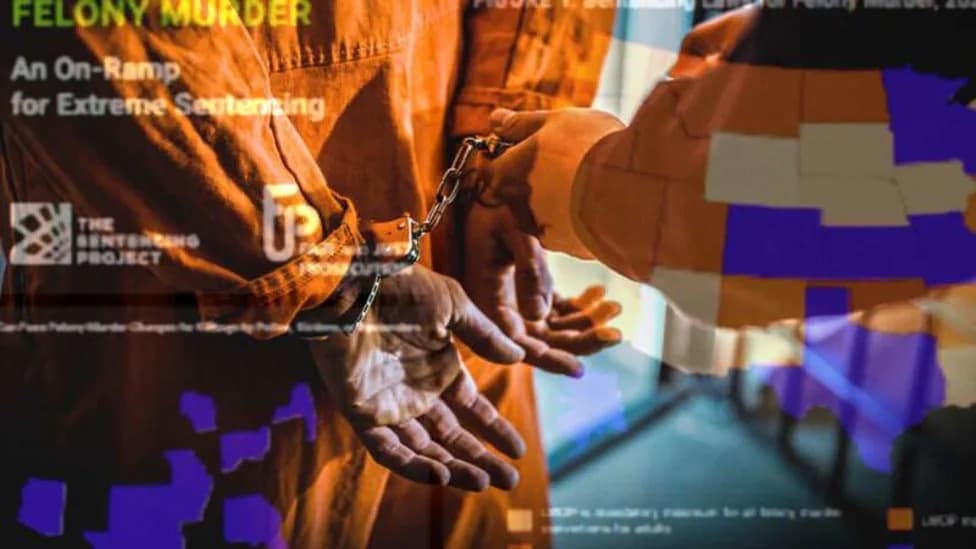
Only Hawaii and Kentucky lack felony-murder statutes. Of the 48 states and the federal system that retain the rule, 10 states (and the federal code) mandate LWOP for any adult convicted of felony murder; 11 impose LWOP for certain felony-murder convictions; 18 permit LWOP; and nine disallow it. The report also highlights that roughly half of U.S. states allow death sentences for unintentional killings under some felony-murder provisions.
Real-World Consequences
Although comprehensive national data are lacking, available figures show felony murder accounts for a substantial share of LWOP cases in some states: as of 2019, a quarter of people serving LWOP in Michigan and in Pennsylvania—more than 1,000 individuals in each state—were serving time for felony murder.
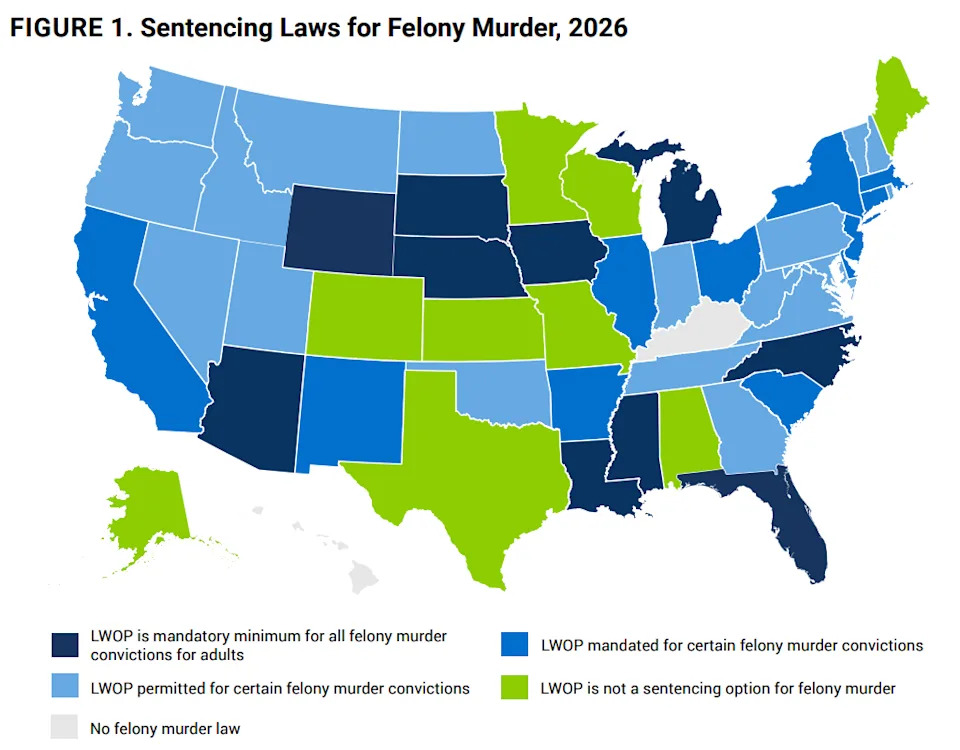
A map showing states' policies on life sentences without parole (LWOP) for felony murder (The Sentencing Project)
The doctrine can also reach defendants who did not pull the trigger or who were not present when a death occurred. For example, accomplices can be charged with murder if an officer or a victim kills during the incident, or when someone supplied drugs to a person who later fatally overdosed. In some jurisdictions, using an assault as the predicate felony has blurred the line between intentional and unintentional homicide—an issue raised during prosecutions like Derek Chauvin’s and in cases such as Jonathan Miller’s, where a rare medical outcome turned a punch into a life sentence for the defendant.
Plea Bargaining, Costs, and Deterrence
Felony-murder charges amplify coercive plea bargaining: facing the risk of a murder charge and its extreme penalties, defendants often plead to lesser offenses that still carry long sentences. Prosecutors do not need to prove intent to kill, making trial outcomes appear especially risky for defendants.
The Sentencing Project also argues these laws waste taxpayer dollars by imposing long incarcerations long after people are likely to reoffend (recidivism drops with age) and provide little additional deterrence, since many offenders do not expect to be caught or act under impaired judgment.
Recommended Reforms
The report urges policymakers to repeal felony-murder statutes and instead prosecute unlawful conduct and unintentional killings as separate offenses. When repeal is not immediately feasible, the authors recommend reforms to reduce injustice and excessive sentences:
- Eliminate the most extreme penalties (death and LWOP) for felony murder.
- Ensure felony-murder sentences are less severe than intentional-murder sentences.
- Bar low-risk predicate felonies—such as routine robbery, burglary, and many drug offenses—from triggering felony murder.
- Prevent assault from serving as a predicate felony, to preserve the distinction between intentional and unintentional killings.
- Exclude killings caused by third parties (for example, police or victims) from felony-murder liability for other participants.
- Narrow accomplice liability to major participants who acted with reckless indifference to human life.
- Adopt intent-focused standards that assess the defendant’s mental state with respect to the killing itself.
The Sentencing Project also calls on prosecutors to reform charging and plea practices that exacerbate racial and ethnic disparities and to allow judicial review of sentences imposed after pleas entered under the threat of felony-murder exposure.
These recommendations aim to restore proportionality and fairness to homicide sentencing while addressing mass-incarceration concerns and racial disparities tied to charging and negotiation practices.
Help us improve.