Overview: Youlin Chen, a 54-year-old Boston seismologist and U.S. citizen, has been detained in China since November 2024 and was charged with espionage in May 2025. His research on North Korean nuclear tests was funded by the U.S. State Department and the Air Force Research Laboratory. Family and advocacy groups report serious health concerns and restricted legal access. The U.S. government designated Chen 'wrongfully detained' in March 2026, and his case was raised with President Xi during a May 2026 diplomatic meeting; advocates hope Xi's planned September 2026 visit to Washington offers another chance for intervention.
Boston Seismologist Detained in China Nearly Two Years — Family Breaks Silence as Espionage Trial Looms
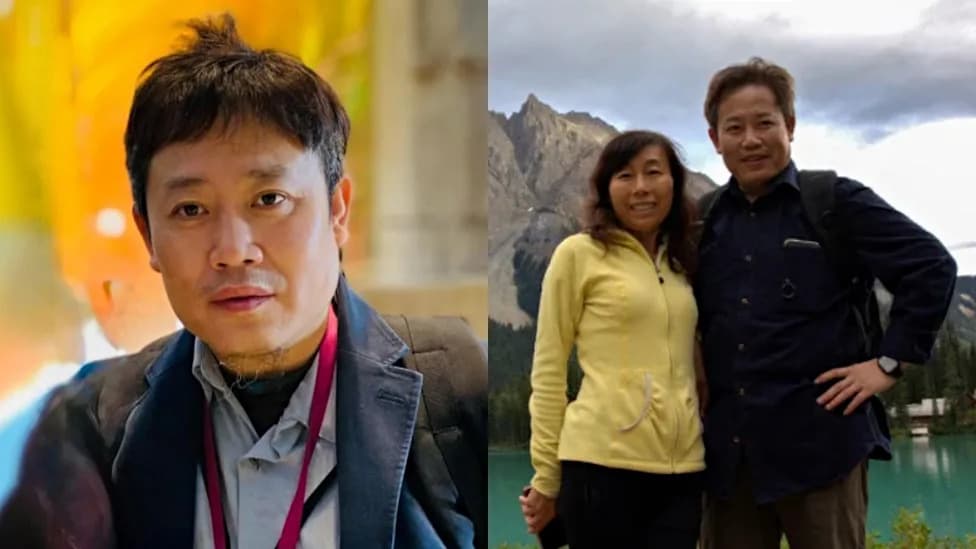
Boston seismologist’s family breaks silence after 2 years of secret detention in China
Youlin Chen, a Boston-based seismologist and U.S. citizen, has been held in China since November 2024 without a public trial, and his family publicly appealed for help last week as Beijing shows no sign of releasing him.
Charges, Research and Detention
Chen, 54, who became a U.S. citizen in 2011, was detained by Chinese state security officers while visiting his parents in Beijing, according to Global Reach, the nonprofit advising his family. Authorities formally charged him with espionage on May 1, 2025 — an accusation that carries penalties ranging from life imprisonment to the death penalty.
His research included a December 2020 paper that analyzed six confirmed North Korean nuclear tests using regional seismic data; some of that data were collected in China. The work received funding from the U.S. State Department and the Air Force Research Laboratory. Chen's wife, fellow seismologist Yufang Rong, says Chinese investigators questioned him more than 100 times about that research and that a lawyer was not permitted to see him until 13 months into his detention.
Health, Family Concerns and Access
'I have not been able to speak with my husband for over 600 days,' Rong said in a statement, adding that she remains deeply concerned about his health.
Global Reach reports Chen has lost as much as 40 pounds in custody. The Foley Foundation has warned that Chen's chronic conditions — diabetes, high blood pressure and high cholesterol — require ongoing care that he has not reliably received while detained.
U.S. Response and Diplomacy
On March 19, 2026, Secretary of State Marco Rubio designated Chen as "wrongfully detained," making him the only American in China to carry that designation and elevating his case among U.S. diplomatic priorities. President Donald Trump raised Chen's detention directly with President Xi Jinping during a May 2026 meeting in Beijing; Global Reach told Newsweek, citing State Department officials, that Xi said he would look into the matter.
There is precedent for diplomatic appeals: the founder of a prominent underground church was released earlier this month after Trump raised that individual's case with Xi during the same visit. Still, China's Foreign Ministry has rejected claims of wrongful detention; spokesperson Lin Jian said there is "no such thing as so-called wrongful detention." Rong told Reuters she expects a conviction and predicted any trial would be held behind closed doors.
Broader Context and Concerns
Weeks before Chen's family spoke publicly, Chinese authorities detained another U.S. national, Min Zin, a University of California, Berkeley doctoral candidate focused on Myanmar, at Kunming airport. Beijing has accused him of espionage without publicly detailing the evidence. Amnesty International researcher Joe Freeman called the circumstances "extremely concerning," citing the lack of disclosed evidence.
Senator Edward Markey (D-Mass.) warned that Chen's treatment could have a chilling effect on academic and scientific exchange, saying the case "may deter other academics" from collaborating with Chinese colleagues — a loss for cross-border research and people-to-people ties.
What Comes Next
With President Xi expected in Washington in September 2026, Chen's family and advocates see another diplomatic window to press for his release or improved consular access before any closed trial proceeds.
This article draws on reporting from Global Reach, Newsweek, Reuters and statements from medical and human-rights organizations advising Chen's family.
Help us improve.