
NATO arrived at the Ankara summit under strain after President Trump publicly criticized allies on burden sharing and defense spending. Secretary General Mark Rutte used steady flattery and deft diplomacy to calm tensions and secure public praise from Trump, even as some members pushed back. Behind the scenes, allies are increasing defense spending and sending more aid to Ukraine, nudging the alliance toward a so-called NATO 3.0 in which Europe assumes greater conventional-defense responsibilities while the US remains the nuclear guarantor. That combination of diplomacy and institutional change could bring Europeanization of NATO closer to reality.
How NATO Quietly Reinvented Itself for Trump: Rutte, NATO 3.0, and the Europeanization of Defense
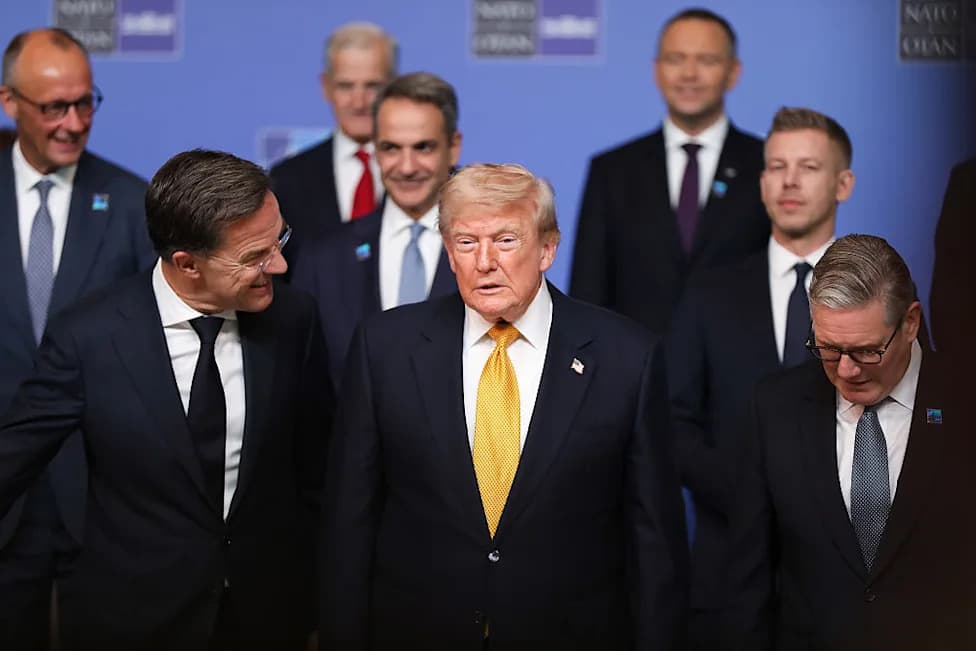
President Donald Trump and NATO Secretary General Mark Rutte at the NATO Summit in Ankara, Turkey, on July 8, 2026. —Klaudia Radecka-NurPhoto via Getty Images
The Ankara summit arrived under tension after President Donald Trump publicly attacked NATO over burden sharing and defense spending. What began as a fraught diplomatic encounter ended with an apparent détente: Trump left praising the alliance while many European leaders quietly embraced deeper military commitments.
Mark Rutte: The Conciliator-in-Chief
NATO Secretary General Mark Rutte played a central role in tempering the summit's worst frictions. A long-serving Dutch prime minister turned consensus-builder, Rutte cultivated a compliment-driven approach to persuade an instinctively transactional U.S. president. His steady praise of the president and deflection of awkward questions helped turn a potentially explosive visit into a series of staged reconciliations.
Rutte's tactics have not been free of controversy. He drew criticism for publicly amplifying US-friendly narratives, including remarks about Italian support for Operation Epic Fury that prompted a rebuke from Rome's defense ministry. At the 2025 Hague summit his effusive language, including a widely noted informal phrase used to flatter the president, made some diplomats uncomfortable. And when he tried to open a discussion framework on the Greenland question, Denmark's defense minister reminded him he had no negotiating authority on Copenhagen's behalf.
The Limits And Levers Of The Secretary General
The office of the Secretary General carries real institutional weight but not sovereign power. Historically, several recent secretaries general have been sitting prime ministers or former ministers, giving the role political gravitas and the ability to engage directly with national leaders and NATO military commanders. The Secretary General oversees the International Staff, coordinates summitry and shapes public messaging, but cannot override national decisions made in Washington, London, Paris, Rome or elsewhere.
That constraint was visible when the United States made the final calls on operations such as the Afghanistan withdrawal and on troop posture in Europe; the Secretary General's role, in practice, is often to frame and manage reactions rather than to dictate outcomes.
From Theater To Structural Change: NATO 3.0
Beyond summit theatrics, the alliance is quietly shifting its practical posture. Influential voices in Washington have urged a rebalancing in which European allies assume primary responsibility for conventional defense in Europe while the United States remains embedded in command structures and continues to provide extended nuclear deterrence.
European and Canadian governments have increased defense budgets and accelerated deliveries of weapons and aid to Ukraine. That trend has prompted commentators to describe a move toward "NATO 3.0" or an unprecedented process of Europeanization within the alliance. If sustained, this evolution could bring NATO closer to an older American aspiration: enabling Europe to shoulder more of its own defense without direct US intervention.
What This Means Practically
Europeanization will likely involve multiple strands: higher national defense spending, deeper integration of European defense planning, ad hoc coalitions and bilateral arrangements that complement NATO, and a more defense-focused European Union. NATO would remain the center of gravity for coordination, but the balance of effort and responsibility could change significantly.
Looking Ahead
NATO's future will be shaped by the interplay of personalities, politics and policy. The Secretary General can smooth tensions and shape narratives, but alliance direction depends on national capitals and, above all, Washington. What the Ankara summit made clear is that diplomacy and institutional realignment have gone hand in hand: flattering rhetoric can create breathing room, but the lasting transformation may come from the material choices allies now make to equip, train and plan together.
Bottom line: Rutte's diplomacy helped defuse a volatile moment, but a deeper shift toward a European-centered conventional defense posture is underway—and that structural change will determine whether NATO's traditional transatlantic bargain endures in a new form.
Help us improve.





















