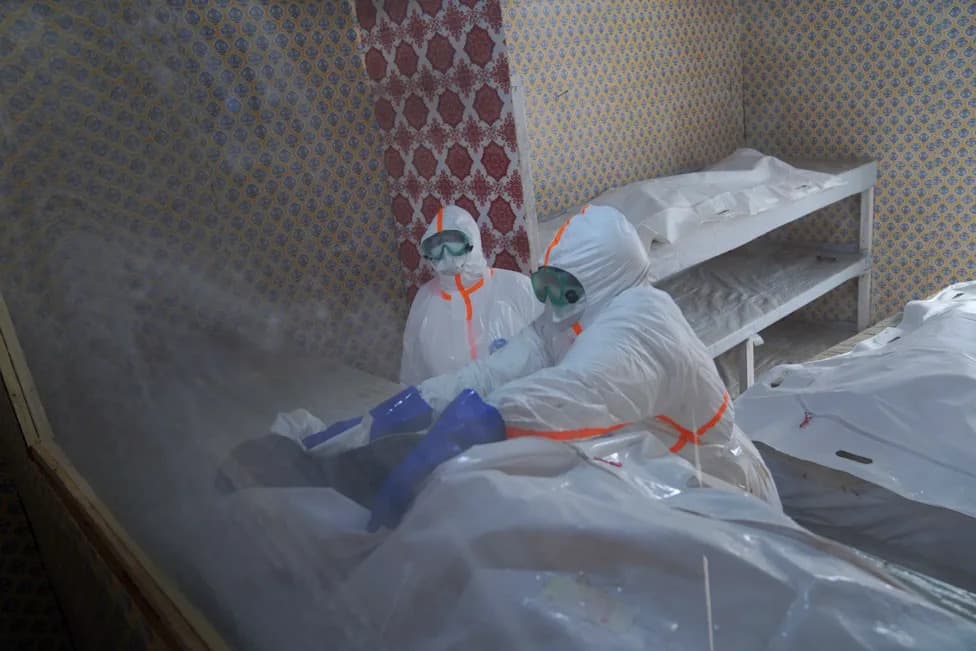
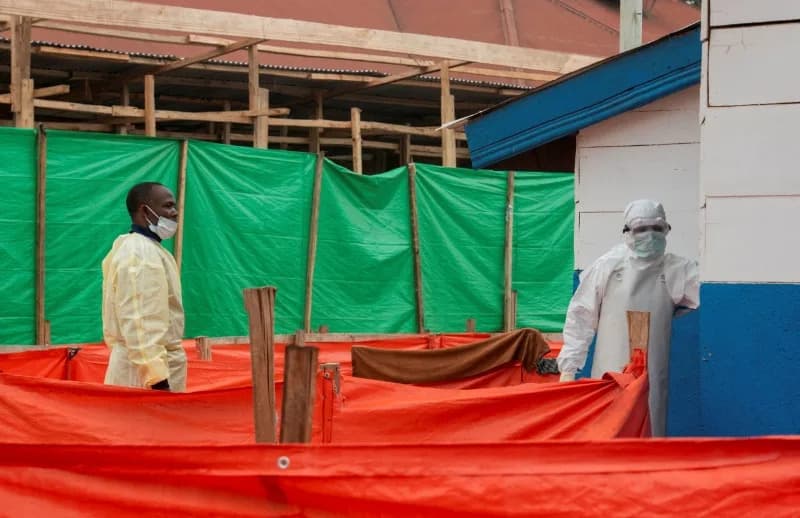
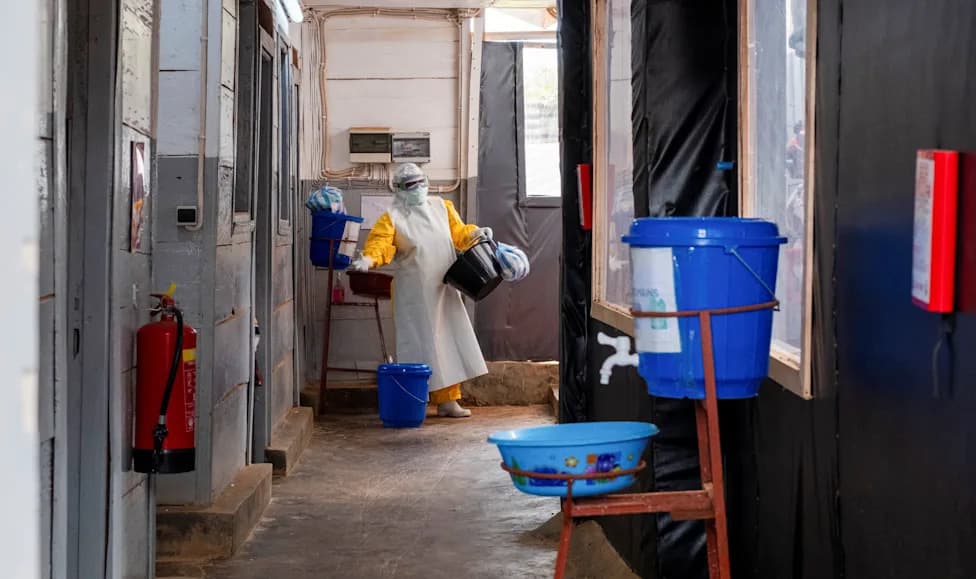
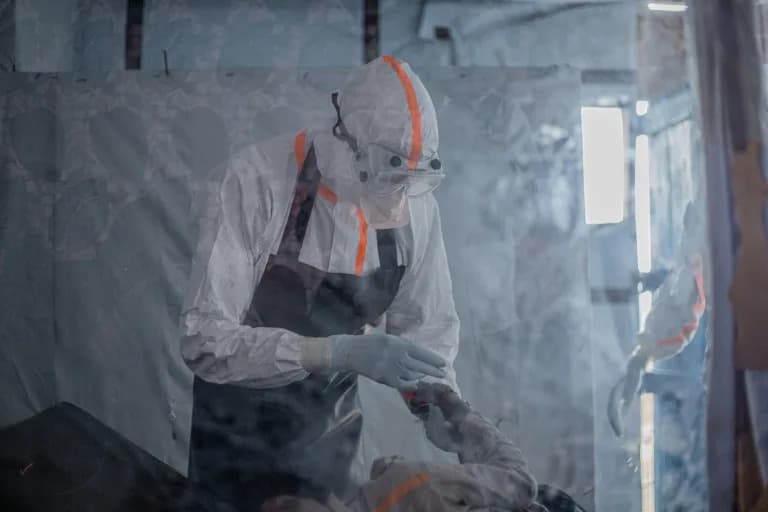
The Ebola outbreak declared on May 15 in the Democratic Republic of Congo is unusually difficult to contain because it is driven by the Bundibugyo strain, for which no approved vaccines or proven treatments exist. Authorities report 2,536 confirmed cases, 1,033 deaths and at least 738 patients in isolation, with nearly 90% of cases in Ituri province. Violence, displacement, community distrust and strikes by local health staff have disrupted surveillance and contact tracing, leaving contact monitoring at about 77% versus a 95% target. The WHO rates national risk as Very High and regional risk as High, while regarding the global risk as low given Ebola's transmission route.
Why Congo’s Fastest-Growing Ebola Outbreak Is Becoming Harder to Contain
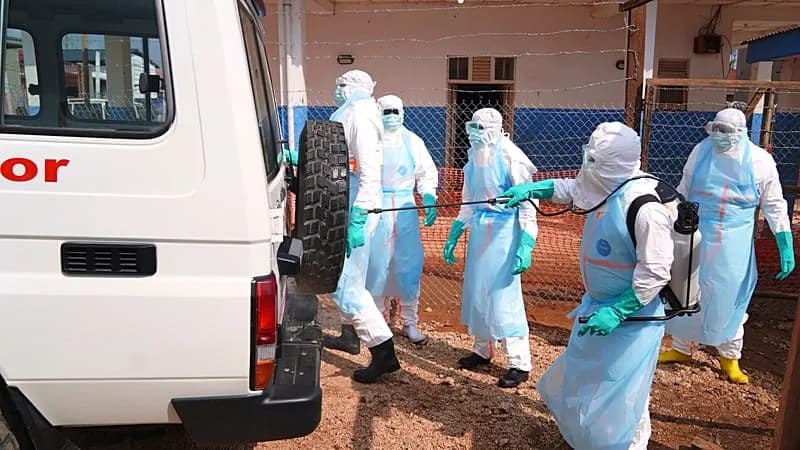
Why the fastest-growing Ebola outbreak in history is becoming more challenging
Congo's public health institute reports that while the recent surge of Ebola cases may be easing, the outbreak has not yet peaked and transmission remains sustained. Short-term fluctuations in case numbers likely reflect reporting delays and ongoing data consolidation rather than a clear decline.
Outbreak At a Glance
The institute's latest update lists 2,536 confirmed Ebola cases and 1,033 deaths, with at least 738 patients currently in isolation or hospital care. The epidemic, declared on May 15, is driven by the Bundibugyo strain of the virus, for which there are currently no approved vaccines or proven treatments, complicating response efforts.
'There's never been an Ebola outbreak that started with so many cases because it was so late to be identified,' said Trish Newport, Emergency Programme Manager for Doctors Without Borders, who has been working in Congo.
Where The Virus Is Spreading
The outbreak is concentrated primarily in remote Ituri province, which accounts for nearly 90% of reported cases. However, infections have also been confirmed in five other provinces, including the large city of Kisangani, and across the border in neighbouring Uganda. Part of the epidemic is unfolding in Goma, a major city and humanitarian hub under rebel influence, which adds a layer of complexity to the response.
Key Challenges Slowing the Response
Violence and insecurity are significant obstacles. Fighting involving the Rwanda-backed M23 rebels and attacks by the Islamic State–linked Allied Democratic Forces, along with mass displacement, have hampered surveillance, contact tracing and safe access to affected communities.
Distrust and misinformation also undermine containment: outreach teams report abuse and accusations that the outbreak is fabricated, and rumours about treatment centres, fear of isolation and resistance to safe burials have led some people to avoid testing or delay care until they are critically ill.
Responders face internal strain as well. After weeks of hazardous work with little or no pay from the government, some local staff at treatment centres — including epidemiologists, case investigators, drivers and gravediggers — have staged strikes and blocked access to facilities.
Surveillance, Risk Assessments and Projections
Nationwide, only about 77% of known contacts are currently being monitored, well below the 95% target officials say is needed to interrupt transmission. Researchers at the US Centers for Disease Control and Prevention modelled a worst-case scenario last month in which the outbreak could approach the scale of the most severe Ebola epidemics recorded.
WHO assesses the public-health risk as Very High inside Congo and High for neighbouring countries such as Uganda, citing cross-border spread and frequent population movement. The agency nevertheless judges the global risk as low, noting that Ebola transmits through direct contact with infected bodily fluids rather than via airborne routes, which limits its potential for global spread compared with respiratory viruses.
The situation remains dynamic. While the WHO says additional imported cases are likely as the outbreak expands, most such cases so far have been detected and contained quickly. Continued security, community trust-building and faster data reporting will be crucial to controlling transmission.
Help us improve.