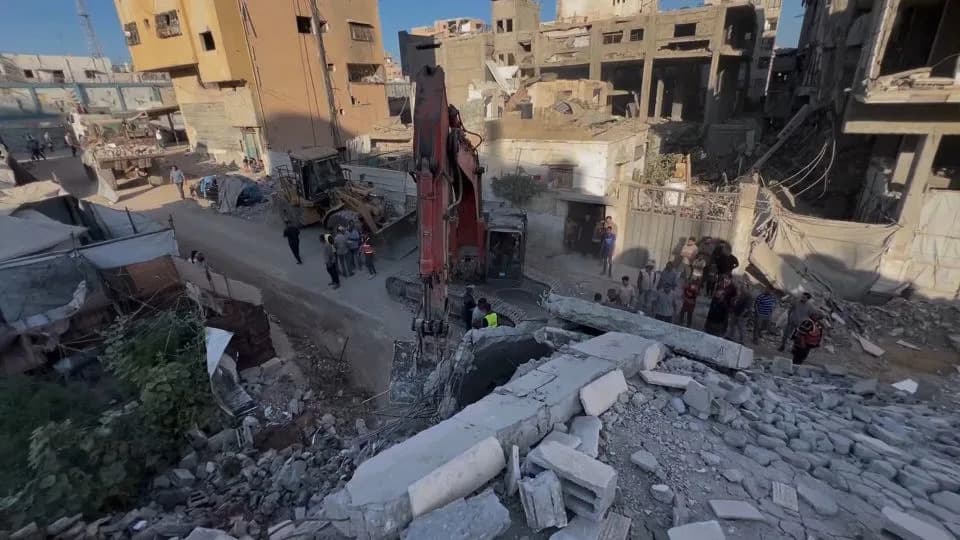
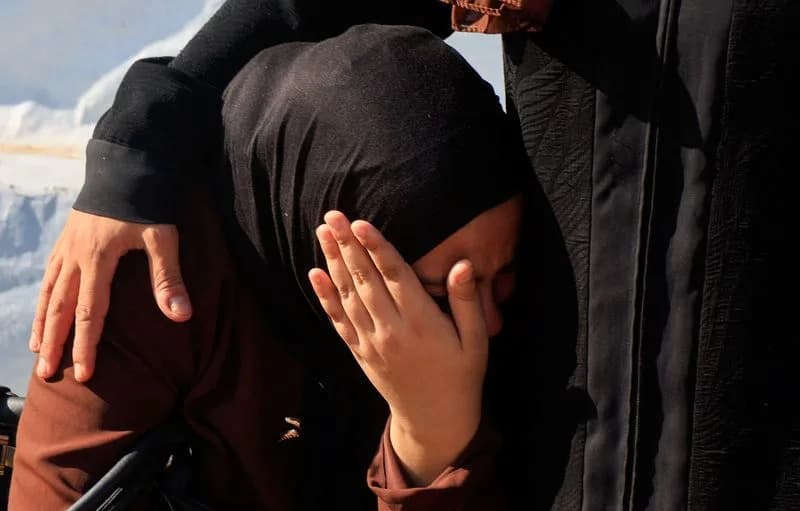
Israeli air strikes hit areas of Gaza after evacuation orders, killing at least two people and destroying homes in Bureij, Jabalia and Gaza City neighbourhoods including Zeitoun and Tal al-Hawa. Local health authorities report more than 73,300 Palestinian deaths since the wider campaign began, with over 1,185 recorded since the October 2025 ceasefire. UN agencies say about 1.4 million people — roughly 67% of Gaza's population — face acute food insecurity, while diplomats press for an international stabilization force and unrestricted humanitarian access.
Israel Strikes Gaza After Evacuation Orders, Killing At Least Two — Homes Destroyed, Humanitarian Crisis Deepens
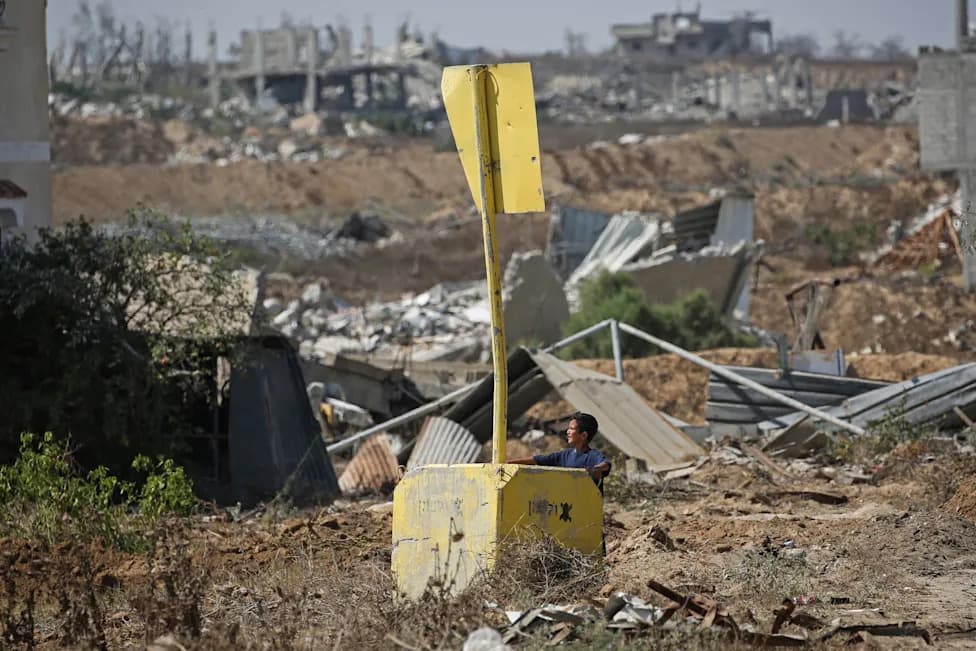
A marker on the 'Yellow Line' drawn by the Israeli military in the east of Deir el-Balah, central Gaza Strip, July 22 [AFP]
Israeli forces issued evacuation orders for several areas in Gaza before launching air strikes that medical sources say killed at least two people and damaged or destroyed numerous homes.
What Happened
Reporters in Gaza City said the military intensified bombardment after warning residents in four separate locations to leave. Al Jazeera correspondent Ibrahim al-Khalili described a troubling pattern in which evacuation warnings were followed by strikes on the very areas people were told to flee. One strike in Gaza City sparked a large fire that Civil Defence crews were still extinguishing, he said.
Air raids destroyed homes in the Bureij and Jabalia refugee camps and hit neighbourhoods in Gaza City including Zeitoun and Tal al-Hawa. A separate strike on a building in the Zeitoun area southeast of Gaza City wounded several people, a source at al-Ahli Hospital told Al Jazeera.
Humanitarian Impact
For many families, an evacuation order means abandoning the only shelter they have found, often at night and in panic, leaving large numbers stranded on the streets with nowhere else to go, al-Khalili reported. Local health authorities say the wider campaign has been devastating: they report at least 73,311 Palestinians killed overall, a total that those authorities have described as part of a genocidal campaign; more than 1,185 of those deaths have been recorded since the October 2025 ceasefire.
UN agencies warn that the humanitarian situation remains acute. A recent multi-agency analysis estimates roughly 1.4 million people — about 67% of Gaza's population — are facing 'crisis or worse' levels of acute food insecurity, down slightly from 1.6 million at the end of last year.
Ross Smith, director of emergency preparedness and response at the UN World Food Programme, told Al Jazeera: 'Things are not fine in Gaza. Continued attention to humanitarian access, funding and operations is critical to reach people where they are.'
Diplomacy And Stabilization Efforts
The strikes come as implementation of a US-backed plan for Gaza — which envisages an international stabilization force and tighter controls over movement in the territory — has stalled. Egyptian Foreign Minister Badr Abdelatty urged the US Secretary of State to accelerate deployment of an International Stabilization Force (ISF) during a meeting on the sidelines of the ASEAN foreign ministers summit in Manila, according to Egypt's Foreign Ministry.
Israeli media reported that about 30 Moroccan officers visited Gaza to prepare for a potential ISF deployment. Morocco has announced plans to send security personnel and to establish a field hospital in Gaza.
The UK Foreign Office has called on Israel to lift restrictions that impede humanitarian relief. A statement from the newly formed UK government said: 'Gaza continues to face crisis levels of food insecurity. Averting famine cannot be the benchmark for success.' The Foreign Office warned that aid constraints are contributing to disease, water shortages and the collapse of health services.
Outlook
Humanitarian agencies stress that sustained access, funding and operational support are needed to prevent further deterioration. Diplomatic efforts to deploy international forces and administrative mechanisms to stabilize Gaza are underway but face logistical and political hurdles.
Help us improve.