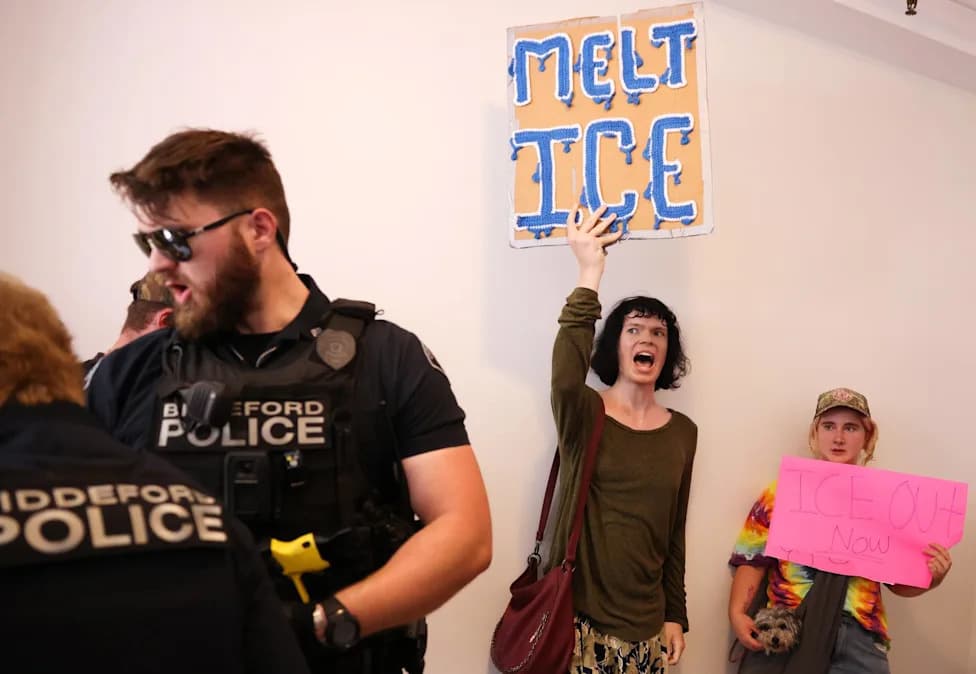
The Waterville City Council on July 21 approved the "Immigration Enforcement Restrictions" ordinance, which bars municipal employees — including police — from cooperating with ICE after months of debate. An amendment to exempt police failed 5-2, and the full ordinance passed 6-1. Supporters, including ILAP, said the measure protects immigrants; opponents cited overlap with state law L.D. 1971 and warned it could risk public safety and a $1.9M federal radio grant. The ordinance now moves to implementation, with practical questions about enforcement and employee guidance outstanding.
Waterville Council Bans City Employees — Including Police — From Cooperating With ICE; Measure Passes 6-1
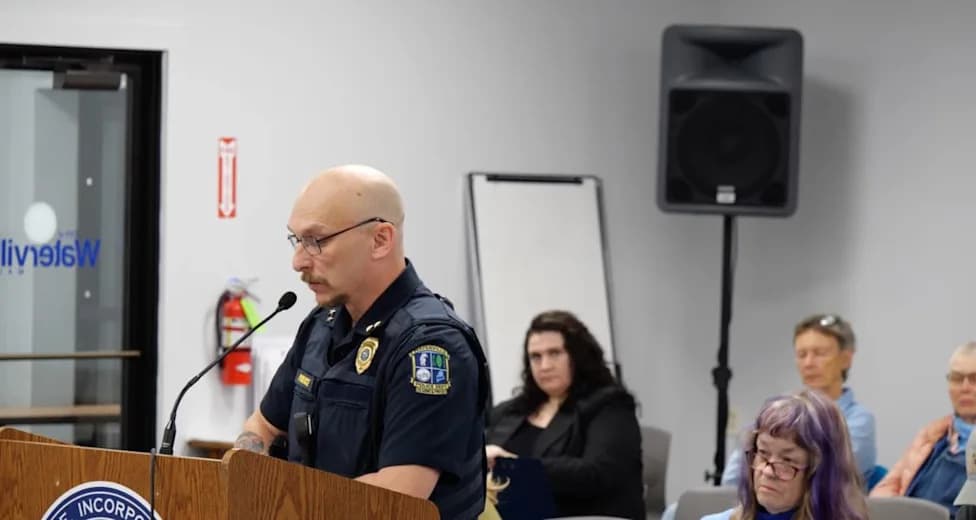
Chief William Bonney of the Waterville Police Department addresses the City Council on April 21, expressing opposition to a proposed city ordinance outlining how local police interact with federal immigration authorities. (Screenshot)
The Waterville City Council approved an ordinance on July 21 that prohibits municipal employees, explicitly including police officers, from cooperating with U.S. Immigration and Customs Enforcement (ICE). The decision caps months of debate, public comment and competing concerns about immigrant protections, public safety and federal funding.
What the Ordinance Does
The ordinance, titled "Immigration Enforcement Restrictions," bars city staff and law enforcement personnel from providing assistance to ICE in most circumstances. Councilors debated whether to exempt police officers; an amendment to do so failed, and the council adopted the original measure.
Key Votes and Timeline
Councilors first considered the measure in April. It passed its initial reading in May by a 6-1 vote. A second reading originally scheduled for June 2 was postponed after a 3-3 tie; Mayor Michael Morris broke that tie to table the item until July 21 so the City Solicitor could recommend revisions.
City Solicitor Bill Lee later proposed an amendment to exempt police officers and apply restrictions only to other municipal employees; that amendment was rejected 5-2. The final ordinance, which includes law enforcement, was then approved by the council 6-1, with Council Chair Brandon Gilley casting the lone dissent.
Public Reaction
The second reading drew heavy public comment and sharply divided testimony. Supporters—including Lisa Parisio, policy director for the Immigrant Legal Advocacy Project (ILAP)—said the measure strengthens protections for immigrants and signals the city's commitment to its diverse community. Parisio told the council,
"There is absolutely no link to being an immigrant and criminality,"and argued that excluding police would "send a clear message" that the city was not doing enough to "protect people from ICE violence."
Several residents described the ordinance as a symbolic but necessary statement of support. One Ward 4 resident said,
"More than anything else, it is a statement when a statement needs to be made."Others raised practical concerns about identifying federal agents and about obeying officials who do not clearly identify themselves.
Opposition and Practical Concerns
Opponents warned the ordinance could create confusion for officers and harm public safety. Waterville Police Chief William Bonney had opposed adopting the ordinance in earlier discussions, saying it was unnecessary and could undermine trust with federal partners. Bonney also cautioned that restricting cooperation could jeopardize federal equipment funding, calling out a $1.9 million federal grant for new radios as a potential risk.
Council Chair Brandon Gilley questioned whether the local ordinance was needed in light of a state law (L.D. 1971) enacted in January that already clarifies and limits how local police may interact with federal immigration authorities. Gilley asked what specific gap the city ordinance would fill beyond the state statute.
What Comes Next
With the ordinance now adopted, Waterville becomes one of the municipalities restricting local cooperation with ICE. The city will need to finalize implementation details and guidance for employees to address practical questions raised during the hearings—especially around identification of federal agents and permissible interactions under both the new local rule and existing state law.
Facts At A Glance: Final vote: 6-1. Amendment to exempt police: failed 5-2. Key local concern: potential loss of a $1.9M federal radio grant. State context: L.D. 1971 (January).
Help us improve.