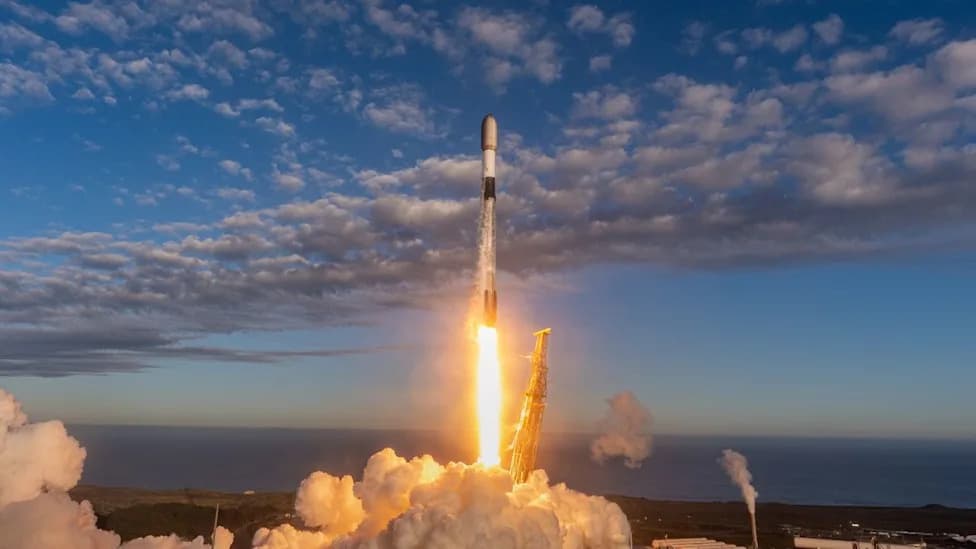
SpaceX is targeting Starship Flight 13 for Thursday, July 23, with liftoff no earlier than 6:45 p.m. EDT (22:45 GMT) inside a 90-minute window. The suborbital test is the second V3 flight this year and will last roughly 1 hour 5 minutes, with both stages aiming for controlled water landings instead of orbit. The vehicle carries 20 Starlink V3 satellites (six with cameras) that are expected to reenter and burn up. SpaceX and independent outlets will stream live coverage; several popular public viewing spots are near South Padre Island and Port Isabel.
When Is SpaceX’s Starship Flight 13 Launching? Full Timeline and How to Watch
Credit: Background: SpaceX, clock added in Canva Pro
SpaceX is preparing to launch Starship Flight 13 from its Starbase facility near Boca Chica Beach, Texas. The test, the 13th Starship flight and the second of the Version 3 (V3) configuration this year, is a suborbital demonstration designed to validate vehicle performance, stage separation, boostback and landing burns, and hardware and software fixes applied after the previous flight.
When To Watch
SpaceX is targeting liftoff on Thursday, July 23, with a no-earlier-than time of 6:45 p.m. EDT (22:45 GMT). The company has a 90-minute launch window, so liftoff could occur anytime between 6:45 p.m. and 8:15 p.m. EDT (22:45–00:15 GMT). SpaceX’s official webcast typically begins 30 minutes before the planned liftoff.
How To Watch
SpaceX will stream the launch on its official channels, including its mission page and its X account. Independent outlets will simulcast that feed. NASASpaceflight will run an extended, independent webcast starting several hours earlier, offering additional camera angles and expert commentary.
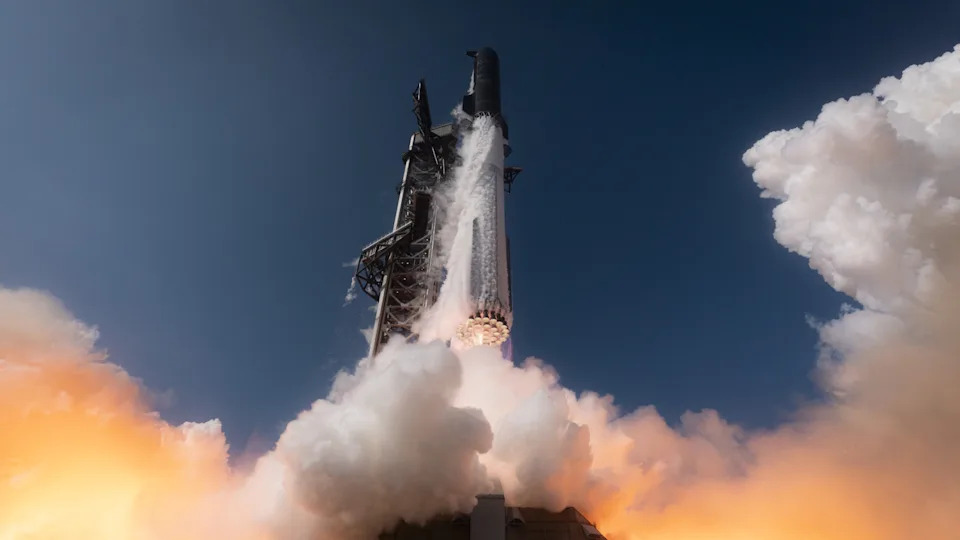
Credit: SpaceX
Where To Watch In Person
There is no official public viewing area, but popular spectator locations include:
- Isla Blanca Park (Cameron County Amphitheater), South Padre Island — roughly 5 miles (8 km) from Starbase, with clear sightlines and restroom facilities.
- Port Isabel shoreline and boat tours — many locals offer boat viewing; Hopper Haus is a nearby bar and grill popular with spectators.
- Highway 48 shoreline — roadside viewing between Brownsville and Port Isabel (6–8 miles / 10–13 km from the pad); limited amenities.
- Rocket Ranch (paid camping/viewing) — about 3.8 miles (6.1 km) from the pad; ticketed viewing locations and transport for one launch attempt.
Mission Overview
Flight 13 is a suborbital test of the V3 Starship system. The mission will not attempt to reach orbit or recover the Ship at the pad. Instead, both stages will aim for controlled descents and water landings: the Super Heavy booster in the Gulf of Mexico off the Texas coast and the Ship upper stage on a suborbital arc with a splashdown targeted in the Indian Ocean off Western Australia.
Starship will carry 20 Starlink V3 satellites on this flight. Because Flight 13 is suborbital, the satellites will not reach orbit and are expected to burn up on reentry; six of the satellites carry cameras to record views of the vehicle and its heat shield for postflight analysis.
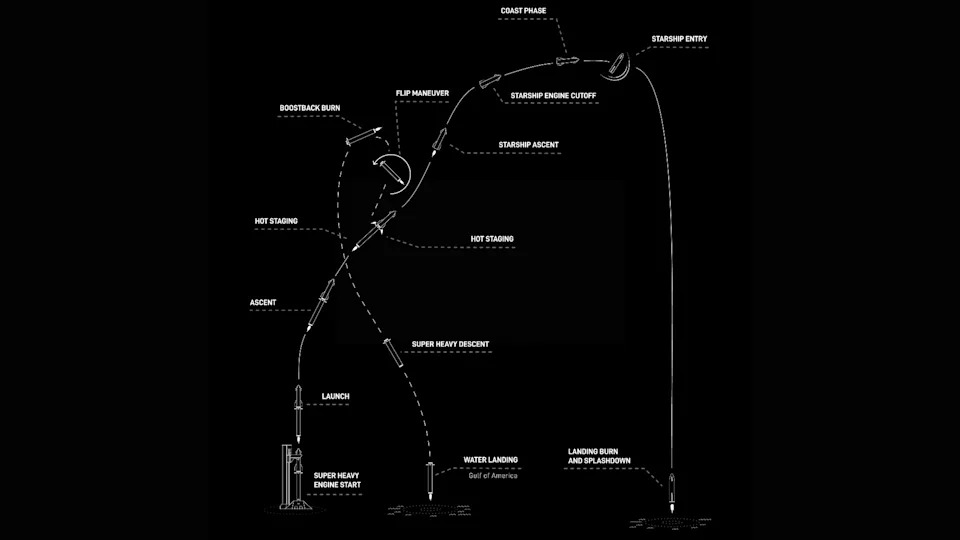
A diagram showing SpaceX's Flight 13 Starship mission profile. The flight should last just over 1 hour. | Credit: SpaceX
What SpaceX Is Testing
- Launch, ascent, and stage separation in V3 configuration.
- Boostback and landing burn performance for the Super Heavy booster, with hardware and software modifications following Flight 12.
- Ship engine relight demonstration, payload-deploy procedures, and thermal/structural behavior during reentry.
Countdown & Flight Timeline (Planned)
The following timeline shows key countdown and flight events. Times are relative to liftoff (T- and T+).
T-0:50:00   Flight director polls for fueling
T-0:37:30   Ship liquid oxygen loading begins
T-0:37:00   Super Heavy liquid oxygen loading begins
T-0:35:25   Super Heavy liquid methane loading begins
T-0:34:48   Ship liquid methane loading begins
T-0:21:30   Raptor engine chilldown begins (Ship & Super Heavy)
T-0:02:50   Super Heavy fueling complete
T-0:02:10   Ship fueling complete
T-0:00:30   Flight Director GO for launch poll
T-0:00:17   Flame deflector activation
T-0:00:03   Booster ignition sequence startup
T-0:00:00   Liftoff

T+00:00     Liftoff
T+00:58     Ship/Super Heavy reach Max Q
T+02:18     Super Heavy main engine cutoff (MECO)
T+02:21     Hot-staging separation / Ship Raptor ignition
T+02:25     Super Heavy boostback burn start
T+03:03     Super Heavy boostback burn shutdown
T+06:27     Super Heavy landing burn start
T+06:53     Super Heavy landing burn shutdown (followed by splashdown)
T+08:05     Starship engine cutoff
T+16:40     Payload-deploy demo starts
T+27:29     Payload-deploy demo complete
T+38:58     Ship engine relight demonstration
T+47:30     Ship reentry begins
T+01:02:23 Ship transonic
T+01:03:01 Ship subsonic
T+01:05:01 Landing burn start
T+01:05:03 Landing flip
T+01:05:12 Landing burn three to two engines
T+01:05:19 Landing burn two to one engines
T+01:05:26 Expected landing sequence complete
Outcomes To Expect
Even with improvements after Flight 12, tests may produce anomalies; Flight 12’s booster failed to execute a controlled splashdown. Flight 13 focuses on validating fixes and gathering data. If the launch is scrubbed for weather or technical reasons, SpaceX will likely try again on a nearby backup date with a similar nighttime window.
Follow SpaceX’s mission page, NASASpaceflight, and major space news sites for live coverage, video, and postflight analysis.
Editor's note: This article was updated to reflect the current target launch date of July 23.
Help us improve.