Archaeologists near Iznik, Turkey, have uncovered an earlier church beneath a later basilica that they identify as the Church of Saint Neophytos—likely the small church where the First Council of Nicaea met in 325 C.E. A 2014 aerial photo led to excavations beginning in 2015, which exposed walls, paving and a column base from the earlier building. Historical records and dating suggest that church was destroyed in a 368 C.E. earthquake, while later artifacts, including items linked to a 729 C.E. Umayyad siege, also emerged from the site.
Archaeologists Uncover Likely Site of the First Council of Nicaea: The Church of Saint Neophytos
Archaeologists Found an Early Christian LandmarkAnadolu - Getty Images
Archaeologists working near modern Iznik in northwestern Turkey have uncovered remains beneath a later basilica that they now identify as the Church of Saint Neophytos—a strong candidate for the modest worship space where the First Council of Nicaea met in 325 C.E.
How the Discovery Began
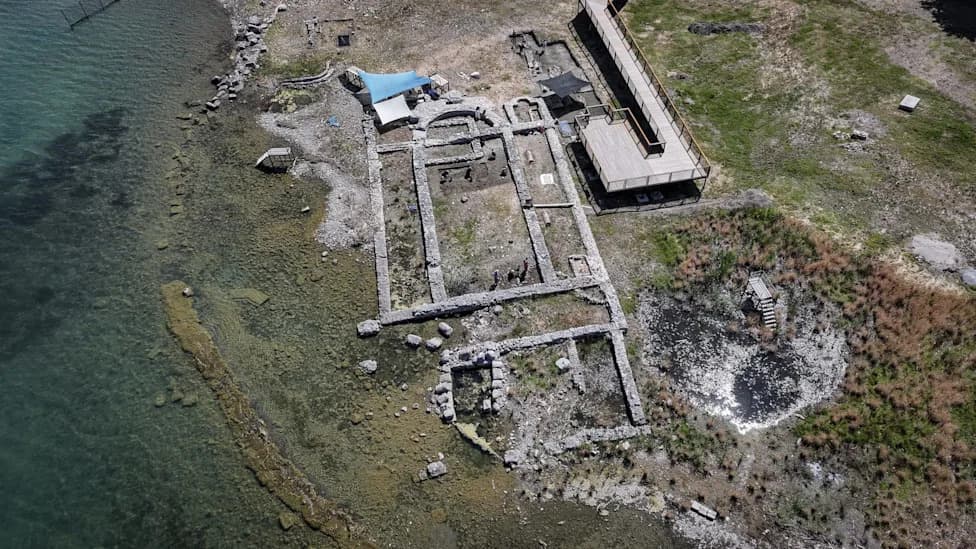
An aerial photograph taken in 2014 revealed a submerged, church-shaped outline in a nearby lake. That image prompted a formal investigation of ruins on the shore and led to excavations beginning in 2015. Field teams focused on subtle architectural clues, including preserved wooden features and flooring that extended beyond the footprint of the later stone basilica.
What the Excavations Found
Recent seasons exposed wall sections, paved floors and a column base belonging to an earlier building that lay beneath a larger stone church. A team led by Mustafa Sahin of Bursa Uludag University identifies these remains as the earlier Church of Saint Neophytos, over which the later Church of the Holy Fathers was erected.
"The church was so small that how so many clergymen fit into this church was a great miracle of God." — Eusebius of Caesarea
This contemporary description of the council's meeting place helps explain why scholars expected a modest worship space rather than a grand palace hall. Initial hopes that the submerged outline in the lake marked the original venue were tempered when a dated stone layer proved too recent; the decisive evidence came from the trenching and uncovering of the earlier structural remains onshore.
Dating and Historical Context
Documentary and archaeological evidence align: sources report the Church of Saint Neophytos was destroyed by an earthquake in 368 C.E.—43 years after the council—while the later Church of the Holy Fathers appears to have been built after about 380 C.E. to commemorate the clergy who participated in the First Council.
Excavations now in their 11th season have also revealed graves and a range of artifacts that help anchor the site chronologically. Finds include a gold ring decorated with palm-tree and sword motifs and a bronze thimble datable to the period of the Umayyad siege of Iznik in 729 C.E. Contemporary accounts even record an Umayyad commander entering the Church of the Holy Fathers during that siege.
Why This Matters
If confirmed, the identification of the Church of Saint Neophytos would strengthen the material link between Iznik and the formative First Council of Nicaea, where roughly 300 bishops gathered under the patronage of Emperor Constantine I and where the Nicene Creed—one of Christianity's defining doctrinal statements—was formulated.
Ongoing excavation seasons and careful dating of structural phases and artifacts are essential to refine the site's chronology and to assess the likelihood that this modest church hosted one of the most influential gatherings in early Christian history.
Help us improve.