
Group Captain Shubhanshu Shukla says sharing three DFRL-adapted Indian desserts — Gajar Ka Halwa, Moong Dal Ka Halwa and Amras — with international crewmates aboard the ISS was a standout moment of his mission. Although he did not taste them in orbit, watching colleagues enjoy Indian flavours was rewarding. The experiment offered useful feedback as India develops more space-ready meals ahead of the Gaganyaan crewed mission.
Indian Astronaut Shares Flavours of Home on the ISS — Space-Ready Halwa and Amras Delight Crew
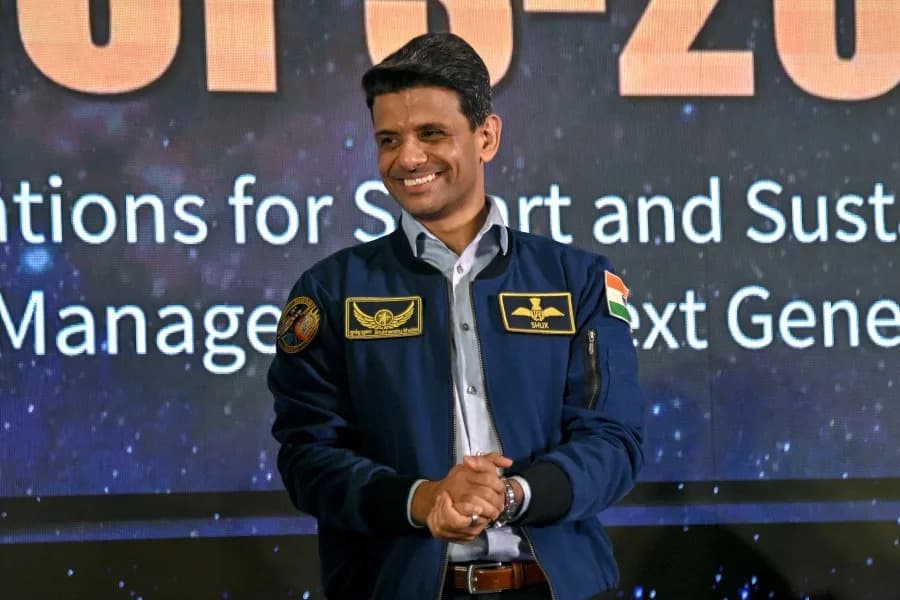
Group Captain Shubhanshu Shukla says one of the most memorable moments of his mission aboard the International Space Station was sharing tastes of India with his international crewmates.
Shukla revealed that the three Indian desserts he took to orbit were not reserved for him. Instead, the space-adapted sweets became a communal treat enjoyed by astronauts from around the world.
'I couldn't eat any Indian food as all three items were shared with my crewmates, and they really enjoyed them,' Shukla told the 'Figuring Out' podcast hosted by entrepreneur Raj Shamani. 'What better way to be in space than sharing food?'
The dishes — Gajar Ka Halwa, Moong Dal Ka Halwa and Amras — were prepared and adapted for spaceflight by the Defence Food Research Laboratory (DFRL). These items underwent qualification to ensure they remained safe, nutritious and stable in microgravity and could survive launch stresses and long-term storage.
Rigorous Testing for Space Food
Food destined for space must pass extensive, multi-year testing that evaluates safety, nutritional content, microbial stability, packaging, and how textures and flavors behave in weightlessness. Shukla noted that only three items were ultimately qualified for his flight, partly because some additional tests could not be completed in time.
Why the Sharing Mattered
Although Shukla did not get to taste those dishes himself while in orbit, he said watching crewmates enjoy the flavors of India made the sacrifice worthwhile. Microgravity can dull the senses of taste and smell, so bold and familiar flavors are often especially welcome on long missions, according to NASA.
After nearly two weeks aboard the ISS, Shukla said he began craving spicier and saltier foods. On his return to Earth, his flight surgeon greeted him with banana chips and bhakarwadi — simple Indian snacks that, after weeks in orbit, tasted especially comforting, according to Business Today.
Shukla, 39, piloted the mission and became the second Indian to travel to space and the first Indian to visit NASA's orbiting laboratory. He is among four Indian Air Force officers shortlisted to fly on India’s planned first crewed mission, Gaganyaan, currently scheduled for 2027.
Practical Benefits for India's Space Food Program
Beyond the personal moments, the culinary experiment provided researchers with valuable, real-world feedback. That input will help DFRL and other teams expand India’s catalogue of space-qualified meals so future Gaganyaan crews can share a broader range of Indian cuisine in orbit.
Help us improve.





















