Environmental groups and former U.S. space officials have asked the FCC to pause approvals for proposed orbital datacenters, warning of large-scale stratospheric pollution and light pollution. A 2023 NOAA flight found metals in stratospheric sulfuric acid aerosols, but scientists say the interactions and long-term effects are poorly understood. Petitioners argue NEPA reviews are required and say company filings lack meaningful environmental mitigation plans.
Orbital 'Datacenters' Could Be 'Catastrophic' for Earth, Experts Warn — FCC Petition Seeks Pause
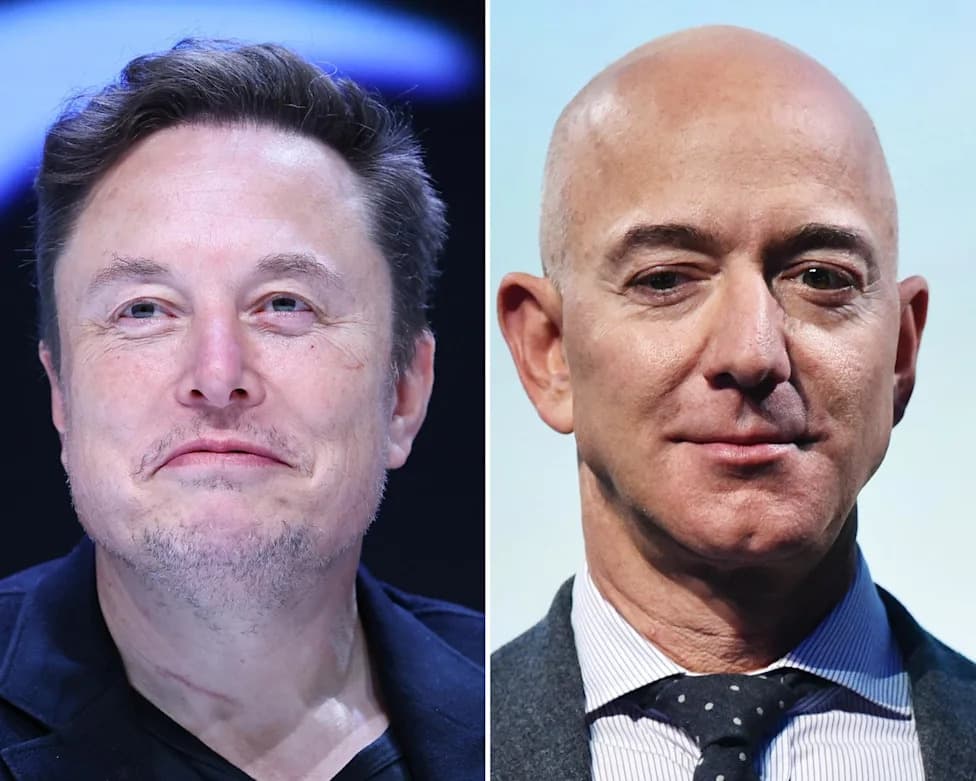
Elon Musk and Jeff Bezos, the chiefs of space companies SpaceX and Blue Origin.Photograph: Getty Images
Tech firms including SpaceX and Blue Origin have proposed launching millions of satellites to host 'orbital datacenters.' Environmental groups and former U.S. space officials warn that the plans could inject unprecedented amounts of pollution into the stratosphere, alter atmospheric chemistry, and produce widespread light pollution — risks described in a petition asking the Federal Communications Commission (FCC) to pause approvals and require environmental review.
The petition and who filed it
The petition, filed with the FCC by Public Employees for Environmental Responsibility (PEER), Earthjustice and DarkSky International, argues that current company filings fail to assess cumulative environmental harms and may violate federal law. The groups urge regulators to apply the National Environmental Policy Act (NEPA) to satellite-constellation proposals so agencies can evaluate impacts, consider alternatives and require mitigation before licenses are granted.
What the science shows — and what remains unknown
Scientists say rockets and satellites emit a mix of pollutants: black carbon (soot), aluminum oxides, rare and heavy metals, nitrogen oxides, chlorine compounds and other byproducts. When satellites are decommissioned and burn up on re-entry, their materials can vaporize and deposit metals in the stratosphere — a delicate atmospheric layer that influences temperature, ozone chemistry and high-altitude aerosols that reflect sunlight.
In late 2023, a NOAA-sponsored stratospheric measurement flight detected metals embedded in sulfuric acid aerosols — particles that play an outsized role in regulating Earth’s temperature and protecting the ozone layer. Researchers warn that interactions among spacecraft-derived metals, naturally occurring metals and sulfuric acid aerosols are "largely unknown," and that the long-term consequences of large-scale satellite emissions remain poorly understood.
How many satellites are coming?
The number of active satellites in orbit has risen rapidly: roughly 1,400 in 2015 to about 15,000 today. Analysts project as many as 100,000 satellites may be in orbit within a decade, not counting additional proposals for orbital datacenters. Companies such as Starlink and Amazon’s broadband constellations already account for thousands of satellites, and new proposals — including one from Cowboy Space Corporation for 20,000 satellites — would add substantially to the total.
Environmental and ecological impacts
Experts warn of multiple potential harms: ozone depletion or altered ozone chemistry, changes to stratospheric aerosols that affect global temperature regulation, deposition of toxic metals, and intensified light pollution that disrupts nocturnal wildlife and obscures the natural night sky. Advocates say artificial skyglow contributes to declines in insects such as fireflies and can harm ecosystems that rely on darkness.
Resource and feasibility concerns
Orbital datacenters would demand substantial amounts of rare metals and complex components, increasing terrestrial mining and supply-chain pressures. Several former federal space officials have also questioned whether large-scale orbital datacenters are technically and economically feasible, even as permitting processes move forward.
Regulatory questions and company disclosures
The petitioners say FCC filings from applicants provide scant detail about environmental mitigations. For example, Cowboy Space’s application reportedly mentions minimizing impacts on the astronomy community but offers little else on pollution or re-entry emissions. SpaceX’s application frames orbital datacenters as advancing humanity’s multi-planetary future while offering only vague commitments to "brightness mitigations." The petition contends none of the applicants have shown how they would mitigate cumulative harms from millions of satellites over decades.
Conclusion
Petitioners urge an immediate pause on new licenses for orbital datacenter proposals until robust environmental reviews are completed, more research is funded to understand stratospheric impacts, and realistic mitigation measures are required. Regulators face a complex choice: weigh potential technological benefits against uncertain but possibly severe harms to the atmosphere, ecosystems and night skies.
"No proponent has provided satisfactory detail to explain how it will mitigate the cumulative environmental harms flowing from the foreseeable operation of more than a million satellites," the petition says.
Help us improve.