Science Corporation has launched its Prima retinal system commercially across Europe after receiving CE certification from DEKRA. The subretinal photovoltaic implant and companion glasses restored an average 25.5 ETDRS letters in a 38‑patient study; 84% regained the ability to read and 80% had at least a 10‑letter gain at 12 months (p < 0.001). Reimbursement and site activations are underway, with the first commercial implant expected in Germany.
Science Corporation Begins European Rollout of Prima Retinal System After CE Mark
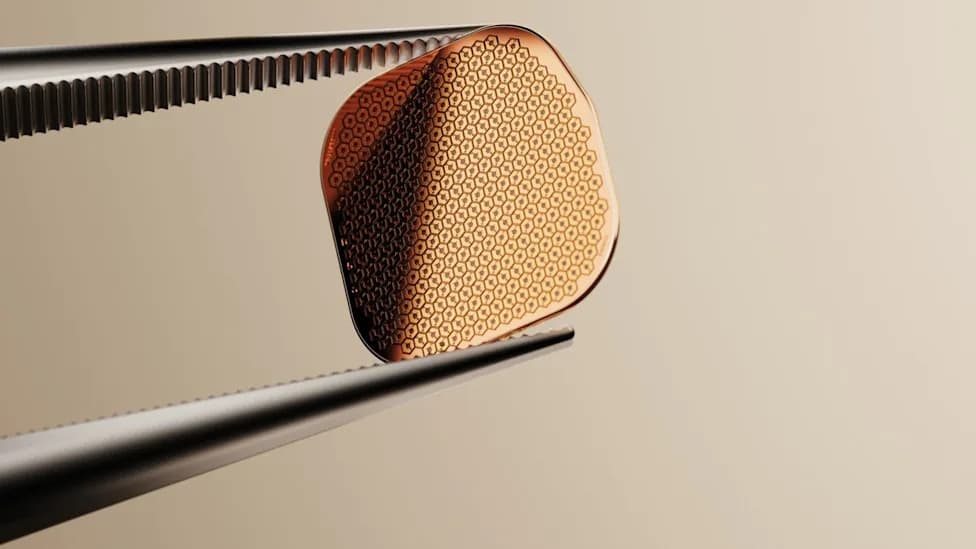
The PRIMA implant held between tweezers. Credit: Science Corporation / Business Wire.
Science Corporation has started commercial distribution of its Prima retinal system across Europe after receiving CE certification from DEKRA under the EU Medical Device Regulation. The approval allows the company to offer the device in 30 European countries.
What Prima Does
Prima is a thin subretinal photovoltaic implant paired with smart glasses that project near‑infrared light onto the implant. The implant converts that light into electrical stimulation to activate remaining retinal neurons, restoring functional central vision for people with geographic atrophy (GA) caused by age‑related macular degeneration (AMD). The glasses include a magnification feature to aid letter recognition and support wireless integration with the implant.
Clinical Evidence
In a multi‑centre study of 38 participants treated at 17 clinical sites across five countries, Prima produced clinically meaningful gains in vision. The trial reported an average improvement of 25.5 letters on the ETDRS chart—more than five lines. After 12 months, 84% of participants regained the ability to read letters, numbers and words, and 80% achieved at least a 0.2 logMAR (10‑letter) improvement. The results were statistically significant (p < 0.001). Importantly, surgical implantation under the atrophic macula did not cause a decline in mean natural vision in the study cohort.
Regulatory And Commercial Rollout
Science Corporation said it is progressing country‑specific reimbursement applications and activating clinical sites across Europe, with the first commercial surgical implant expected in Germany. In the United States, the company is in discussions with the FDA and has already received Breakthrough Device and Humanitarian Use Device designations for Prima. In April 2024 the company acquired intellectual property and related assets for the Prima retinal implant from French bioelectronics firm Pixium Vision.
Why It Matters
AMD‑related GA affects more than five million people worldwide and gradually destroys central photoreceptors, often leaving patients unable to read, recognise faces or maintain independence. Prima offers a new restorative option for patients who currently have limited or no effective treatments to recover central vision.
Key takeaway: Prima is now commercially available in Europe after CE clearance, backed by clinical data showing substantial vision gains in a cohort of patients with GA due to AMD.
Help us improve.