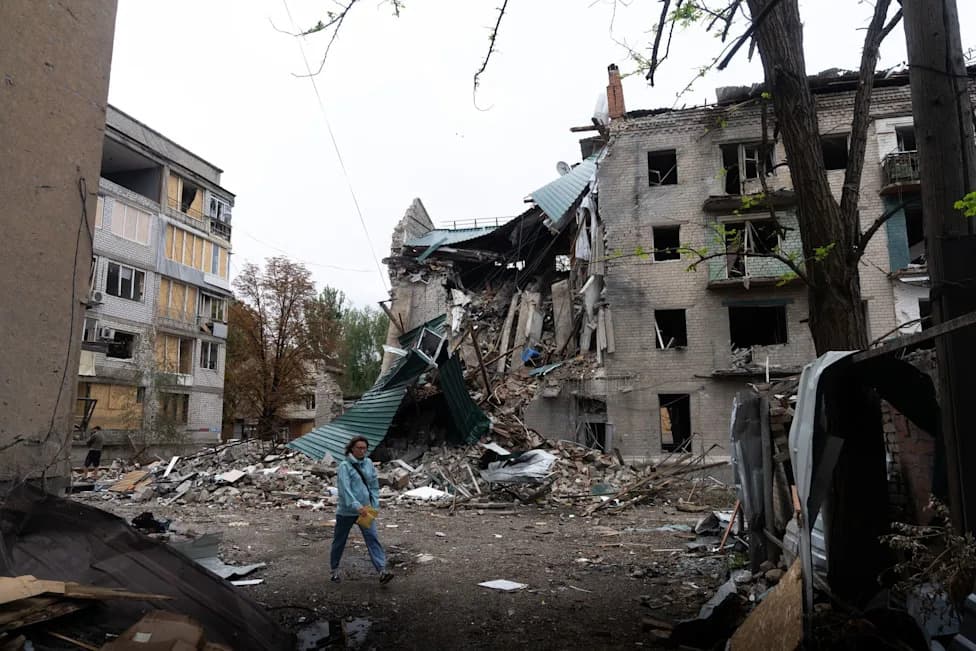
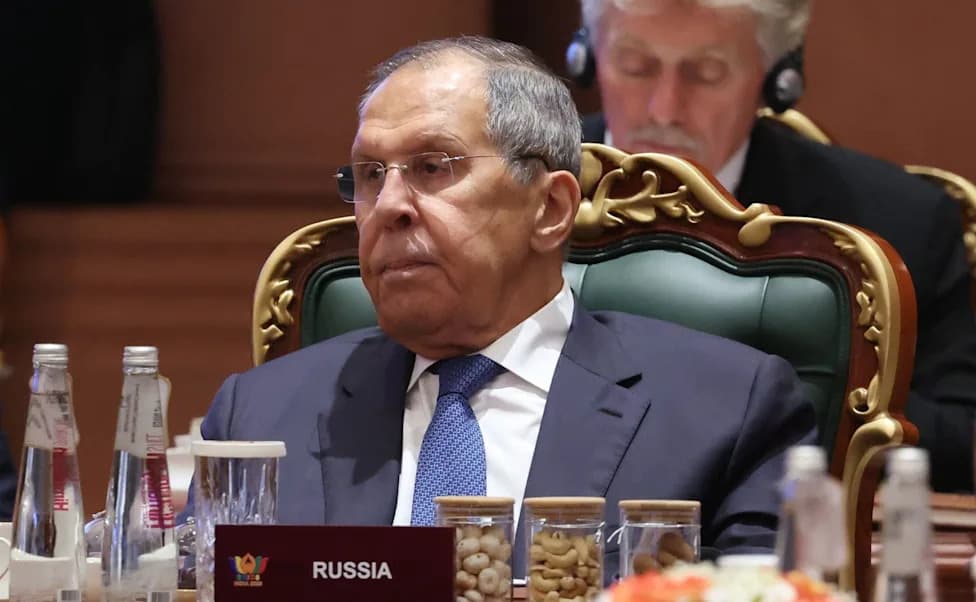
U.S. Senator Marco Rubio will meet Russian Foreign Minister Sergey Lavrov in Manila to explore whether Washington can re-engage as a broker to help end the war in Ukraine. Rubio said the U.S. remains open to playing a role "if that opportunity presents itself," acknowledging mediation efforts had slowed as focus shifted to tensions with Iran. The meeting, on the sidelines of the ASEAN summit, will also cover broader cooperation, recent South China Sea escalations and concerns over a Chinese submarine missile test.
Rubio Seeks to Reopen U.S. Role in Ukraine Peace Talks During Manila Meeting With Russia's Lavrov
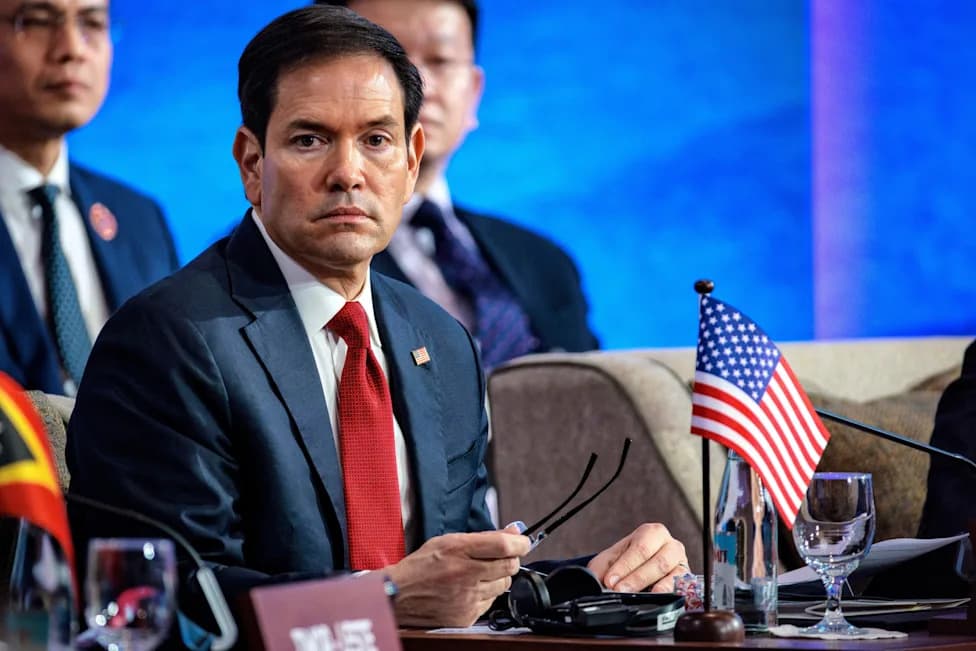
U.S. Secretary of State Marco Rubio attends the 33rd ASEAN Regional Forum (ARF), part of the Association of Southeast Asian Nations (ASEAN) Foreign Ministers' Meeting in Pasay, Metro Manila, Philippines Thursday, July 23, 2026. (Ezra Acayan/Pool Photo via AP)(Ezra Acayan/Pool Getty Images via AP)
U.S. Senator Marco Rubio is scheduled to meet Russian Foreign Minister Sergey Lavrov on Thursday in Manila, where he is expected to probe whether Washington can re-engage as a broker to help end the war in Ukraine.
The meeting will take place on the sidelines of a gathering of Southeast Asian foreign ministers, making it one of the higher-profile bilateral encounters at the Association of Southeast Asian Nations (ASEAN) summit in Manila. Rubio’s talks with Lavrov come as indirect mediation efforts have slowed and attention has shifted to heightened tensions involving Iran.
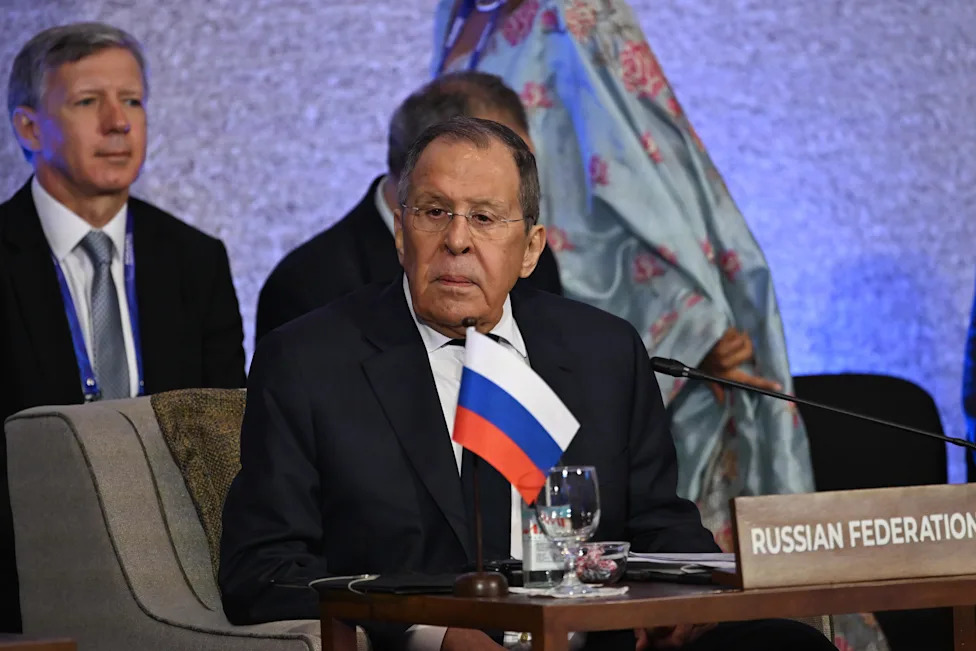
Russia's Foreign Minister Sergey Lavrov attends the ASEAN Regional Forum (ARF), part of the Association of the Southeast Asian Nations (ASEAN) Foreign Ministers' Meeting in Pasay, Metro Manila, Philippines Thursday, July 23, 2026. (Brendan Smialowski/Pool Photo via AP)(Brendan Smialowski/Pool AFP via AP)
U.S. efforts to facilitate talks on the Russia-Ukraine war have eased after previous indirect talks stalled. Renewed exchanges of strikes between the U.S. and Iran followed the collapse of an interim ceasefire, further complicating the diplomatic landscape.
Rubio told reporters in Manila that he plans to raise the conflict in Ukraine with Lavrov and that the United States would be open to playing a role in ending the war "if that opportunity presents itself." He acknowledged that mediation efforts "have kind of fallen off a little bit over the last few months" but said the meeting will explore whether there is an opening to restart talks.
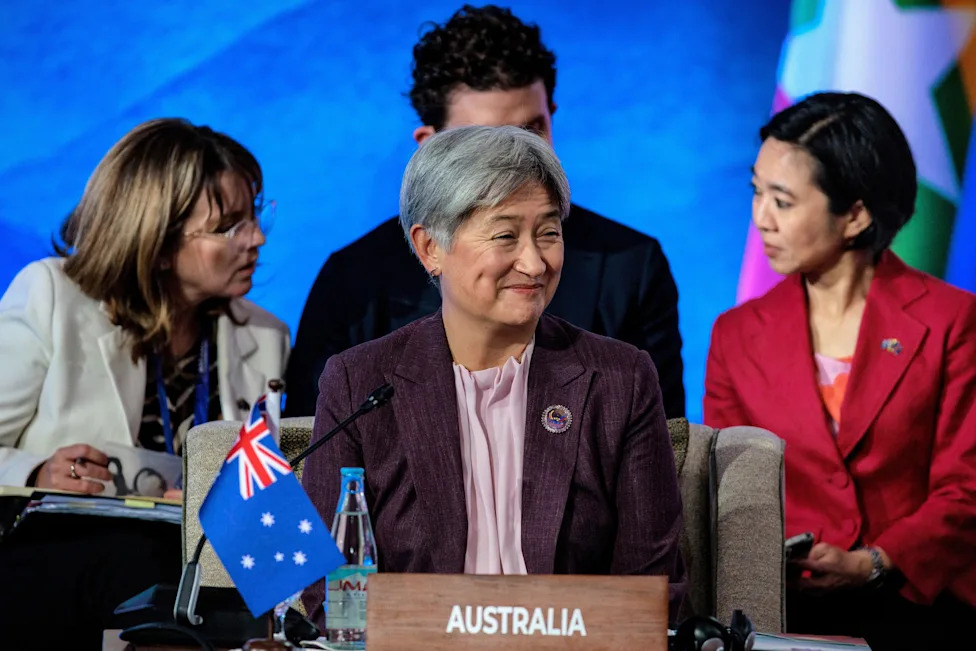
Australian Foreign Minister Penny Wong, center, attends the 33rd ASEAN Regional Forum (ARF), part of the Association of Southeast Asian Nations (ASEAN) Foreign Ministers' Meeting in Pasay, Metro Manila, Philippines Thursday, July 23, 2026. (Ezra Acayan/Pool Photo via AP)(Ezra Acayan/Pool Getty Images via AP)
“We have to have a relationship with the Russian government, even though we have areas of disagreement,” Rubio said, noting the two countries are the world’s largest nuclear-armed powers.
Lavrov, speaking to reporters at the ASEAN meeting, said he would ask Rubio about recent statements by U.S. President Donald Trump suggesting a settlement may be near.
“I will ask Marco Rubio about it tomorrow,” Lavrov said.
Expectations for renewed discussions come as Ukraine has made notable progress this year, even as internal rifts among defense leaders and a major government reshuffle under President Volodymyr Zelenskyy pose challenges to Kyiv’s momentum.
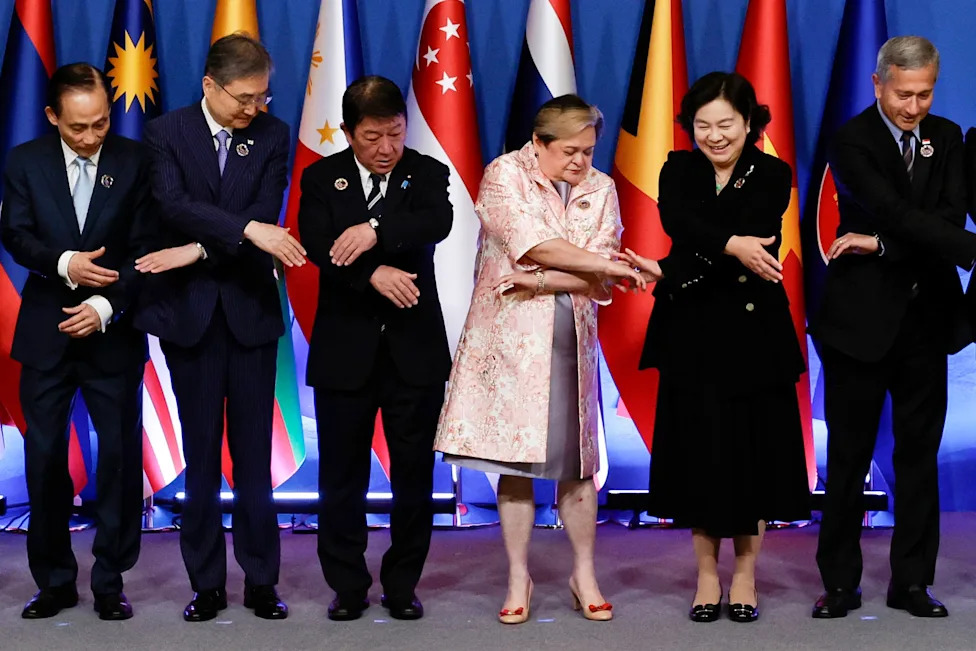
From left, Vietnam's Foreign Minister Le Hoai Trung, South Korean Foreign Minister Cho Hyun, Japan's Foreign Minister Toshimitsu Motegi, Philippine Foreign Secretary Theresa Lazaro, China's Vice Minister of Foreign Affairs Hua Chunying and Singapore's Foreign Minister Vivian Balakrishnan prepare to link arms for a group photo during the 27th Assocation of Southeast Asian Nations (ASEAN) Plus Three Foreign Ministers' Meeting in Pasay City, Metro Manila, Philippines Thursday, July 23, 2026. (Rolex Dela Pena/Pool Photo via AP)(Rolex Dela Pena/Pool EPA via AP)
Rubio said the meeting would not be limited to Ukraine. He intends to explore other potential areas of U.S.-Russia cooperation, reflecting a broad agenda many foreign ministers have raised in side meetings during ASEAN.
Regional Tensions and Other Meetings
Australian Foreign Minister Penny Wong reiterated Canberra’s alarm over a recent Chinese navy test-launch of a missile from a nuclear-powered submarine in the region, saying it "came with too little information and notification, including to the Philippines — over which the missile flew — and Pacific nations, near where the missile landed."
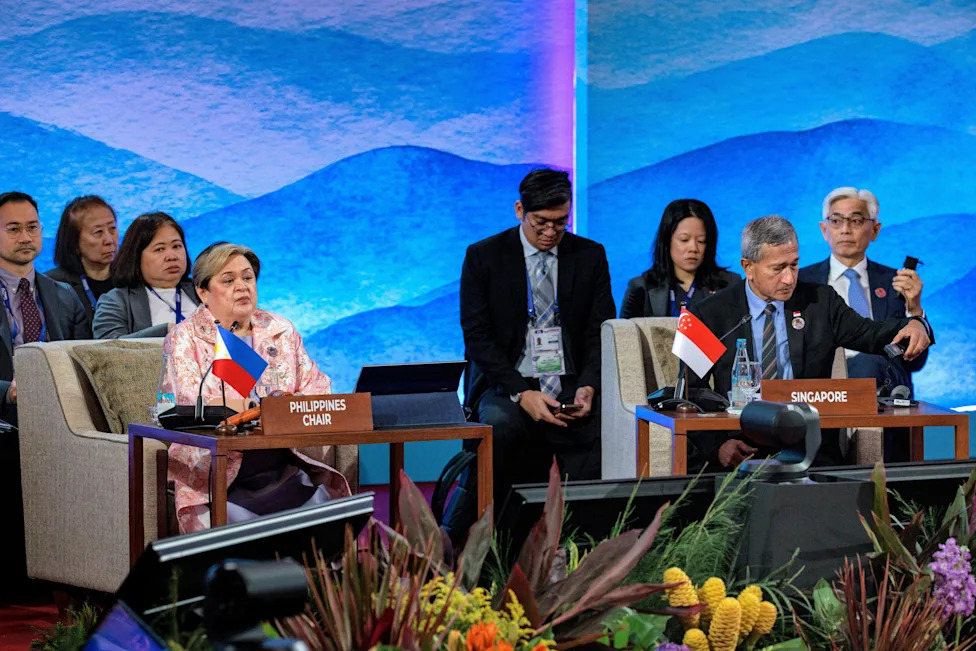
Philippines Foreign Secretary Theresa Lazaro, front left, and Singapore Foreign Minister Vivian Balakrishnan, front right, attend the 33rd ASEAN Regional Forum (ARF), part of the Association of Southeast Asian Nations (ASEAN) Foreign Ministers' Meeting in Pasay, Metro Manila, Philippines Thursday, July 23, 2026. (Ezra Acayan/Pool Photo via AP)(Ezra Acayan/Pool Getty Images via AP)
“It comes in the context of a rapid military build-up of China’s nuclear arsenal without the transparency or reassurance the region expects,” Wong said, calling the test "provocative and destabilizing."
China defended the launch as part of annual exercises and said it provided appropriate notice to countries in the area.
Rubio also held lengthy meetings in Manila with Chinese Foreign Minister Wang Yi and Indian External Affairs Minister Subrahmanyam Jaishankar. He said he and Wang discussed a recent altercation between Chinese and Filipino forces at a disputed shoal in the South China Sea — an incident Rubio described as "escalatory."
“Those need to be managed very carefully, because obviously, a conflict — be it economic or otherwise — between the U.S. and China would have a dramatic global impact,” Rubio said.
The Trump administration has criticized China’s assertive actions in the South China Sea as disadvantaging smaller claimant states such as the Philippines. Taiwan and ASEAN members Vietnam, Malaysia and Brunei have also been involved in frequent maritime standoffs.
ASEAN foreign ministers discussed the territorial disputes and welcomed progress in long-running negotiations between China and the regional bloc on a proposed non-aggression pact, or code of conduct, that both sides hope to finalize this year. The pact is intended to reduce the risk of a major conflict in these strategic waters that could draw in outside powers.
Associated Press journalists Haruka Nuga in Bangkok and Fu Ting in Washington contributed to reporting on this developing story.
Help us improve.