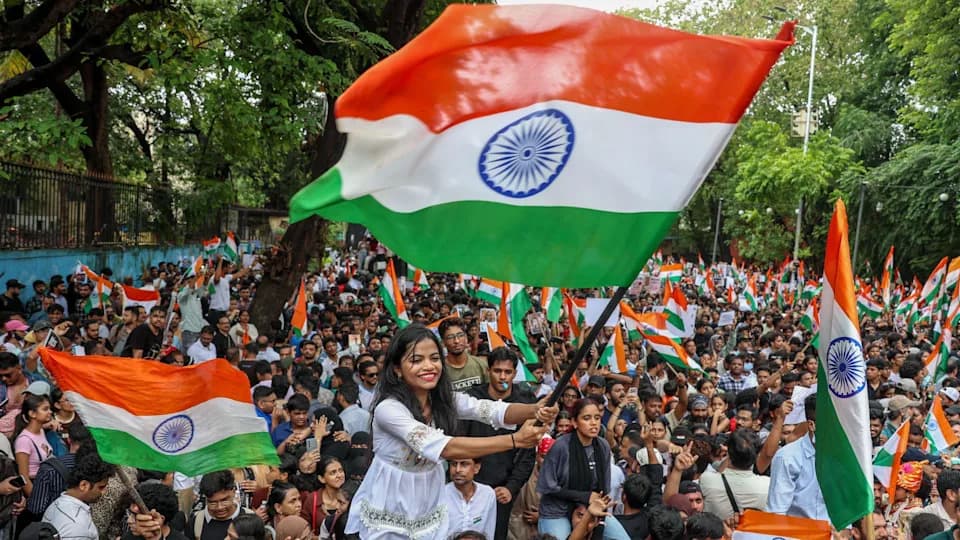
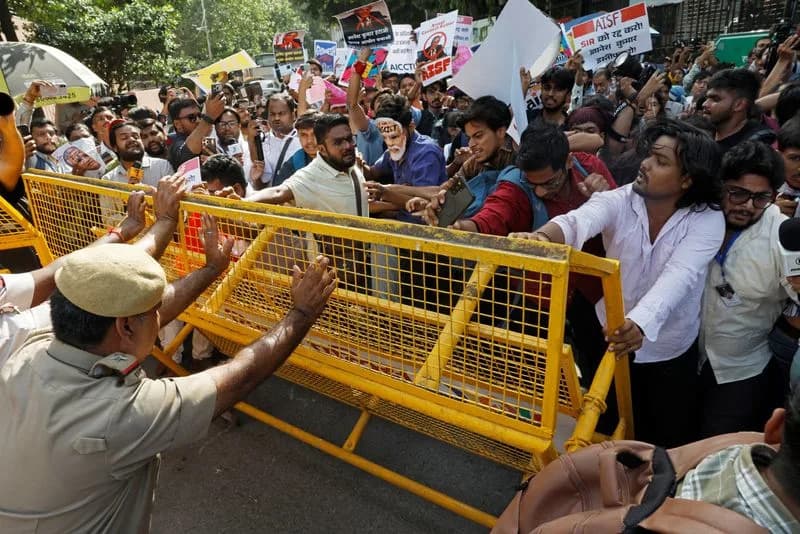
Tens of thousands joined a CJP march in Delhi demanding the resignation of Education Minister Dharmendra Pradhan amid alleged exam leaks. Police used tear gas and baton charges and authorities suspended mobile internet near the protest site. Young demonstrators documented the unrest with reels, "fit checks" and memes — mixing humour with fear as both a coping mechanism and a form of witness. Experts say this blend of online culture and street protest reflects how a generation raised on the internet experiences politics.
Delhi Crackdown Sparks Memes: Youth Turn 'Fit Checks' and Reels Into Defiant Recordings
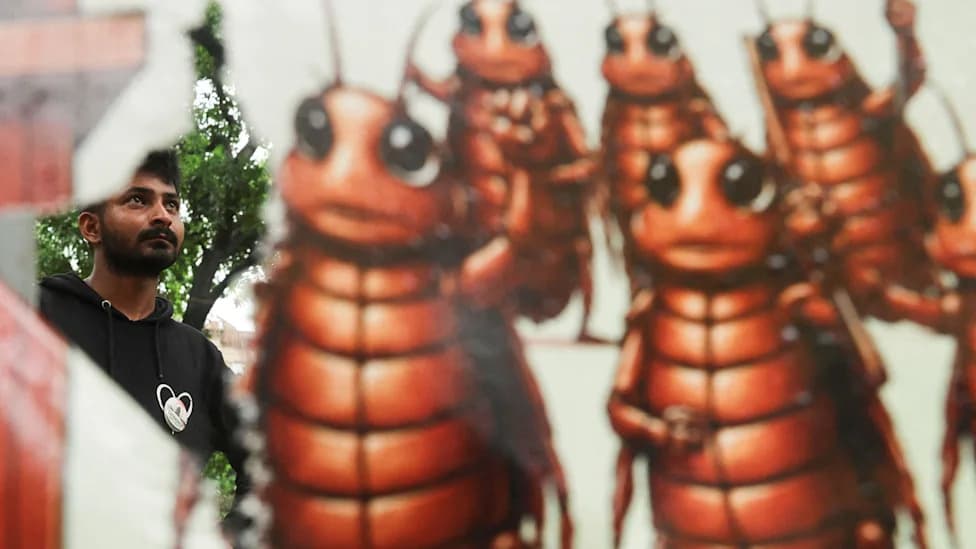
CJP protesters are responding to Monday's police violence with memes online [Reuters]
On Monday, 20-year-old Chhavi (name changed) paused outside a Delhi metro station on her way to what would become one of the largest youth-led demonstrations in the capital in recent years. She propped her phone against a railing, stepped back and recorded a quick "fit check" — the short social video trend that shows off an outfit — before joining the march. "Going to get beaten by cops, guys," she smiled into the camera.
Hours later, police fired tear gas and charged demonstrators with batons as tens of thousands of supporters of the Cockroach Janta Party (CJP) — a movement that began with protests over alleged exam irregularities and expanded into a broader call for government accountability — marched toward parliament. Protesters demanded the resignation of Education Minister Dharmendra Pradhan amid allegations of exam paper leaks and recruitment irregularities. Authorities suspended mobile internet around the protest site. By evening, protesters reported scores had been beaten while police said several officers were injured.
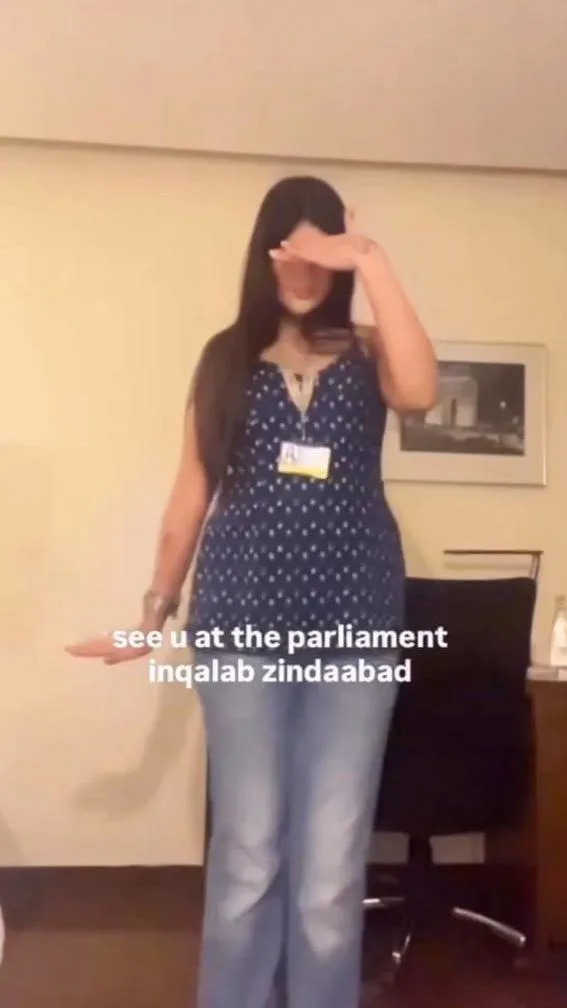
A lot of protesters posted "fit checks" - a viral Instagram trend - ahead of the march [Deeva Arora]
When Chhavi uploaded her videos after connectivity was restored, a striking detail remained: the same wry, resilient tone that had opened her clip. She was still smiling — posing beside riot police, flashing victory signs, filming through crowds and even interviewing an injured marcher. Those clips were among thousands of reels, memes and first-person dispatches that flooded Instagram and other platforms once the internet returned.
Humour, Documentation and Defiance
Some posts were raw with anger or fear; many blended anxiety with sardonic humour. Protesters posted "fit checks" and fashion videos before the march, then cut to scenes of tear gas or baton charges. One young woman calmly reapplied lipstick in front of a line of riot police. Another posted a deadpan "review" of tear gas, rating its sting and smell like a restaurant critique. An 18-year-old engineering student, Manit (name changed), posted a fitness-style reel that ended with his running app showing distance logged while evading a baton charge.
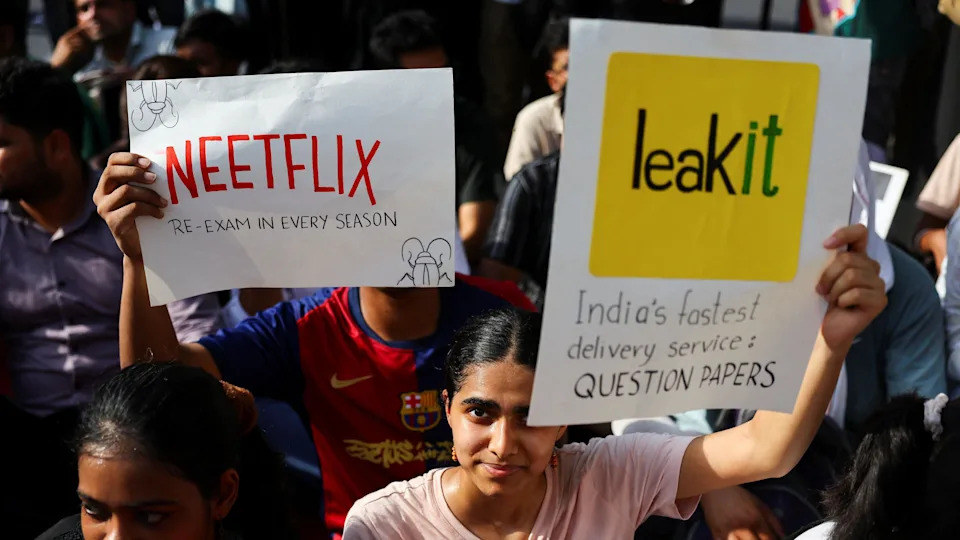
From one-liners to satirical digs, the placards have become one of the defining features of the protests [Reuters]
"It was either laugh in the face of fear or cry," Chhavi said, describing why she kept filming even as the crackdown intensified.
Protesters interviewed for this report said they were not primarily motivated by chasing viral fame or algorithms. For many, filming was inseparable from the protest itself: an act of witness, documentation and community-building. The humour was usually self-directed — jokes about kilometres run while fleeing police, or the surreal moment of recording an outfit reveal moments before tear gas — and did not erase the fear or the violence. It coexisted with both.
Expert Perspectives
Researchers say this blend of digital culture and street protest reflects how a generation raised online experiences politics. Joyojeet Pal, a professor at the University of Michigan who studies technology and society, observed that older generations often separated political life from everyday life, while younger people grow up with politics woven into their memes, family photos and commutes.
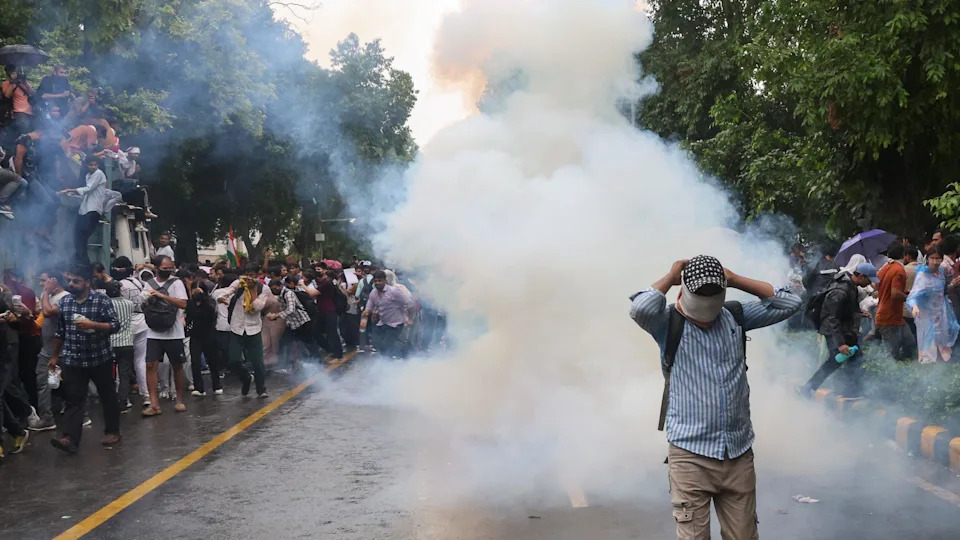
Police fired tear gas to disperse protesters as they tried to reach parliament [EPA/Shutterstock]
Payal Arora, a digital anthropologist at Utrecht University, noted that smartphones have turned ordinary people into chroniclers of political upheaval: "The act of capturing a protest is often an end in itself. Their message is more like: 'This happened. We were there. We will remember.'"
Nishant Shah, director of the Digital Narratives Center at the Chinese University of Hong Kong, warned against mistaking humour for detachment. He argues humour often performs the opposite function: building solidarity, easing tension and sustaining movements through joy and resilience.
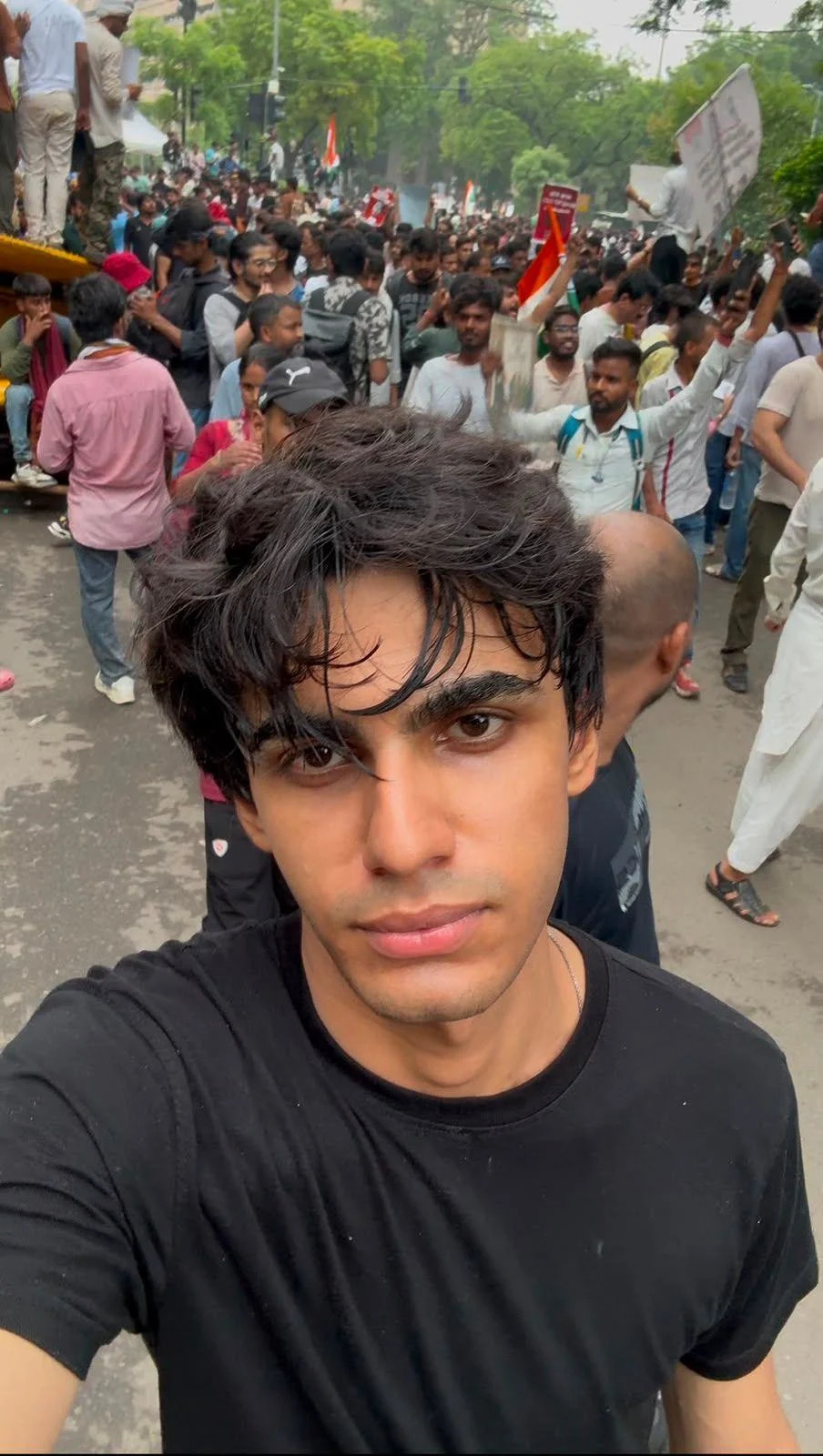
Manit even logged a running activity while evading a police baton charge [Manit]
Memory, Politics and New Protest Languages
The tactics and symbols of protest have long changed with technology and culture — from songs in India's freedom movement to street theatre in student protests, murals during anti-citizenship rallies, and livestreams during farmers' demonstrations. The CJP demonstrations spoke in the idiom of a generation for whom online life and political action overlap. Sharing memes, reels and parodies became another form of participation and a way to widen the conversation beyond traditional media audiences.
For many participants, humour did not minimize the trauma of the day; it helped shape how the events would be remembered. Ishaan (name changed), 21, posted a reel of white smoke with the caption: "Delhi Police doesn't realise I'm from Jamuna Paar," a local joke about the eastern neighbourhoods of the city. "The joke wasn't about denying the violence," he said. "It was about refusing to let fear dictate the memory of the day."
Note: Some names in this article have been changed to protect identities.
Help us improve.