Researchers in Spain and the UK find that declines in sulphate aerosols and other particulate emissions have amplified heatwaves across Britain and western Europe by allowing more sunlight to reach the surface and altering jet-stream circulation. The reduced pole-to-equator temperature contrast weakens and stalls Rossby waves, trapping heat and producing persistent heat domes. The study links this mechanism to recent record-breaking summers and estimates circulation changes boosted regional excess warmth by about 29 percent. Findings appear in Geophysical Research Letters.
Cleaner Skies, Hotter Summers: Falling Aerosols Have Amplified Europe’s Heatwaves

Temperatures in Europe have warmed twice as much as the rest of the world since the 1980s - Richard Baker/In Pictures via Getty Images
New research from Spanish scientists working with the UK Met Office finds that reductions in atmospheric particle pollution — especially sulphate aerosols — have helped intensify heatwaves across Britain and western Europe. Since the 1980s Europe has warmed faster than the global average, and the study links much of this extra regional warming to cleaner air that allows more solar energy to reach the surface and alters large-scale atmospheric circulation.
How cleaner air amplifies heat
Aerosols, particularly sulphate particles produced by fossil-fuel combustion, reflect sunlight back to space and exert a cooling influence. When those particles decline — due to air-quality measures, emissions controls and broader international agreements (including effects following policies such as the Montreal Protocol and subsequent clean-air actions) — more sunlight reaches the surface. That additional energy is unevenly distributed, warming the poles relatively more and reducing the pole-to-equator temperature contrast.
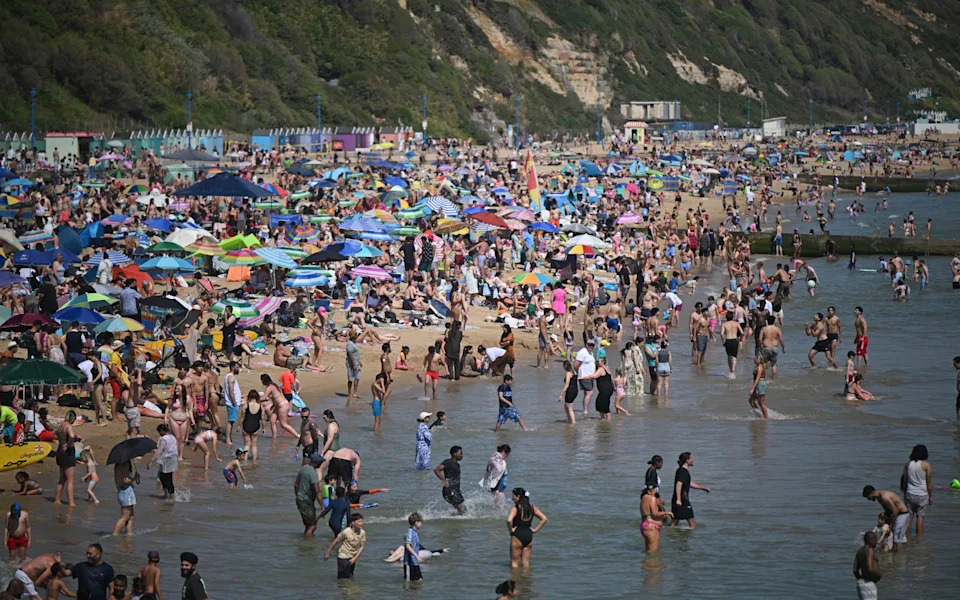
British temperature records were broken three times in June - Justin Tallis/AFP via Getty Images
Jet stream and Rossby waves
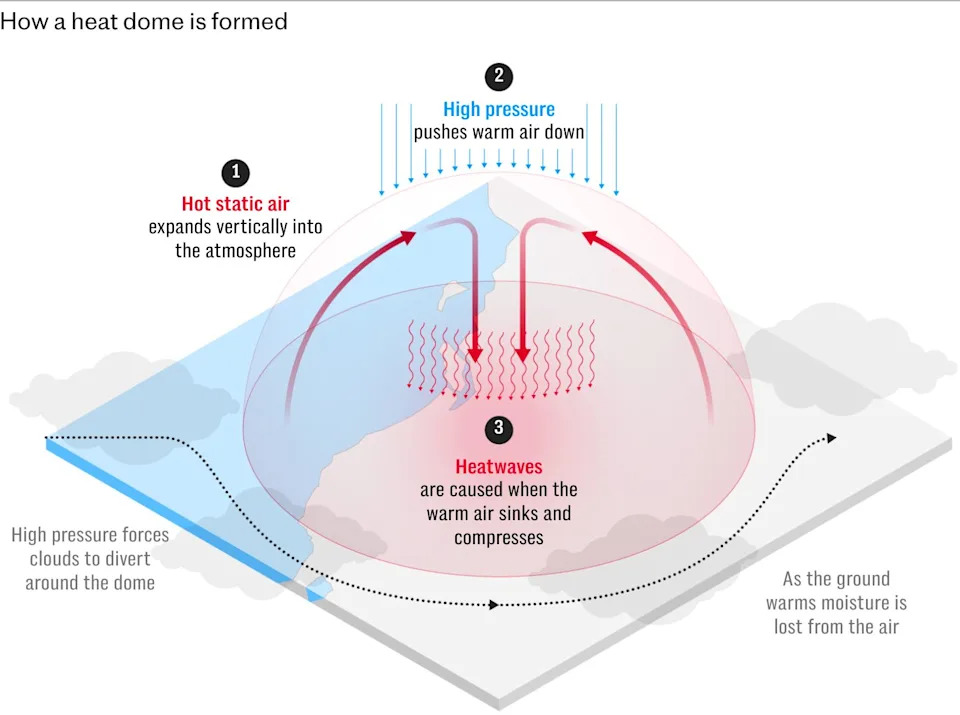
The temperature difference between the poles and the tropics helps drive the jet stream, the high-altitude west-to-east current that shapes weather patterns. The study explains that a smaller temperature gradient weakens and slows the jet-stream’s Rossby waves, making them more quasi-stationary. When Rossby waves stall, weather patterns can lock in place, producing persistent heat domes and prolonged hot spells over western Europe.
“The cleaner air lets more sunlight reach the surface,” said Prof Markus Donat of the Barcelona Supercomputing Centre. “This additional energy also causes atmospheric circulation changes that bring even more heat to Western Europe.”
Evidence and recent extremes
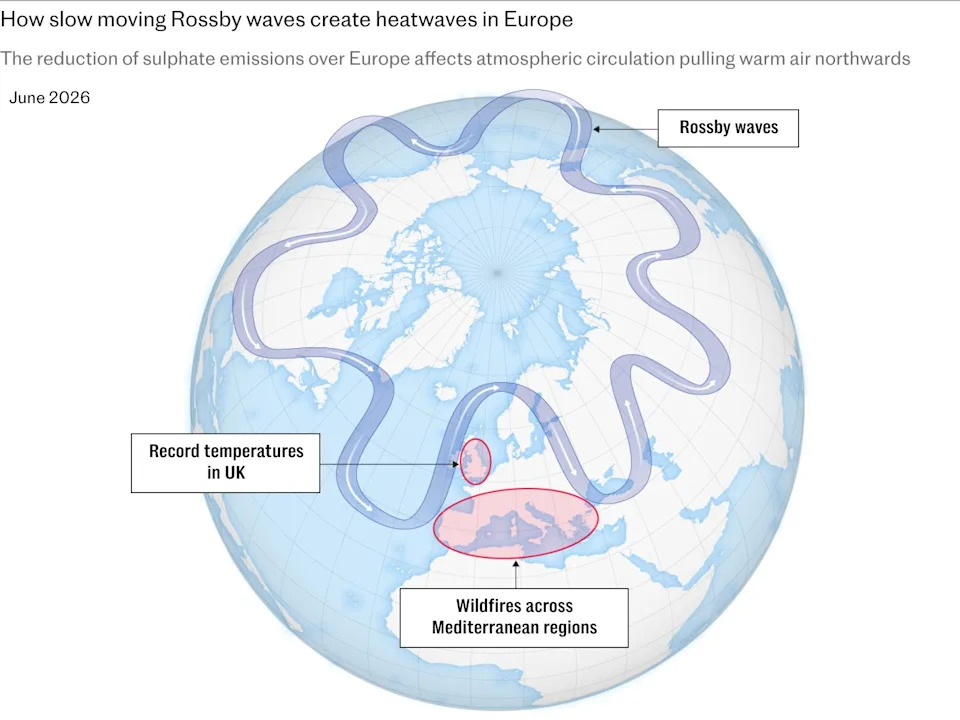
2307 Rossby waves diagram
The analysis cites several severe European summers — 2003, 2006, 2015, 2018 and 2019 — and points to the recent UK heatwave as consistent with the mechanism. British temperature records were broken three times in June, with the mercury reaching 37.3°C at Santon Downham in Suffolk on June 26.
Lead author Pedro Roldán-Gómez added: “Now that sulphates are disappearing over Europe we can see the full impact of carbon dioxide emissions.” The authors estimate that atmospheric circulation changes increased excess regional warmth by roughly 29 percent, whereas some models had previously assumed a small cooling influence.
Implications
Although removing sulphate pollution reduced a source of regional cooling — an effect sometimes described as ‘unmasking’ — the researchers stress this was beneficial for health and the environment overall. If sulphate emissions had continued, global warming from greenhouse gases would have been masked but harmful air pollution would have persisted. With sulphate levels now largely stabilised in Europe, future regional warming should track greenhouse-gas-driven trends, although similar unmasking could occur in other regions as they cut particulate emissions.
Publication
The new findings are published in Geophysical Research Letters.
Help us improve.