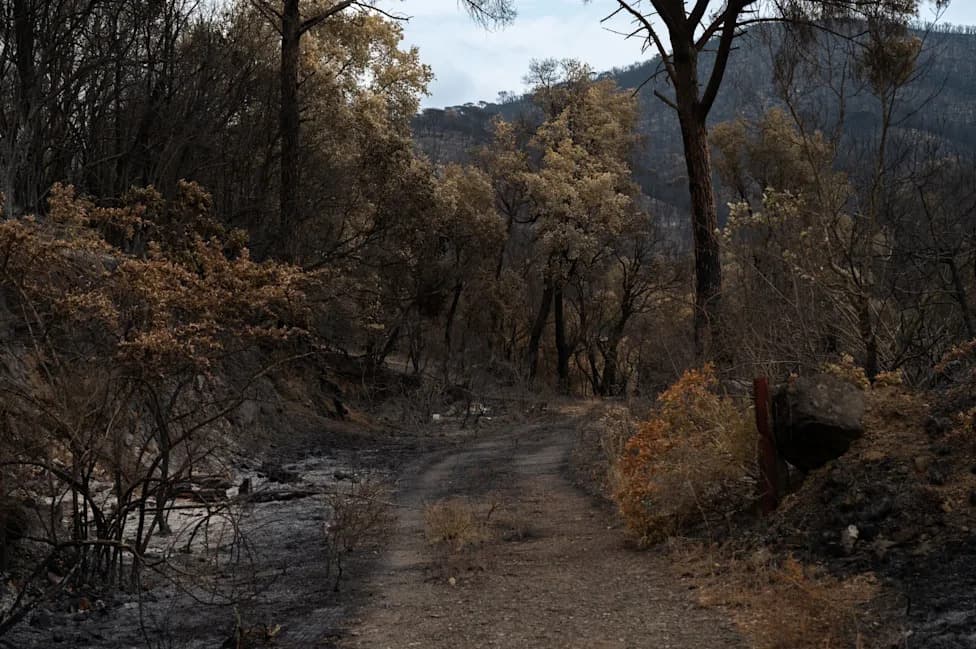
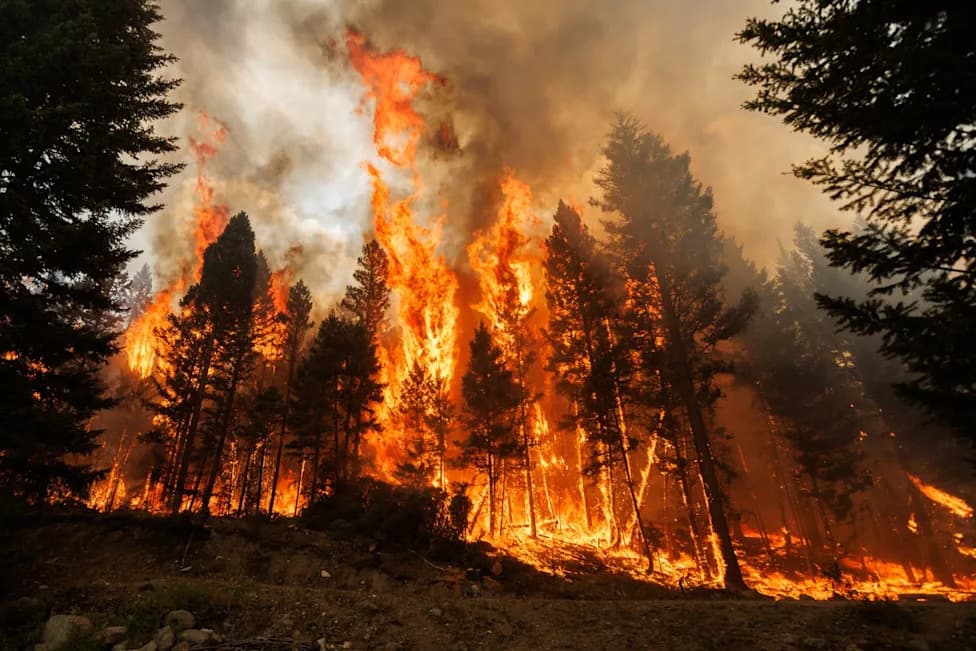
Canada’s 2026 wildfire season is among the most intense on record, but experts and officials say there is no evidence the blazes were started by "directed energy weapons." Scientists attribute the fires to a combination of hotter, drier weather, frequent lightning strikes and human-caused ignitions. Climate change has lengthened fire seasons and increased the potential area burned, but claims of manufactured fires lack credible support.
Canada’s 2026 Wildfires Driven By Heat and Dryness — Not Directed Energy Weapons, Experts Say
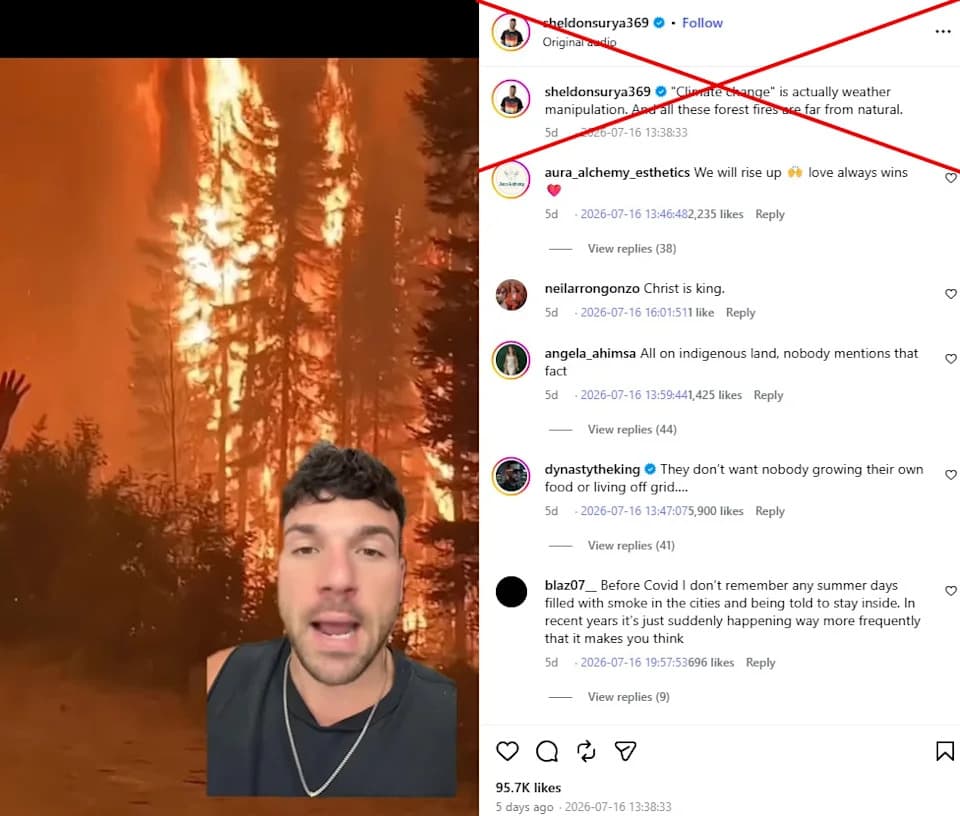
Screenshot of an Instagram reel taken on July 22, 2026
Canada is experiencing one of its most severe wildfire seasons on record in 2026, but claims that the blazes were deliberately ignited by "directed energy weapons" (DEWs) are unsupported by evidence, researchers and officials say. Scientists point to extended hot, dry weather, frequent lightning, and human ignition sources as the primary drivers behind the rapid spread and intensity of fires across the boreal zone.
How The Misinformation Spread
An Instagram reel published on July 16, 2026, and reposted widely alleged that the wildfires were the result of weather manipulation and DEWs. The clip mixed older 2023 footage of volunteer firefighters in Quebec with recent scenes from Ontario and claimed, without evidence, that experimental electromagnetic weapons were being used to start fires. Screenshots and copies of the reel circulated on multiple platforms while Canada reported nearly 1,000 active blazes and a burned area roughly the size of Belgium.
Why Experts Reject The DEW Claims
Authorities and scientists say there is no credible evidence that directed energy systems were used to start the fires. Canada’s Department of National Defence has stated that the Canadian Armed Forces do not operate DEWs in this context. While Defence Research and Development Canada performs research and testing on laser systems, experts note that a weapon capable of igniting large wildfires would require enormous power and visible support infrastructure — making clandestine deployment highly unlikely.
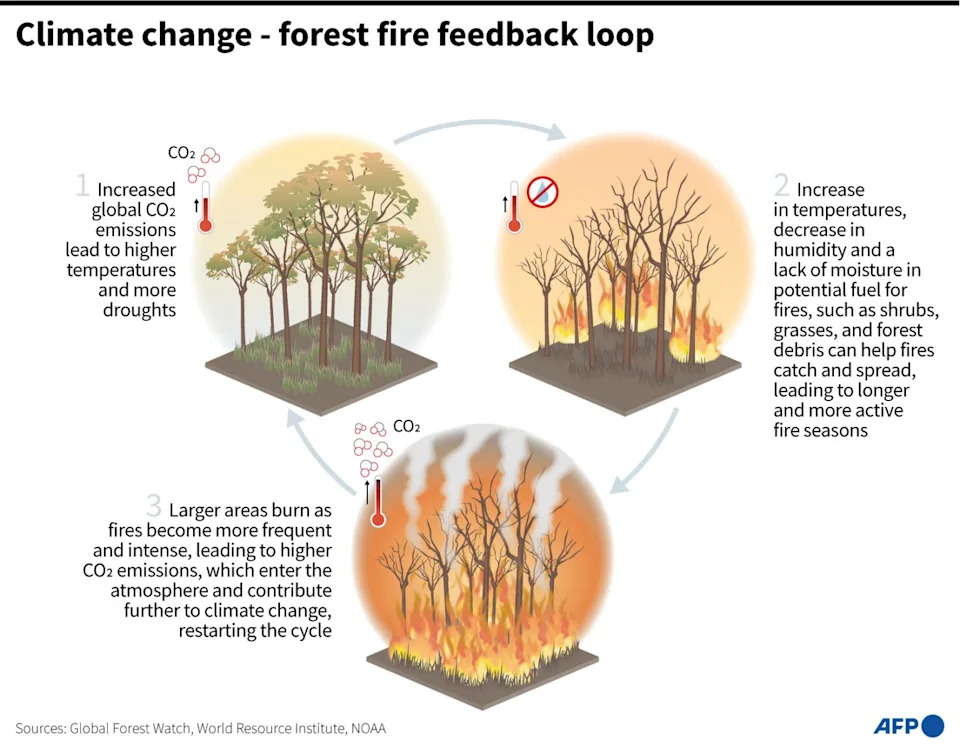
Graphic explaining how increased global emissions can lead to more fire-prone conditions and how more fires can lead to higher emissions, which perpetuates the cycleJulia Han JANICKISophie RAMISAFP
"These online claims are not based on facts and the explanation is much simpler and rooted in the weather." — Michael Gollner, Associate Professor, University of California, Berkeley (July 21, 2026).
The Scientific Explanation: Weather, Lightning, And Climate
Researchers say the more plausible and better-documented explanation is meteorological: sustained high temperatures, low humidity and windy conditions create the right environment for fires to start and spread quickly. The non-profit Canada Wildfire reports that lightning ignites just under half of the country’s fires and accounts for more than 81 percent of the area burned, illustrating how storms during extreme weather episodes can trigger very large burn areas.
Climate change has increased the frequency and intensity of heat waves and drought in many parts of Canada, contributing to longer fire seasons and larger burned areas over recent decades. As climatologist Zeke Hausfather and others have noted, Canada’s boreal forests can "burn catastrophically under extreme weather," and the combination of hotter temperatures and drier fuels raises the likelihood of major wildfires.
Human Ignitions Still Matter
While climate conditions prime the landscape for more severe fires, many wildfires are ignited by human actions — by accident, by negligence (for example, unattended campfires or discarded cigarettes), or intentionally. Authorities continue to investigate specific ignition causes for individual fires, but there is no verified evidence pointing to directed-energy devices or coordinated manufacture of the 2026 blazes.
Bottom line: The best available scientific and official information points to weather, lightning and human-caused ignitions operating in a climate increasingly warmed by human greenhouse gas emissions — not to conspiratorial directed-energy attacks.
Help us improve.