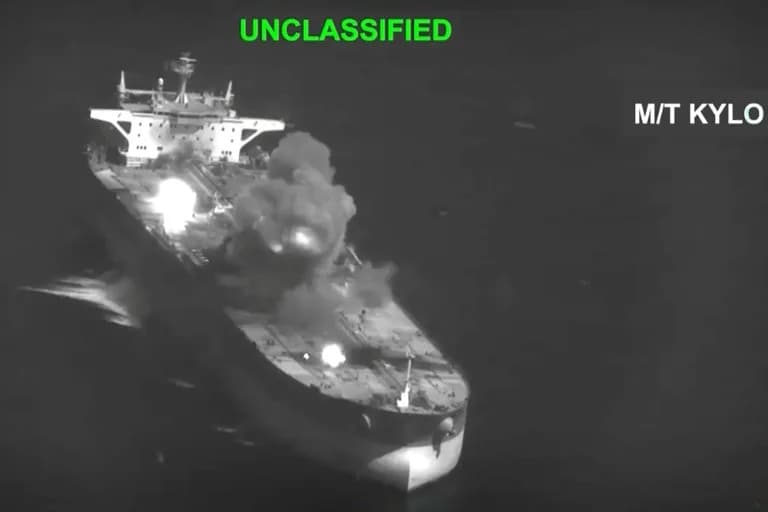
U.S.-Iran hostilities intensified as Iran claimed drone strikes on Camp Doha in Kuwait and CENTCOM reported an 11th consecutive night of strikes inside Iran. Regional shipping through the Strait of Hormuz and Bab el-Mandeb fell sharply after attacks, prompting air-raid alerts in Gulf states. Jordan intercepted the majority of projectiles fired into its territory, and three U.S. service members were named among those killed in a prior base attack. Lawmakers are demanding greater transparency from the administration as tensions and costs to global trade rise.
Iran Conflict Intensifies: Tehran Says It Struck U.S. Base In Kuwait As CENTCOM Reports 11th Night Of Strikes
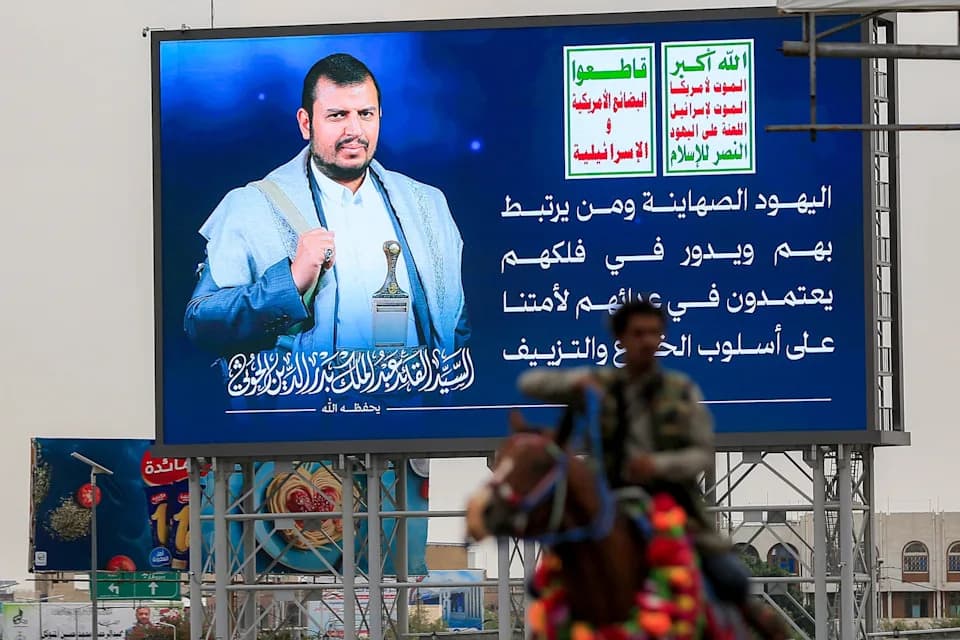
Mohammed Huwais/AFP via Getty Images - PHOTO: A man rides a horse near a giant billboard depicting a message from Abdel Malek al-Houthi, the leader of Yemen's Houthi movement, in al-Sabeen Square in the Houthi-held capital Sanaa on July 21, 2026.
Overview: Hostilities between the United States and Iran continue despite diplomatic talks in June aimed at ending the war. Iran claims it launched drone strikes against U.S. ammunition and logistics facilities at Camp Doha in western Kuwait, while U.S. Central Command (CENTCOM) says American forces conducted strikes inside Iran for an 11th consecutive night to degrade Tehran's ability to threaten commercial shipping.
Key Developments
Bahrain's Interior Ministry reported air-raid sirens across the kingdom on Wednesday. Saudi Arabia's Civil Defense also issued, then quickly lifted, an alert in Dammam, a major Persian Gulf port city.
Maritime intelligence firm Kpler recorded a sharp drop in vessel traffic through the region's two strategic chokepoints: the Strait of Hormuz and Bab el-Mandeb. Kpler reported 13 transits through the Strait of Hormuz on July 20 and nine on July 21, a 31% day-on-day decline; Bab el-Mandeb traffic dropped about 34% to 29 vessels. Analysts warned that sustained attacks on these straits could alter routing decisions, raise freight costs and sustain higher risk premiums for energy markets.
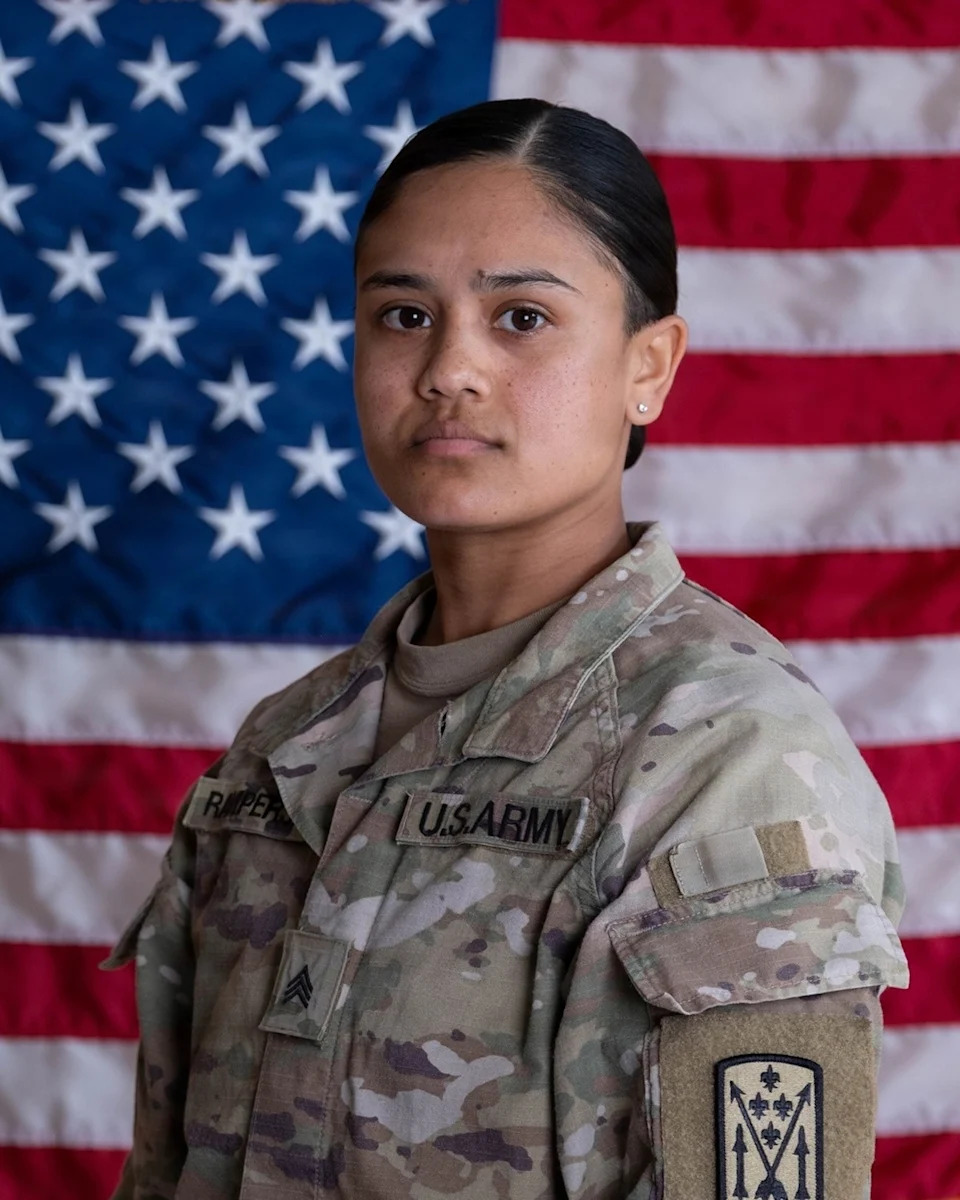
10th Army Air and Missile Defense Command Public Affairs - PHOTO: This photo shows Sgt. Angel Rampersad, 28, of Ozone Park, New York, who is believed to have been killed in action on July 17, 2026, during an enemy attack at Muwaffaq Salti Air Base, Jordan.
The Jordanian Armed Forces said their air defenses intercepted eight of 10 projectiles fired into the kingdom — six missiles and four attack drones — with the remaining two missiles falling in remote areas and no reported injuries or damage.
Iranian state media and the semi-official Tasnim News Agency published statements saying Iran struck Camp Doha in western Kuwait, which hosts U.S. logistics and ammunition facilities. Kuwait's military confirmed its defenses were engaging incoming Iranian drones.
CENTCOM said U.S. forces targeted Iranian military operations centers, maritime capabilities, aircraft hangars, drone storage facilities and logistics infrastructure to reduce Tehran's capacity to threaten commercial shipping in the Strait of Hormuz. The strikes marked an 11th consecutive night of U.S. operations against Iranian targets, CENTCOM said.
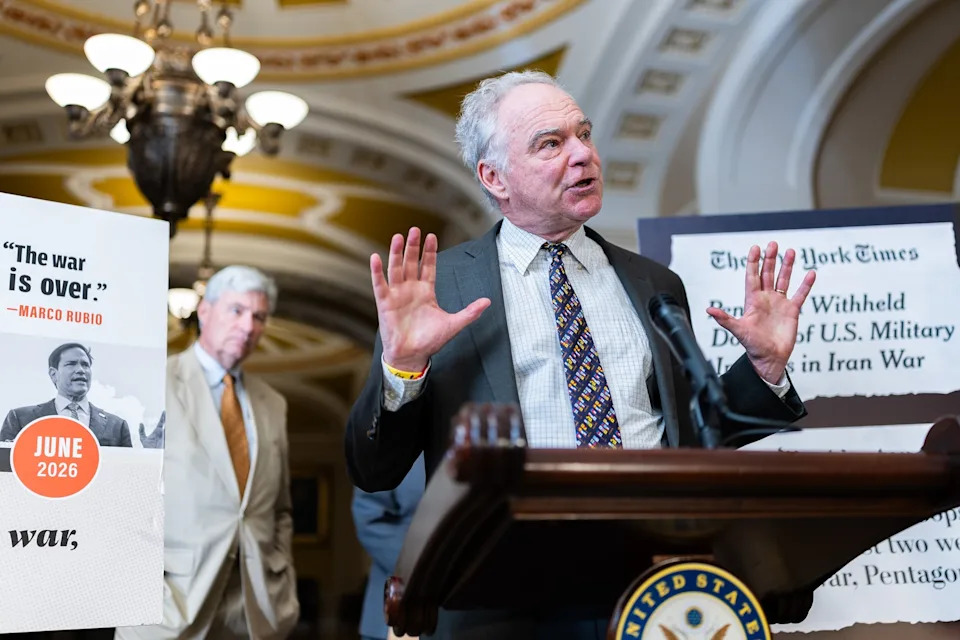
Finn Gomez/Getty Images - PHOTO: Senator Tim Kaine speaks following a policy luncheon at the U.S. Capitol, July 21, 2026 in Washington.
U.S. Casualties and Political Fallout
The Pentagon identified a third U.S. service member believed killed during the July 17 attack on Muwaffaq Salti Air Base in Jordan: Sgt. Angel S. Rampersad, 28, of Ozone Park, New York. The Defense Department previously announced the deaths of Pfc. Isabella Gonzales, 19, of Carrollton, Texas, and 1st Lt. Tyler Feehan, 25, of Ewa Beach, Hawaii. The incident remains under investigation.
"Afghanistan War: 20 years, 2,000 DEAD. Iraq War: 9 years, 4,600 DEAD. Vietnam War: 19 years and 5 months, 58,220 DEAD. Korean War: 3 years and 1 month, 36,574 DEAD. Venezuela War: 1 day, 0 DEAD. Iran Military Conflict: 4 months, 18 DEAD." — President Donald Trump (social media post)
Senate Democrats and some Republicans pressed the administration for greater transparency about the conflict, casualty counts and the overall strategy. Senate Minority Leader Chuck Schumer accused the administration of keeping Americans in the dark as the war escalated. Senator Tim Kaine and Representative Thomas Massie also demanded clearer explanations of policy, troop risks and casualty reporting.
Why It Matters
The sustained exchanges of strikes and counterstrikes have heightened regional instability and raised the prospect of longer-term disruptions to global shipping and energy markets. The Strait of Hormuz and Bab el-Mandeb are vital corridors for oil and trade; continued attacks there could force rerouting, increase transport costs and amplify geopolitical risk premium on energy prices.
What to watch next: verification of damage and casualties at targeted sites, any official U.S. or Kuwaiti confirmations of Camp Doha strikes, further CENTCOM operations, and whether negotiations between U.S. and Iranian delegations resume or collapse entirely.
Help us improve.