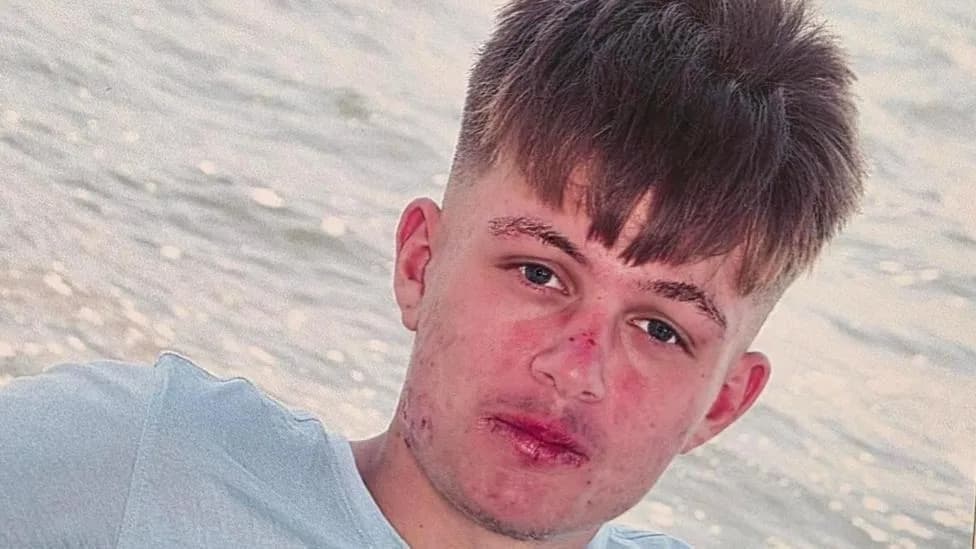
Three fatal bladed attacks involving teenagers — Amen Teklay, Kayden Moy and John McNab — have renewed fears about youth knife crime in Scotland. Official statistics show long-term declines in homicides and reductions in several youth-related measures, including school knife findings and recorded violent offences. Yet attempted murders by under-18s rose 61% in the latest year. Authorities, community groups and campaigners are calling for early prevention, better bail oversight, and practical measures such as more bleeding-control kits.
Three Killings Renew Fears Over Youth Knife Crime in Scotland — Data Shows a Mixed Picture
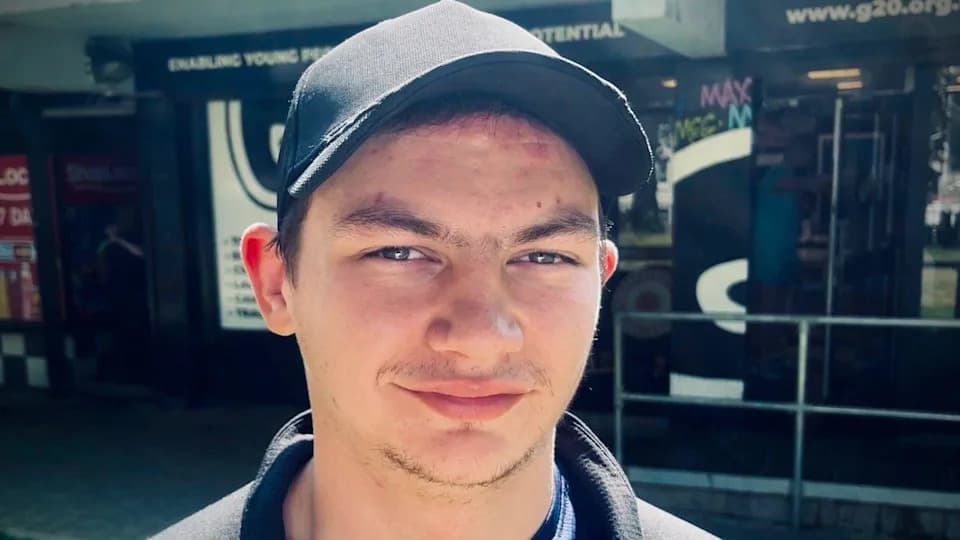
Connor McGurn was two when his older brother Jamie was stabbed to death [BBC]
Three high-profile, bladed attacks in the space of six months — the deaths of Amen Teklay, Kayden Moy and John McNab — have reignited public concern about youth knife crime in Scotland. While these tragedies have prompted urgent calls for action, publicly available statistics paint a more complicated picture: long-term homicide levels are down, but some serious youth offences have recently risen.
Recent Cases
The deaths that prompted renewed scrutiny include the 15-year-old Amen Teklay, who was fatally stabbed with a sword in Glasgow; Kayden Moy, a teenage boy chased and stabbed to death at Irvine Beach in North Ayrshire; and John McNab, a 22-year-old murdered in Edinburgh by a 16-year-old attacker. Those involved in the latter two cases have received life sentences.
Trends and Statistics
Scotland's overall homicide rate has fallen markedly from a peak of 137 in 2005 to a 50-year low of 45 in 2024/25. The long-running Violence Reduction Unit (VRU), first established in Strathclyde in 2005, reframed violence as a public-health issue and has been credited with helping reduce lethal violence.

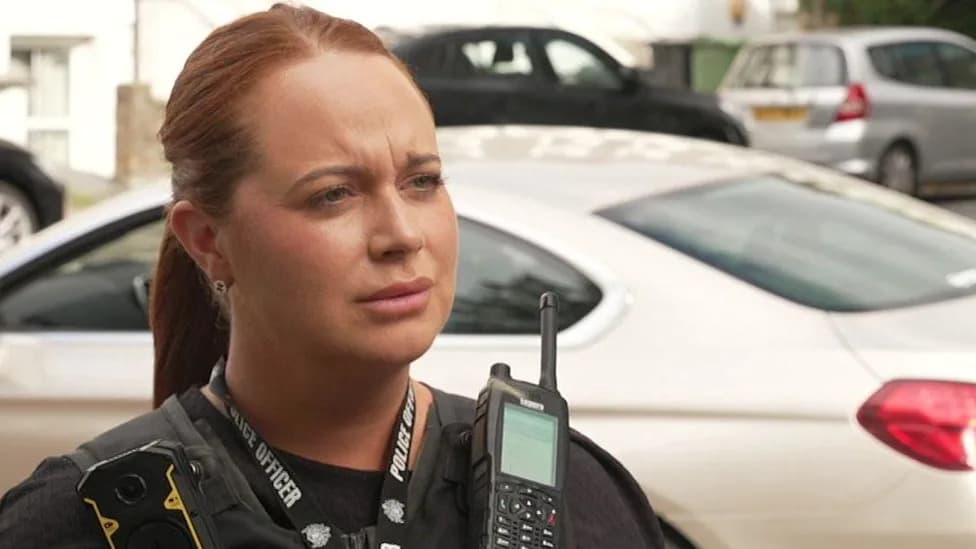
Emily Cutts says harm prevention is about childhood and how we treat our children [BBC]
Official figures show declines in several youth-related measures: recorded violent offences involving young people fell in 2025/26 (though they still averaged about 20 incidents a day), referrals to the Children's Reporter for knife offences have decreased, and the number of bladed weapons or "pointed articles" recovered in schools fell to 127 last year. Police stop-and-search activity found 117 children in possession of knives over the same period.
However, there are worrying signs too: attempted murders involving under-18s rose from 18 to 29 — a 61% increase year-on-year. In 2025/26, there were three homicide deaths linked to under-18s, a figure broadly consistent with recent years.
Voices From the Community
Community organisations such as the G20 Youth Project in Wyndford, Glasgow, point to the importance of mentoring and local services. Volunteer Connor McGurn, who lost his brother to a stabbing in 2007, says the difference today is that such killings now attract national attention. Connor, inspired by anti-gang programmes such as Homeboy Industries, works to show young people constructive alternatives to gang activity and drug dealing.
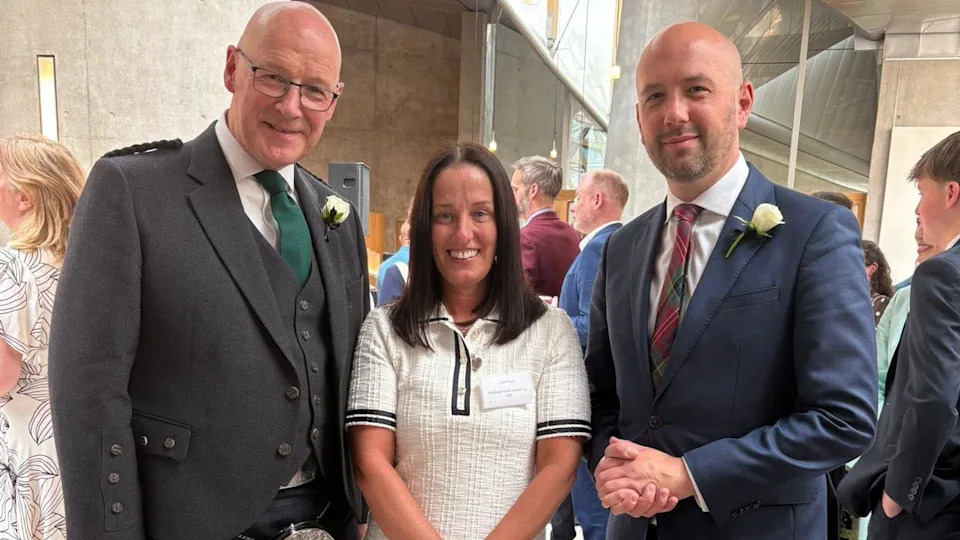
Lisa Petrie, pictured with First Minister John Swinney and Ben Macpherson MSP, has campaigned for something positive to come from her son's death [Lisa Petrie]
Founder Emily Cutts emphasises prevention rooted in childhood: "It's 100% about childhood, about how we treat our children, how we're bringing up our children. That's at the core of this."
Prevention, Policy and Campaigning
Police Scotland and the national VRU have created a Violence Prevention Primary School Working Group to pilot early interventions, including exploring ways to teach children aged 8–11 about the consequences of violence and to develop conflict-resolution skills.
Campaigners such as Lisa Petrie, whose son John McNab was killed by a teenager who had been on bail for a prior knife offence, are pressing for tougher controls on knife sales, stronger bail supervision for those accused of knife offences, and wider distribution of bleeding-control kits. Petrie has already distributed more than 100 bleed kits across Edinburgh and secured a manifesto pledge from the SNP to roll out more community kits.
Justice Secretary Neil Gray has acknowledged the campaign and said ministers are discussing how to implement the commitment, while stressing that early education and prevention must be a priority.
What This Means
The picture is nuanced: long-term reductions in homicide and several youth-related measures show progress, yet spikes in serious offences such as attempted murder among under-18s underline persistent risks. Experts and campaigners agree on a twin approach: continue evidence-based, community-led prevention work and strengthen targeted policing and policy measures where needed.
"A bleed kit is there when there's already been an incident. I want to prevent that incident happening in the first place," said the justice secretary, summarising the balance between immediate practical steps and longer-term prevention.
Help us improve.