BHELT, a west London community group, proposes running eight-seat autonomous electric pods across Hammersmith Bridge to restore a passenger link after long-standing vehicle restrictions. Transport for London says it has no plans to introduce the pods or driverless buses on its network. Trials in Barnes show the pods carry eight seated passengers plus standing room, include space for one wheelchair, and operate at up to 15 mph. A recent council report found reopening the bridge to motor traffic would effectively require building a new bridge, prompting interest in lightweight, driverless alternatives.
Could Driverless Pods Reopen Hammersmith Bridge? Community Proposes Autonomous Link
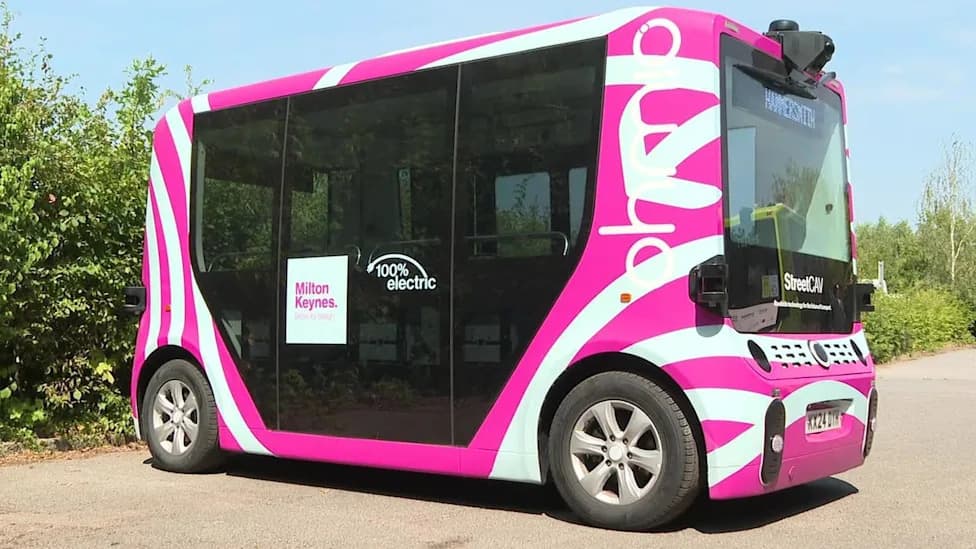
The autonomous pods move at up to 15 miles per hour [BBC]
A west London community group has proposed using lightweight autonomous electric pods to restore a passenger link across Hammersmith Bridge, which has been closed to motor vehicles and largely restricted to pedestrians and cyclists for several years.
What the proposal says
Barnes and Hammersmith Electric Light Transit (BHELT), a not-for-profit set up to "explore, develop and promote" the idea, says small autonomous pods could provide an "inclusive and sustainable" transport option across the river. The group has been trialling eight-seat pods in Barnes and argues the service could fill a growing gap in local public transport.
Transport for London response
Transport for London (TfL) has said it has no current plans to introduce the pods on Hammersmith Bridge and no wider programme to run driverless buses on its network.
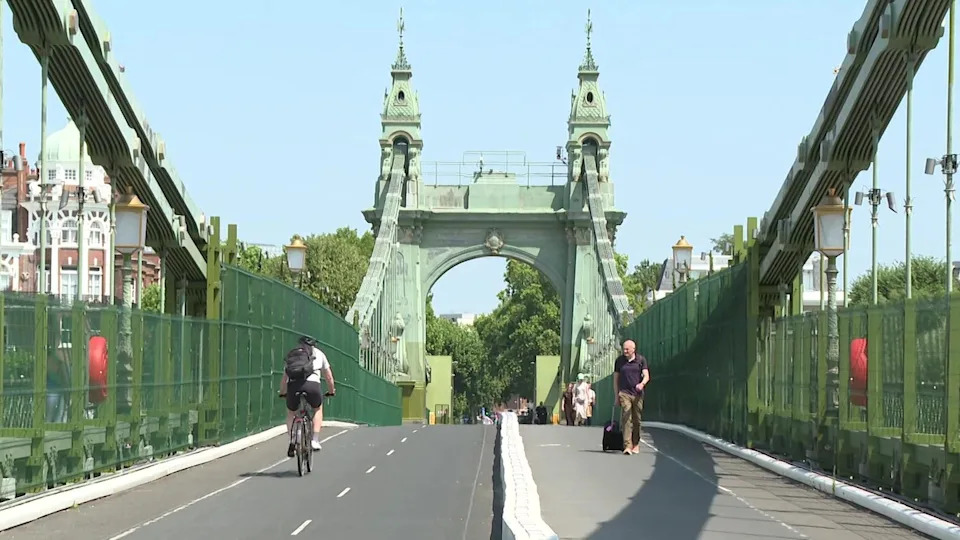
Hammersmith Bridge has been closed to vehicles for seven years [BBC]
Why alternatives are being considered
The 139-year-old Grade II* listed Hammersmith Bridge has been under restrictions for several years after structural cracks were found in its pedestals. A recent council report concluded that reopening the crossing to full motor traffic would effectively require the construction of a new bridge because of the scale of repairs needed, prompting interest in lightweight alternatives.
Pod design and trials
The pods developed by Omeo UK and tested by BHELT seat eight people and offer standing room for about six more. Each vehicle includes space for one wheelchair, deployed via a ramp that extends from beneath the door. The manufacturer describes their operation as "a bit like a tram"; the current trial vehicles run at a maximum speed of about 15 miles per hour, suitable for short local crossings.
Charles Campion of BHELT: "Whatever people's views, there's a consensus that we need to try to fill that gap. We believe the autonomous pods could be the solution."
Proposed route and next steps
BHELT's initial plan would link Hammersmith transport interchange with the Barnes side of the river, with a possible later extension to Barnes railway station. Any real-world deployment would require agreement from TfL and local authorities, safety assessments, and work to protect the bridge's historic fabric.
Key considerations include heritage protections for the Grade II* structure, accessibility and safety standards for autonomous vehicles, and whether lightweight pods are a practical long-term substitute for traditional motor traffic across the crossing.
Help us improve.