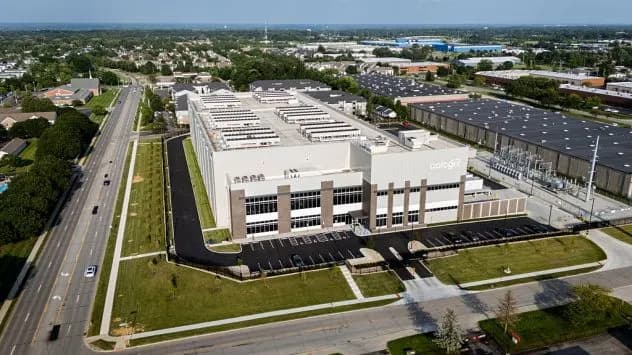
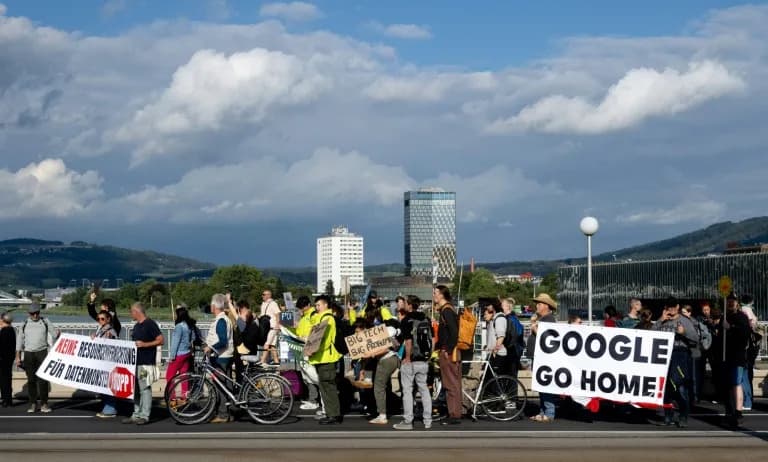
Google reported using about 732.1 million gallons of water in Nebraska in 2025, a sharp rise from 2022 and 2023 that has renewed concerns in a drought-prone state. The increase — and a nearby Council Bluffs site’s reported 1.3 billion gallons — highlights how cooling technology and power sourcing drive a data center’s water footprint. Nebraska has passed a 2026 law requiring annual water and energy reporting from data centers, while local districts update rules as communities assess capacity and risks.
Google’s Nebraska Data Centers Used 732 Million Gallons of Water in 2025, Sparking Drought Concerns
Photo Credit: iStock
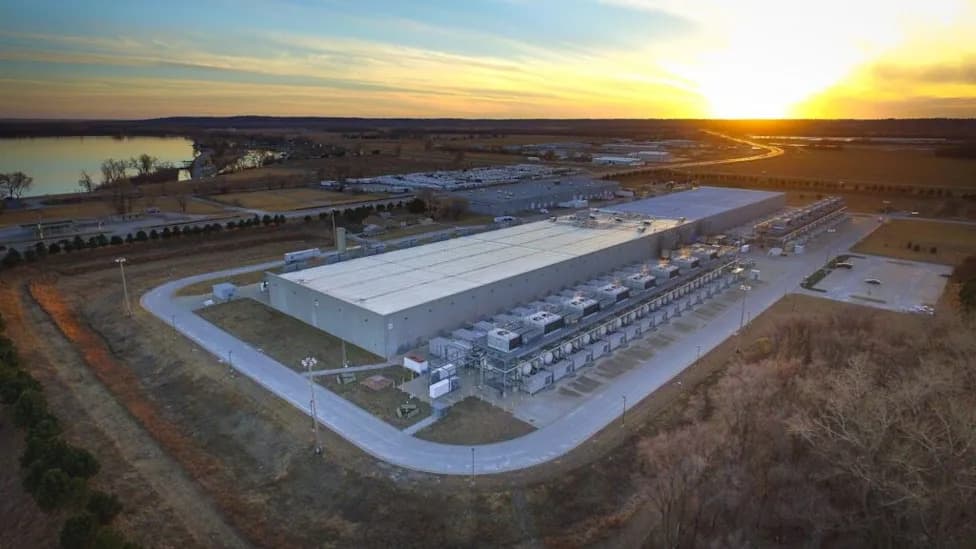
Google reported that its Nebraska data centers consumed about 732.1 million gallons of water in 2025 — a dramatic increase from prior years that has intensified local debate over whether the region can sustain further growth in data-center capacity amid drought conditions.
Water Use Spike and Local Context
According to a company report cited by the Nebraska Examiner, Google’s Nebraska water use rose from 46.6 million gallons in 2022 to 134.7 million gallons in 2023 and then to 732.1 million gallons in 2025. A nearby Google site in Council Bluffs, Iowa, reportedly used about 1.3 billion gallons in 2025.
The Nebraska total for 2025 exceeded the amount of water typically consumed by customers of the Omaha Metropolitan Utilities District in a single week, the report noted. Still, experts urge context:
said Anthony Schutz, a professor at the University of Nebraska–Lincoln College of Law, who compared the total to irrigation needs — roughly equivalent to watering about 2,500–3,500 acres of central Nebraska corn, versus the state’s ~9.1 million irrigated acres.“It remains a small amount relative to that,”
How Cooling Technology Affects Water Use
How much water a data center uses depends largely on its cooling technology. Evaporative cooling systems can consume substantial amounts of water, while closed-loop or air-cooled chillers reuse fluid and reduce water draw but often require more electricity. Google says it selects cooling approaches based on local water availability; Meta’s Sarpy County facility reportedly uses a mix of both systems.
Broader Impacts: Power, Infrastructure and AI
Data centers’ water footprint can extend beyond the site itself because the power plants that feed them may also use water for cooling. The growth of AI and demand for massive server capacity can increase electricity consumption, strain grids, and shift costs or infrastructure needs onto communities and households.
“From a logical, common-sense perspective, we really need to stop putting industry in areas where they can't be supported by natural resources like water,”
Policy and Industry Response
Industry groups say newer technologies will reduce water use over time.
“I think water use will go down, certainly. I think the new technologies are going to be very water efficient,”
Nebraska is moving toward increased transparency: a law passed in the Legislature’s 2026 session requires the state Department of Water, Energy, and Environment to collect annual water-use and energy-demand data from data-center developments beginning later this year. At the same time, several local natural-resources districts are revising rules as communities weigh whether local supplies and infrastructure can realistically support additional projects.
“They should be a lot more transparent. We should demand it,”
As data-center investment and AI demand grow, communities, regulators and companies face tough trade-offs between economic development and stewardship of limited water and energy resources.
Help us improve.