Republic Services' Denver recycling plant now pairs workers with AI-driven Glacier robots that use cameras and suction arms to identify and remove recyclables faster and more accurately. The robots average about 60–70 picks per minute versus 40–50 for humans, and two units installed this year—about $90,000 each—are preventing roughly 25 tons of residue from reaching landfills daily. Improved recovery raises the quality and value of recyclables and shifts labor into more technical roles, though officials stress source reduction remains vital.
AI-Powered Robots Boost Denver Recycling, Diverting 25 Tons From Landfills Daily
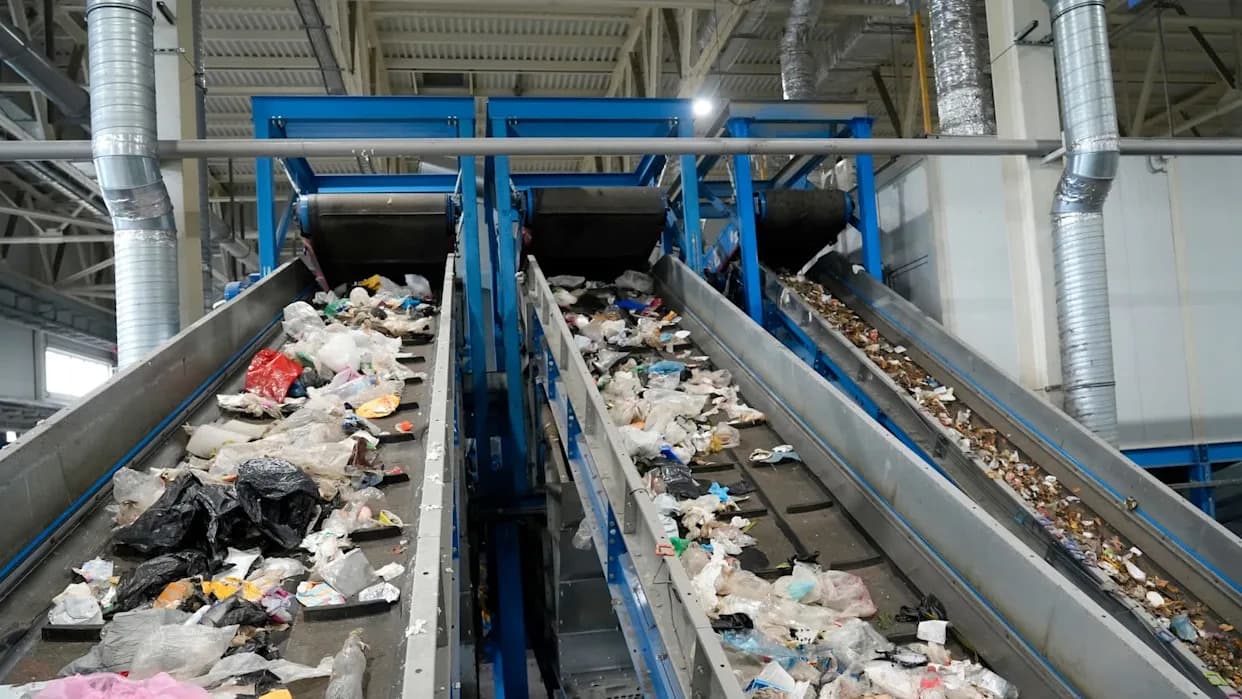
Photo Credit: iStock
Republic Services' Denver recycling facility is pairing employees with AI-powered Glacier robots to speed up sorting, recover more recyclables and reduce landfill waste. The hybrid human-robot system processes material from Denver and nearby mountain communities and is already cutting the plant's daily residue by a substantial amount.
Faster, Smarter Sorting
The plant handles roughly 500 tons of material per day from Denver-area and mountain communities including Golden, Arvada, Louisville, Vail and Steamboat Springs. New Glacier robotic units use high-resolution cameras and artificial intelligence to identify target items on a fast-moving conveyor, while robotic arms use suction to lift those items and deposit them into designated chutes.
Performance and Impact
According to facility general manager Steve Derus, Glacier robots can make about 60–70 picks per minute, compared with an average of 40–50 picks per minute for a human sorter. Earlier this year the plant installed two Glacier units; Derus said installation costs run about $90,000 per unit. Together, the robots are helping keep roughly 25 tons of residue out of landfills each day.
“We're not replacing labor here, but we're moving the positions of a sorter into more technical positions,” Derus said. “Jobs like this that are, you know, a couple dollars above minimum wage, we do struggle to find people to come and work at facilities such as this.”
Benefits Beyond Speed
Improved sorting increases the quantity and quality of recovered materials, which raises their market value and reduces the volume hauled to and buried in landfills. The technology also allows staff to transition from repetitive manual sorting to steadier technical roles such as maintenance, forklift operation and equipment support.
Limits and Broader Solutions
While smarter automation is a major advance for recycling, plant officials emphasize that tackling waste at the source remains essential. Choosing reusable items and avoiding single-use plastics help reduce the amount of material that even the best sorting systems must manage.
“It's the way of the future,” Derus said, underscoring that technology and better consumer choices must work together to cut waste.
Help us improve.