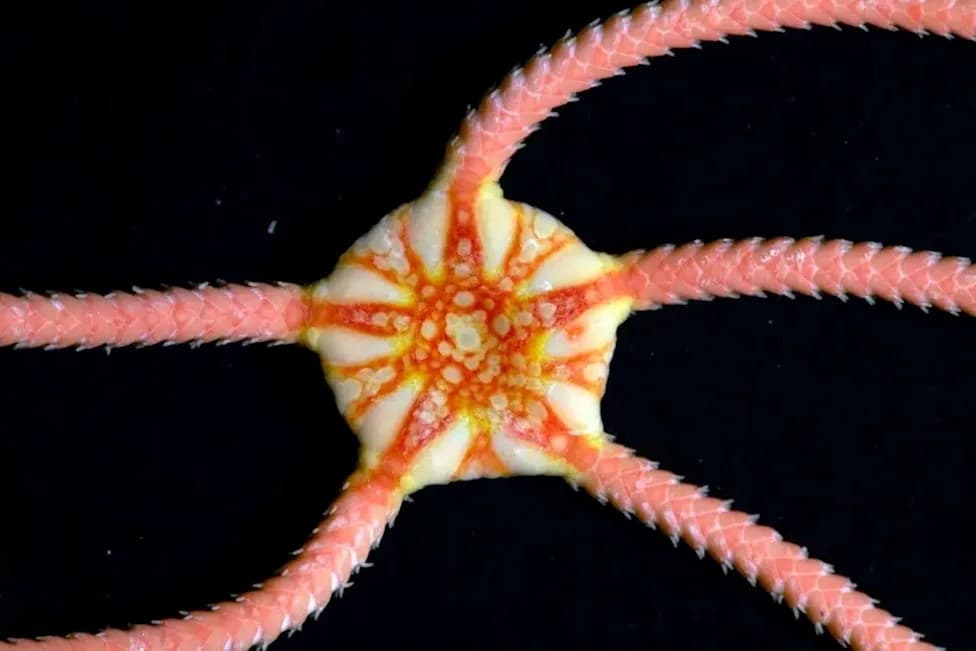
The Diamantina Zone in the southeastern Indian Ocean hides a vast, 5.3-million-year-old whale necropolis nearly four miles deep. A 2023 expedition using the Fendouzhe submersible mapped roughly 745 miles of seafloor and recorded 485 whale-fall and fossil sites, including five active falls and 480 fossil localities. Active sites support specialized communities—bone-eating worms, chemosynthetic clams and mussels, brittle stars—and many species may be new to science. The study, published in Nature, proposes the area acts as a "whale-fall supercorridor," linking deep-sea communities over large distances.
Massive 5.3-Million-Year-Old Whale 'Necropolis' Found Nearly Four Miles Deep in the Indian Ocean
Deep-sea discovery uncovers one of the largest known whale graveyards on the floor of the Indian Ocean
Nearly four miles beneath the surface of the southeastern Indian Ocean, researchers have discovered a vast, 5.3-million-year-old whale graveyard that preserves hundreds of whale remains and active deep-sea ecosystems. The find offers an unprecedented window into the evolution and ecology of deep-diving cetaceans.
How the Discovery Was Made
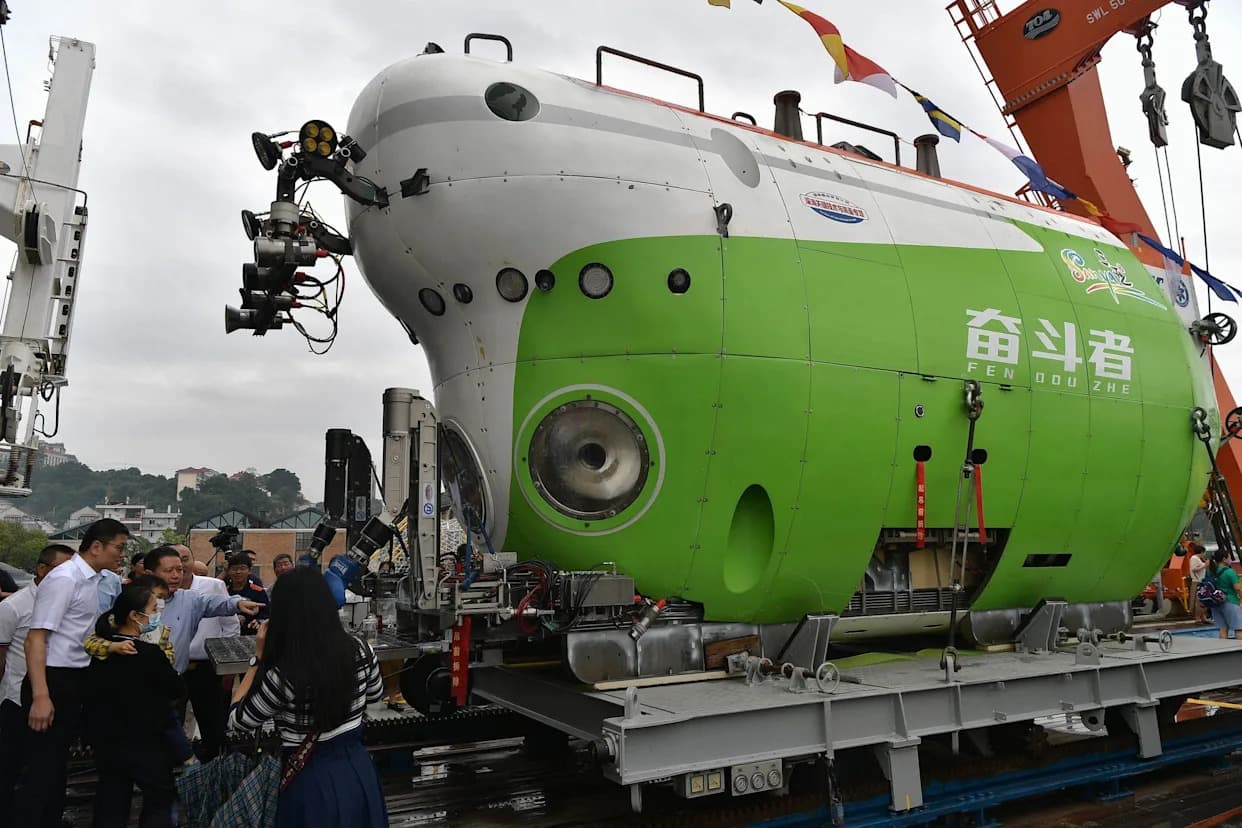
During a 2023 expedition, a team led by Xiaotong Peng of the Institute of Deep-sea Science and Engineering at the Chinese Academy of Sciences used China’s full-ocean-depth submersible Fendouzhe to map roughly 745 miles of seafloor in the Diamantina Zone, south of Australia. The survey documented 485 whale-fall and fossil localities, including five active whale falls and 480 fossil sites.
What They Found
The site contains hundreds of fossil whales representing both living and extinct lineages; some remains may belong to previously undescribed species. The researchers report a concentrated necropolis spanning millions of years of accumulation and exceptional bone preservation due to minimal sediment cover on the abyssal plain.
Visitors view China's deep-sea manned submersible Fendouzhe (Striver) on scientific research ship Tansuo-2 before International Museum Day on May 17, 2023 in Fuzhou, Fujian Province of China.(Getty Images)
Living Ecosystems on the Deep-Sea Falls
Active whale falls hosted rich, specialized communities adapted to chemosynthetic energy sources: bone-eating worms, chemosynthetic clams and mussels, brittle stars and other organisms were observed. Many of these animals could be new to science, underscoring how little of the deep ocean has been explored and cataloged.
Ecological and Scientific Significance
The team proposes that the Diamantina Zone may act as a "whale-fall supercorridor," where sinking carcasses serve as ecological stepping stones that help connect distant deep-sea communities. The discovery extends the known fossil record of deep-diving whales by more than five million years and expands our understanding of how deep-sea ecosystems are structured and persist over geological time.
Why the Bones Stayed Intact
Researchers suggest two main reasons for the graveyard's formation and preservation: (1) the region is a hotspot for deep-diving whales, which increases the frequency of carcass deposition, and (2) the seafloor topography in the Diamantina Zone tends to concentrate sinking remains in a natural collection basin. With very little sediment accumulation, bones remained exposed and well preserved for millions of years.
Looking Ahead
Published in Nature, the study highlights how much of the abyssal plain remains unexplored and suggests that additional whale graveyards may exist in other remote parts of the world’s oceans. Continued deep-sea exploration and taxonomic work will be needed to identify new species and to better understand these unique ecosystems.
Note: This article removes unrelated headlines and focuses on the scientific discovery, methods, and implications of the Diamantina Zone whale necropolis.
Help us improve.