Carrion crows trained by researchers at the University of Tübingen treated an empty set as a measurable quantity and placed it on a numerical continuum. In separate tests the birds learned to associate visual cues with reward probabilities (about 90% versus 70%) and reliably chose the higher-probability option. The results suggest that numerical and probabilistic reasoning may have deep evolutionary roots and have implications for how we value and conserve animals.
Crows Treat 'Nothing' as a Number and Weigh Probabilities, Study Finds
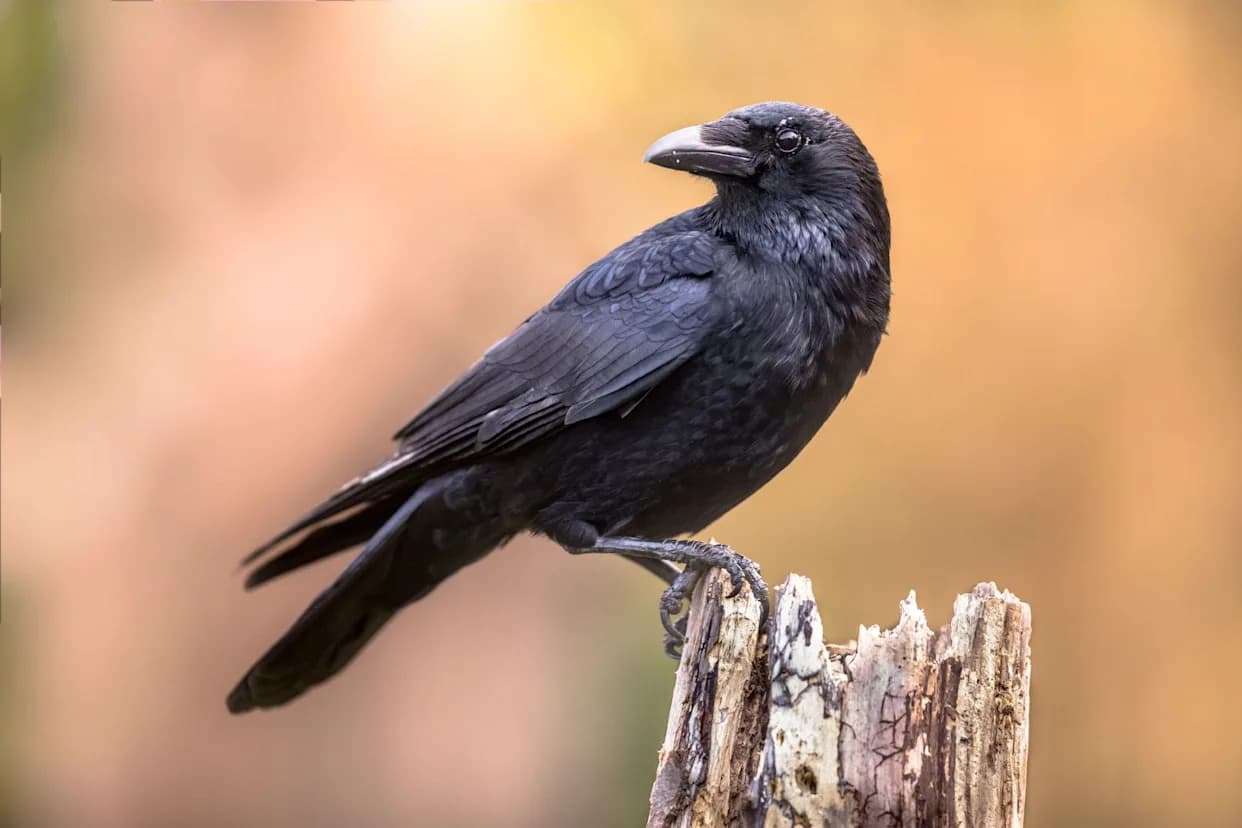
Photo Credit: iStock
Crows are capturing attention again — this time for a surprising ability: treating an absence as a countable quantity and using probabilistic information to guide decisions.
Researchers led by Andreas Nieder at the University of Tübingen in Germany trained carrion crows in food-based tasks to test numerical perception and decision-making under uncertainty. In one set of trials, the birds learned to recognize different quantities. The researchers included trials in which no items appeared at all. Remarkably, the crows behaved as if an empty set were a numerical value on the same continuum as other quantities.
We trained crows to recognize different numbers and included trials with no items. The birds treated an empty set as a quantity and placed it on the numerical continuum, Nieder said.
In a separate series of experiments, the team trained the birds to associate visual cues with different reward probabilities. For example, one cue produced a food reward roughly 90% of the time, while another produced food about 70% of the time. The crows consistently chose the statistically more favorable cue, indicating they could extract and use probabilistic regularities from experience.
The crows extracted probabilistic regularities from experience, stored this information in memory, and used it flexibly to make reward-maximizing decisions under uncertainty, Nieder summarized.
Why This Matters
These findings add to growing evidence that sophisticated, math-like cognitive capacities are not unique to humans or even to mammals. Because the bird and mammal lineages diverged more than 360 million years ago, the roots of numerical and probabilistic reasoning may be much deeper in evolutionary history than previously thought.
Beyond scientific curiosity, research like this can influence how people value ecosystems, bolster conservation efforts, and reshape attitudes toward species commonly dismissed as pests. Demonstrating advanced cognition in birds highlights the complexity of animal minds and the need to consider that complexity in conservation and wildlife policy.
Reporting based on Live Science's coverage and statements from Andreas Nieder, University of Tübingen.
Help us improve.