Iran's UN ambassador in Geneva said Tehran alone will decide how to use frozen assets once they are released under a US-Iran agreement aimed at helping end the Middle East war. State media reported Washington agreed to free $12 billion and to temporarily lift some oil sanctions. US Vice President JD Vance said the US and Qatar would oversee any unfreezing process, a claim Iran's Ali Bahreini rejected as limited to technical coordination. The memorandum of understanding opens 60 days of talks on Iran's nuclear programme and sanctions relief.
Iran Says It Alone Will Decide How To Use $12B In Unfrozen Assets, Ambassador Insists
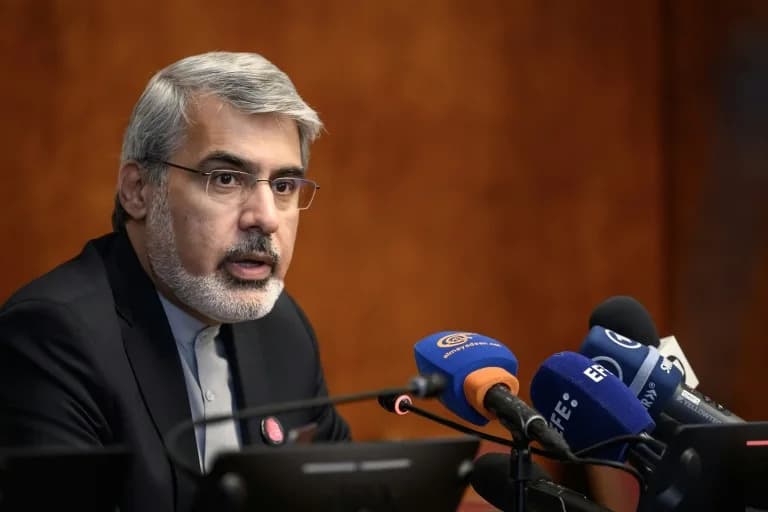
Ali Bahreini is Iran's ambassador to the United Nations in Geneva (Fabrice COFFRINI)(Fabrice COFFRINI/AFP/AFP)
Tehran will be the sole arbiter of how it spends frozen assets once they are released under a US-Iran agreement intended to help end the war in the Middle East, Iran's ambassador to the United Nations in Geneva said on Tuesday — directly contradicting statements by US officials.
State media in Tehran reported that, under the negotiated deal, Washington has agreed to release $12 billion in frozen funds to Iran and to temporarily suspend some oil-related sanctions on the Islamic Republic.
On Monday, US Vice President JD Vance said the funds had not yet been released and insisted that, if they were unfrozen, the money would not be permitted to finance terrorism. Vance suggested the funds could be used to buy US goods such as soybeans and said the US and Qatar would have approval over any unfreezing process.
"If there is any frozen Iranian assets that are unfrozen, then we have approval over that process; the Qataris have approval over that process," Vance said.
Ali Bahreini, Iran's UN ambassador in Geneva, rejected that account. "Iran is the only country who will decide what to do with its assets, which are going to be defrozen," he told reporters, adding that no other country would be allowed to exert influence beyond limited technical cooperation.
Bahreini — who attended the mediated talks in central Switzerland's Burgenstock complex — said some technical steps must be handled by the United States and Qatar because the assets were frozen by the US and some funds are held in Qatari accounts. He emphasized that their role would be limited to the technical mechanics of unfreezing funds.
The issue of frozen assets is included in a memorandum of understanding signed last week by Tehran and Washington. That memorandum sets a framework for 60 days of negotiations to address broader issues, including Iran's nuclear programme and sanctions relief.
Bahreini said Tehran's blocked assets would be unfrozen "very soon," but reiterated that decisions about how the funds are used will rest solely with Iran once they are released.
Context: Iran has faced extensive asset freezes and sanctions by the United States and other parties since the 1979 Islamic revolution. The current talks signal a potential thaw in relations but have already produced conflicting public accounts of how released funds would be managed.
Help us improve.