New hatchling fossils from Mazon Creek challenge the long-held idea that the first tetrapods went through an externally gilled, tadpole-like larval stage. Tiny embolomere juveniles (and other early tetrapod relatives) lack external gills, show early skull ossification and preserved yolk, and point to direct development near the origin of tetrapods. The evidence suggests amphibian-style metamorphosis evolved tens of millions of years later, making it a derived trait rather than the driver of terrestrialization.
Baby 'Crocodile-Like' Fossils Rewrite How Early Vertebrates Moved Onto Land
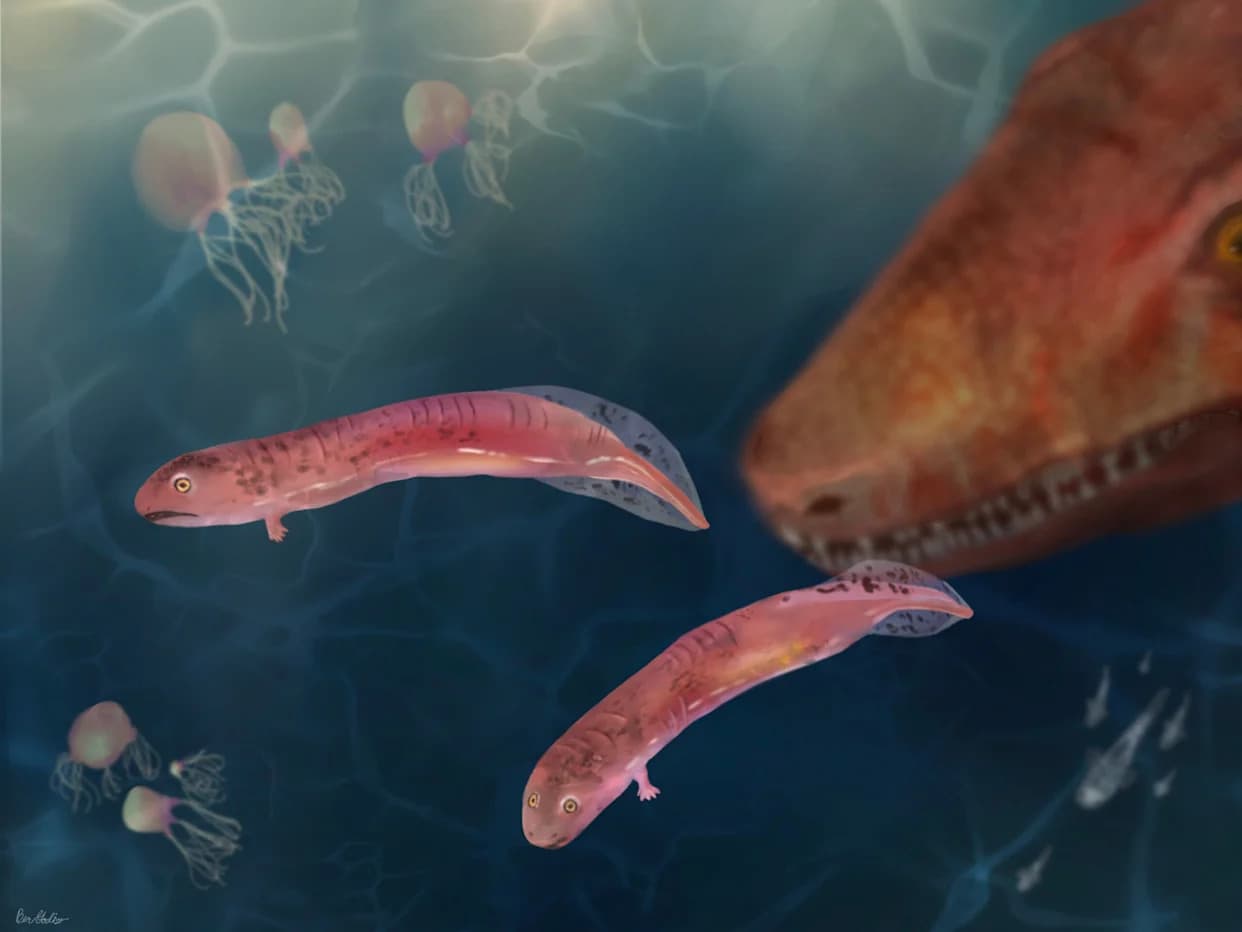
New fossil evidence from crocodile-like early tetrapods known as embolomeres suggests they grew without undergoing amphibian-style metamorphosis. The finding challenges the long-held idea that the ancestors of amphibians, reptiles, and mammals all passed through a tadpole-like stage. (CREDIT: Berit Goding)
New analysis of tiny hatchling fossils from Mazon Creek, Illinois, challenges a long-standing view of how the first four-legged vertebrates developed. Instead of passing through a frog-like, externally gilled larval stage, some of the earliest tetrapods appear to have developed more directly—calling into question the idea that amphibian-style metamorphosis was the key innovation that enabled vertebrates to colonize land.
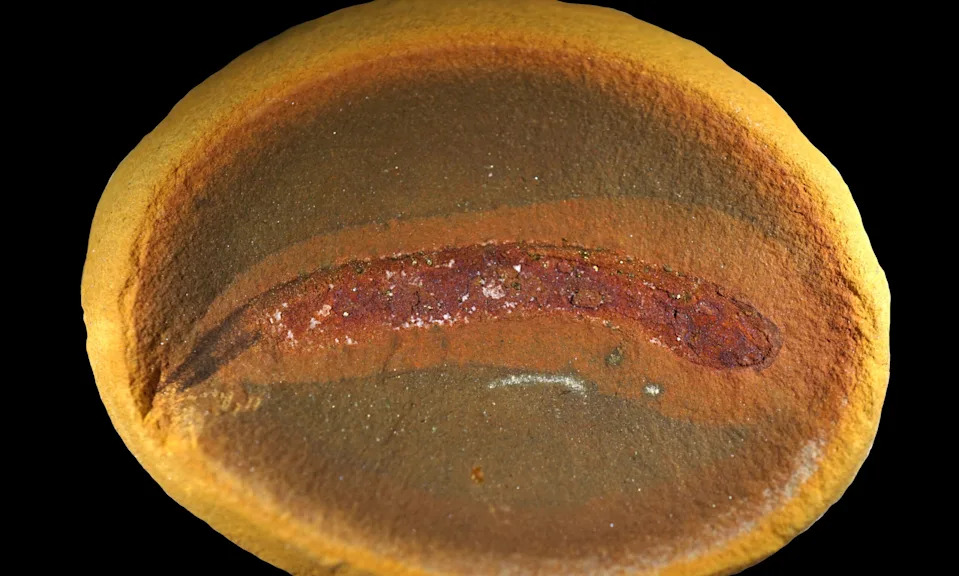
Fossil baby embolomere, showing that young embolomeres did not undergo a full amphibian-like metamorphosis. (CREDIT: Arjan Mann)
What the Fossils Show
The centerpiece specimens are hatchlings of embolomeres, crocodile-like early tetrapods that lived in rivers, lakes, and swamps roughly 350–280 million years ago. Adult embolomeres could grow longer than 10 feet; the newly described juveniles are only a few centimeters long. These specimens preserve not only bones but impressions of soft tissue and body outlines, a rarity that captures an early life stage almost never fossilized.
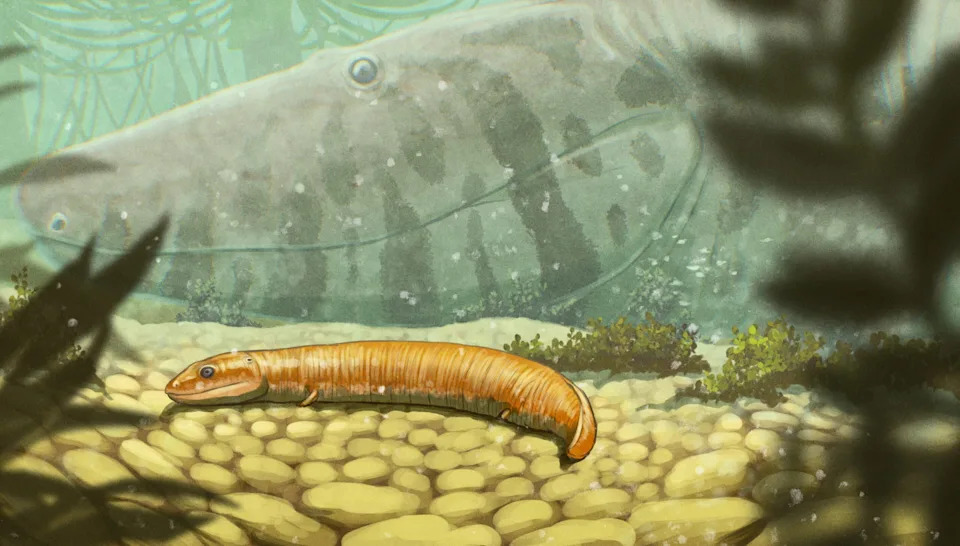
Illustration showing a baby embolomere, with an adult in the background. (CREDIT: Gabriel Ugueto)
Key Anatomical Findings
- None of the examined hatchlings show evidence of external gills—the hallmark of amphibian-style larvae and tadpoles.
- Young individuals have developing limbs and, in at least one case, preserved abdominal yolk, indicating recent hatching and relatively large eggs.
- Cranial bones begin ossifying early rather than after a long larval period, consistent with a more direct developmental trajectory.
“We looked at a number of different species ... and what we found is that none of them have anything that looks remotely like a tadpole. And if you don’t have a tadpole, then you don’t have a metamorphosis.” — Jason Pardo, co-lead author
Methods and Context
The fossils come from the Mazon Creek Lagerstätte, a site renowned for preserving delicate tissues and small organisms. One important specimen had been in the Field Museum collection for years before researchers, including Arjan Mann and Jason Pardo, identified it as a juvenile embolomere. Scanning electron microscopy at the Canadian Museum of Nature helped confirm the identification and reveal soft-tissue details.
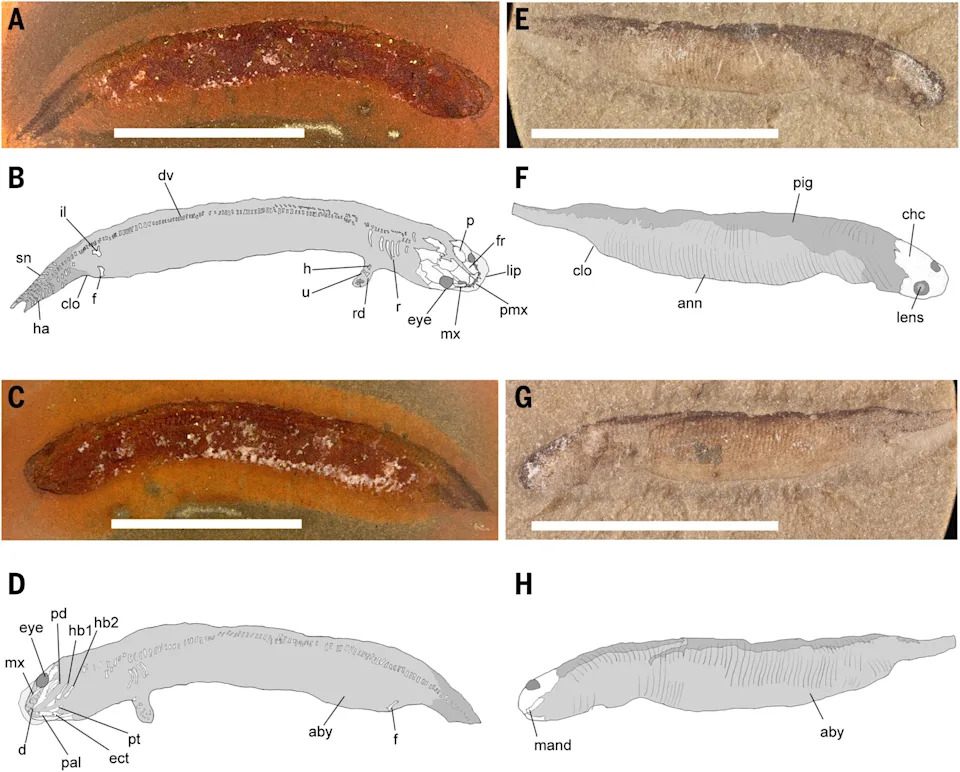
Early posthatching morphology of digited stem tetrapods. (CREDIT: Science)
Implications for the Water-to-Land Transition
These findings undermine a widely cited hypothesis that metamorphosis—an aquatic larval stage followed by dramatic remodeling—was the mechanism that allowed vertebrates to move onto land. Instead, direct development may have been the ancestral condition near the origin of tetrapods, with amphibian-style gilled larvae and metamorphosis evolving later (possibly 40–60 million years after digits first appeared).
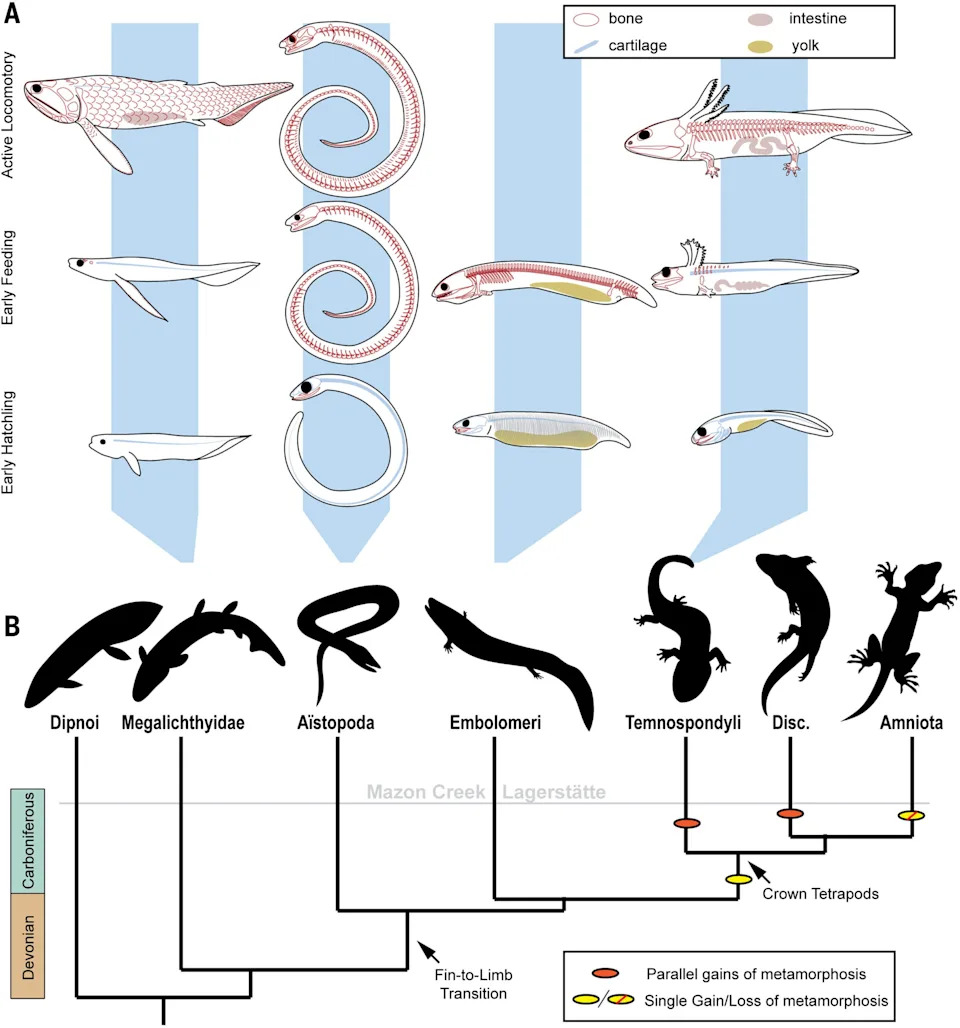
Evolution of life history in early tetrapods. (CREDIT: Science)
That does not imply early tetrapods were fully terrestrial. The evidence suggests they remained largely aquatic, or at best semi-aquatic, with poorly developed limbs in juveniles consistent with later, gradual adaptations for life on land.
Collaboration and Broader Significance
The research highlights the value of museum collections and collaboration with amateur collectors and citizen scientists. Specimens from volunteers and organizations such as the Earth Science Club of Northern Illinois and the Lauer Foundation for Paleontology played a crucial role in these discoveries.
Published in Science, the study reframes how scientists reconstruct early vertebrate life cycles: rather than using modern amphibians as a simple model for the first tetrapods, researchers will need broader comparisons across fishes, fossil groups, salamanders, caecilians, reptiles, and more to trace how developmental patterns changed during the move from water to land.
Source: Research article available online in Science. Original news coverage published by The Brighter Side of News under the headline “Ancient crocodile-like predators rewrite current knowledge of how animals adapted to the land.”
Help us improve.