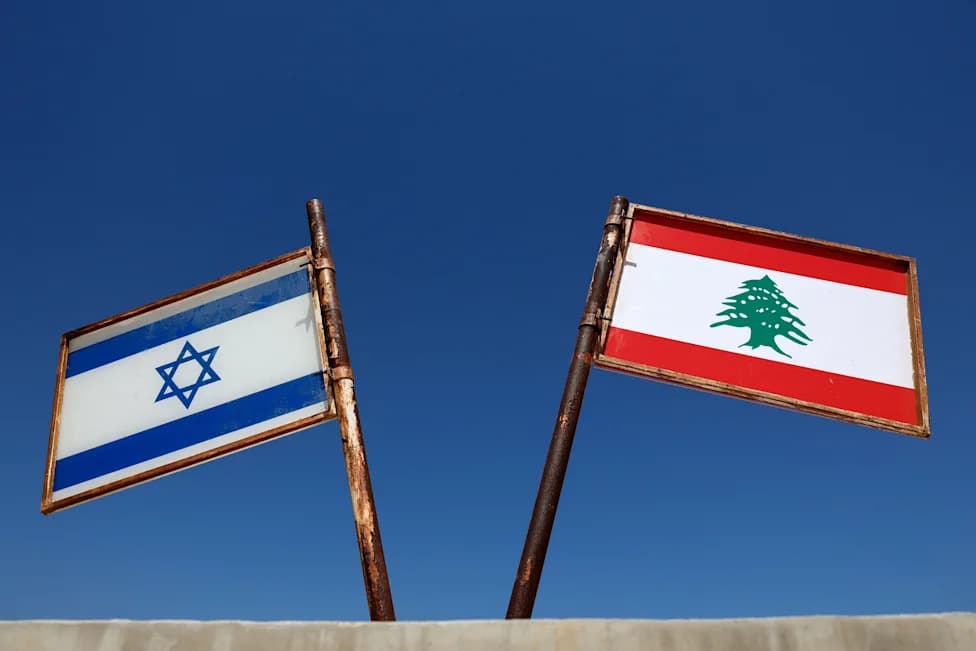
The US State Department said new direct talks between Israel and Lebanon will be held in Washington on June 23 and 25, following a renewed ceasefire with Hezbollah. Marco Rubio spoke with Lebanese President Joseph Aoun, emphasizing bilateral negotiations as the main route to reconstruction and long-term stability. The talks have so far excluded Hezbollah, and recent violence—reportedly killing at least 47 people—highlights the fragility of the ceasefire.
US To Host New Israel–Lebanon Talks In Washington On June 23 and 25
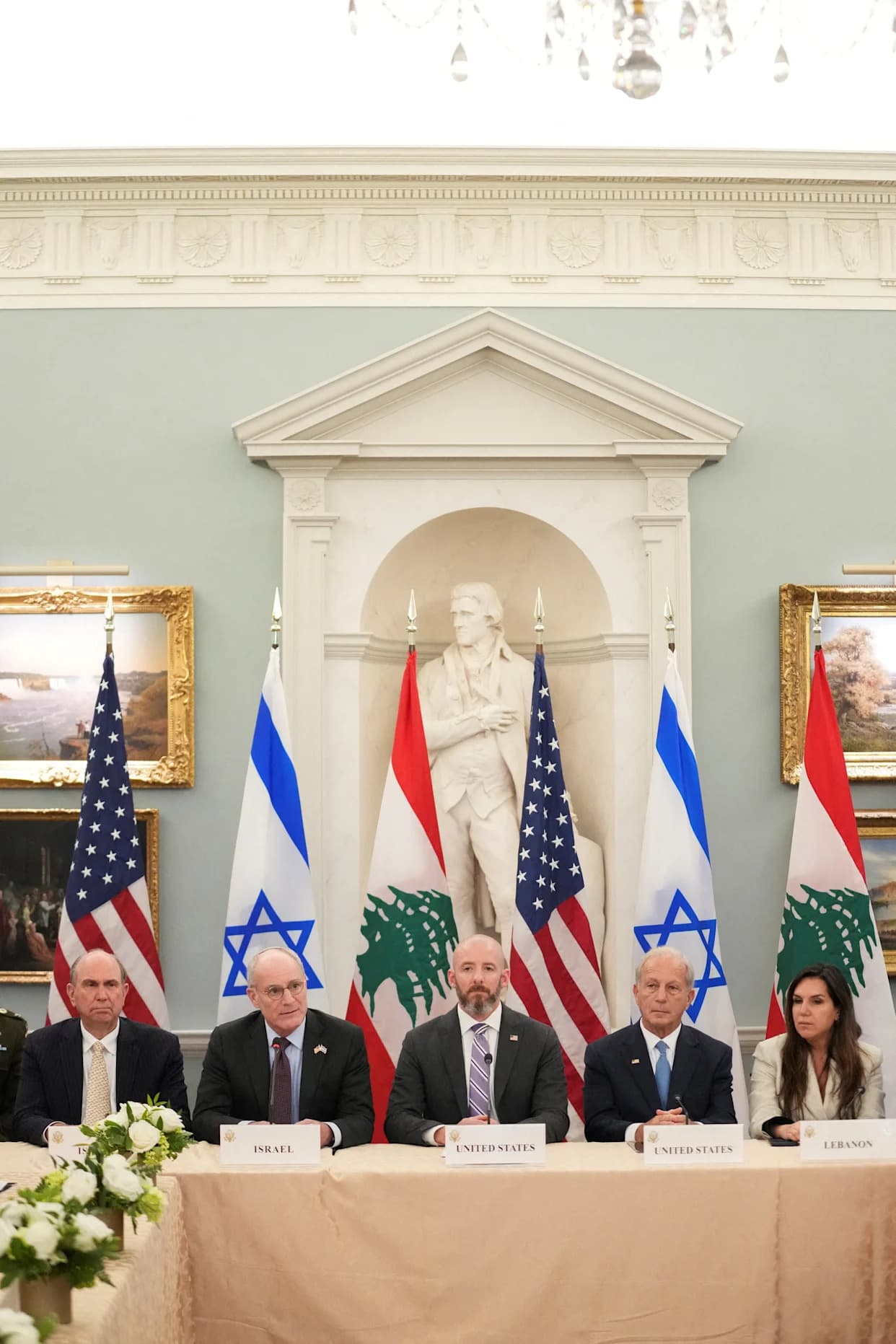
Israeli and Lebanese ambassadors are seen during negotiations in June at the State Department in Washington, DC [File: Nathan Howard/Reuters]
The US State Department announced a new round of direct talks between Israel and Lebanon to be held in Washington, DC, on June 23 and 25. The announcement followed reports of a renewed ceasefire between Israel and Hezbollah that has temporarily reduced cross-border clashes but left key issues unresolved.
The State Department statement said Marco Rubio spoke with Lebanese President Joseph Aoun and stressed that bilateral negotiations between the two governments remain the most feasible path to reconstruction, economic recovery, and ending recurrent cycles of violence. The upcoming sessions are described as opportunities for both sides to make progress toward a lasting peace.
Why These Talks Matter
These meetings are only the latest in a fragile process: Israel and Lebanon held their first direct government-to-government talks in April—the first such meeting since 1993—followed by another round in June. Those rounds produced temporary pauses in fighting but did not include Hezbollah, a major armed actor in Lebanon whose exclusion has limited the talks' ability to secure a comprehensive settlement.
Violence has continued despite diplomatic efforts. Recent Israeli strikes in southern Lebanon reportedly killed at least 47 people in a fresh surge of attacks. Lebanon’s government is pursuing a US-backed roadmap put forward after a November 2024 ceasefire that calls for the disarmament of Hezbollah as part of broader stabilization measures. At the same time, Beirut has pressed for the withdrawal of Israeli forces from parts of southern Lebanon; a June draft agreement envisaged Hezbollah pulling back north of the Litani River but stopped short of demanding a full Israeli withdrawal.
Regional Implications
The talks also intersect with a wider US‑Iran memorandum of understanding (MoU) intended to reduce regional confrontation. Repeated cross-border fighting has threatened to undermine that MoU and prompted unusually public criticism of Israel from US President Donald Trump. Iran’s foreign ministry spokesperson, Esmaeil Baghaei, accused Israel of pursuing a “permanent war,” underscoring how easily local clashes can escalate into broader regional tensions.
Outlook: The Washington talks offer a diplomatic window to build on ceasefire gains, but excluding Hezbollah and unresolved withdrawal and disarmament demands mean durable progress will remain difficult without broader regional engagement.
Help us improve.