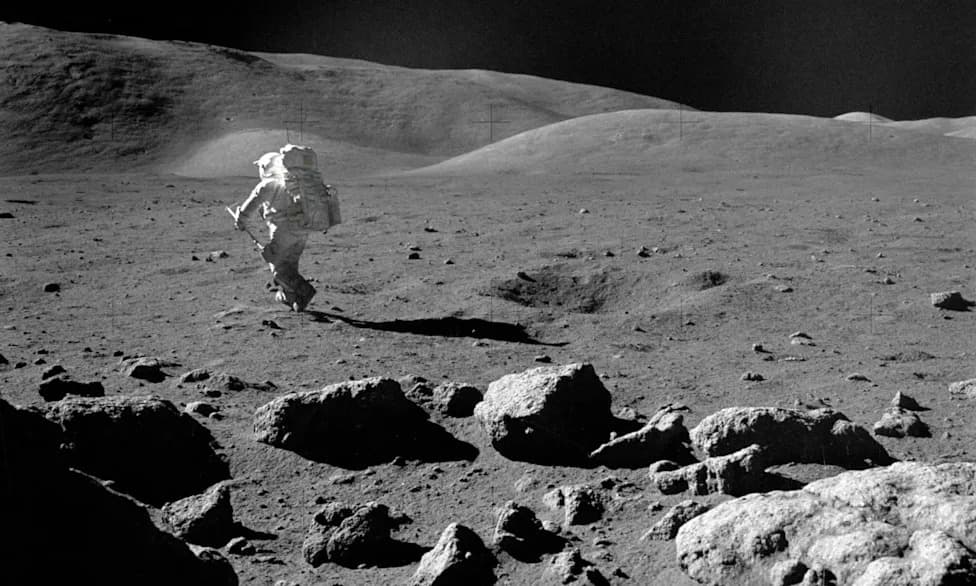
Oxford astrophysicist Brian Lacki proposes searching for long-lived "passive" technosignatures—occulters, glinters and diffusers—rather than relying solely on active radio signals. He suggests that microscopic debris from destroyed megastructures, dubbed technograins, could be transported between stars and become embedded in the Moon’s regolith. Careful sifting and analysis of lunar soil might therefore reveal traces of extinct extraterrestrial technology. The paper is posted on arXiv and is not yet peer-reviewed.
Moon Dust Could Hide Microscopic Traces Of Alien Technology, Study Suggests
Moon dust may be hiding signs of pulverised alien technology, scientist says
Pulverised remnants of advanced alien technology could be scattered through the solar system—and some of those microscopic fragments might already be trapped in the Moon’s regolith, an Oxford astrophysicist suggests in a new paper posted to arXiv.
Brian Lacki argues that searching for long-lived physical artefacts—so-called passive technosignatures—may be a more promising way to find extinct extraterrestrial civilisations than chasing contemporaneous radio transmissions. His paper is available on arXiv but has not yet been peer-reviewed.
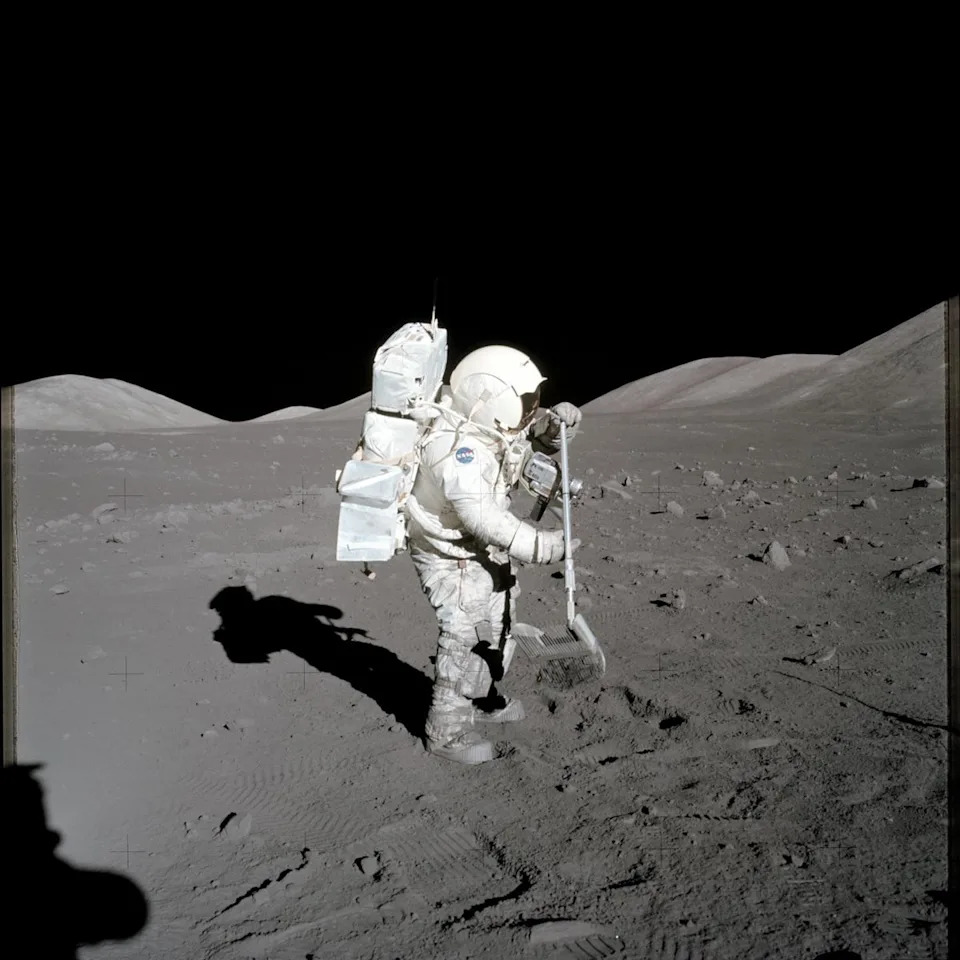
Apollo 17 astronaut Harrison Schmitt collects samples of lunar soil in 1972 (Nasa)
What Are Passive Technosignatures?
Lacki outlines three broad classes of passive technosignature that an advanced civilisation might leave behind:
Occulter
An occulter is an engineered object placed in orbit to block or dim starlight, producing an artificial eclipse or an unusual transit signature. Unlike active beacons, an occulter would require no power or maintenance—simply continuing to orbit and periodically altering its star's apparent brightness.
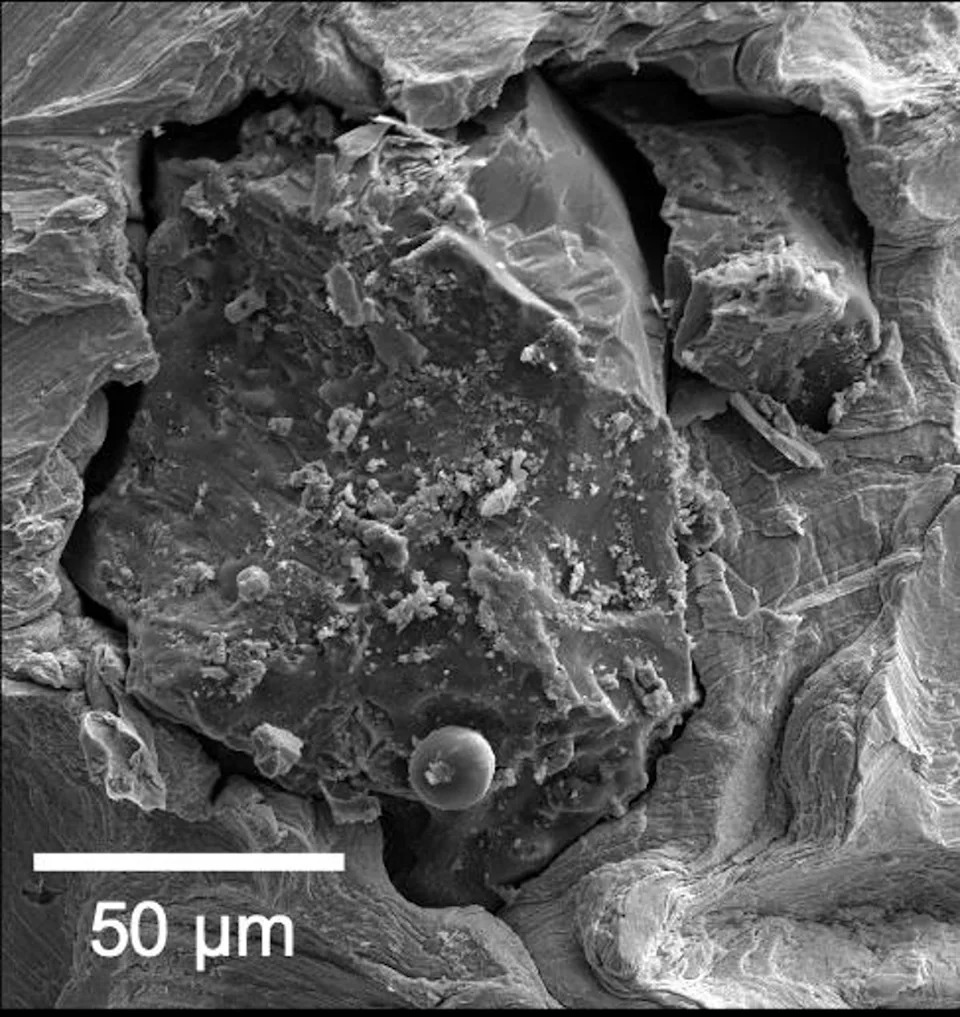
A grain of lunar soil brought back by Apollo 17 (Jennika Greer, Field Museum)
Glinter
A glinter is a large lens- or mirror-like structure designed to redirect or concentrate starlight. On a planetary scale such devices could produce anomalous reflection or focusing effects that stand out from natural sources.
Diffuser
A diffuser is material engineered to scatter incoming light in distinctive ways, producing unique spectral signatures. Humans already use retroreflectors and diffusers on spacecraft to calibrate instruments; an alien diffuser could similarly be identifiable from its spectrum.
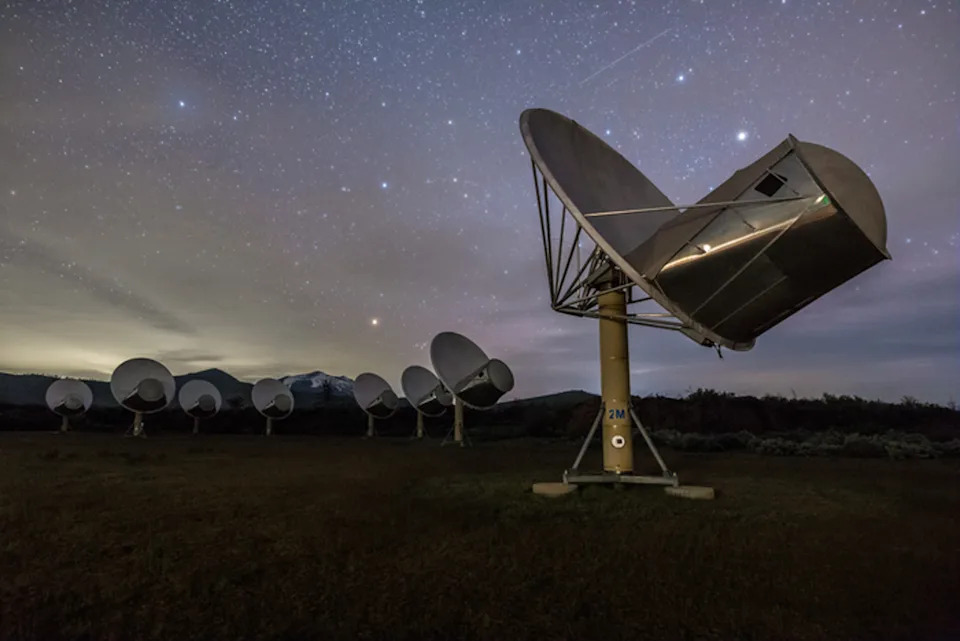
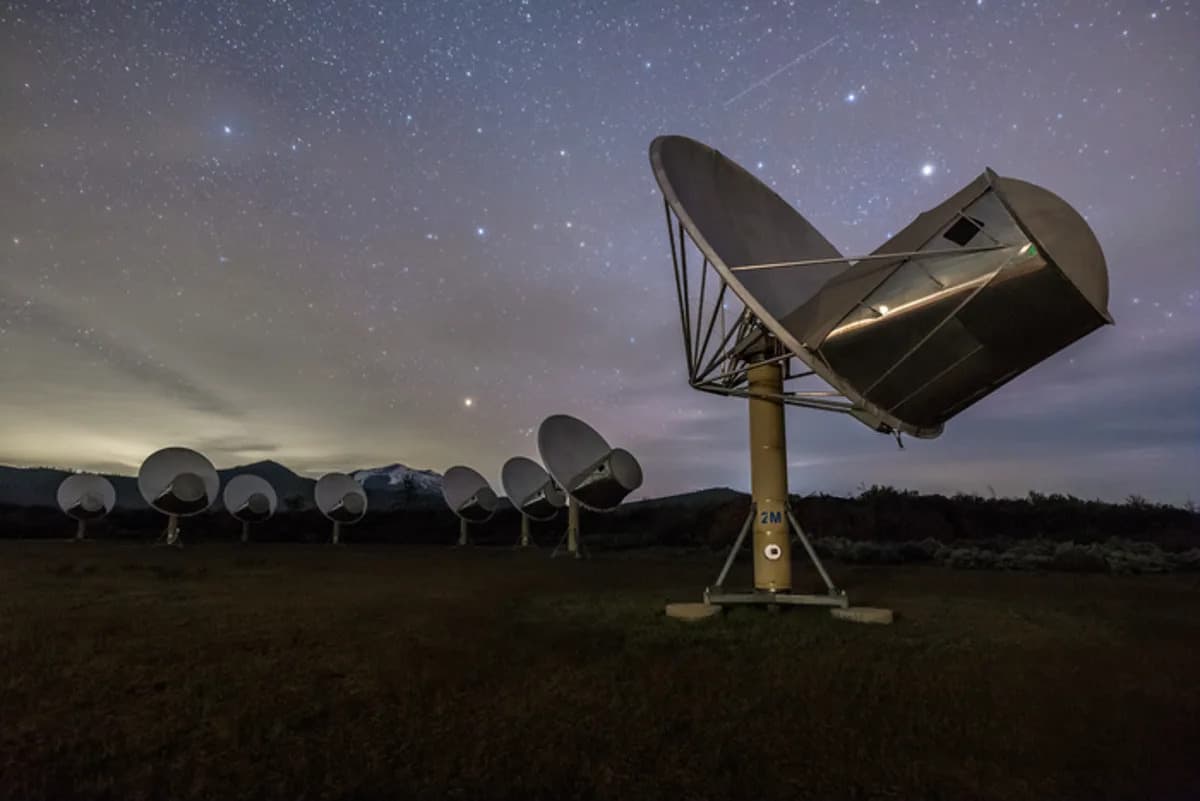
Allen Telescope Array (Joe Marfia)
Technograins: Dust From Destroyed Megastructures
Large-scale concepts such as a Dyson Sphere—a swarm or shell of collectors built to harvest a star's energy—would be difficult to find intact. Lacki suggests a complementary approach: look for the microscopic debris created when such megastructures break apart. He calls these fragments technograins.
Technograins could be accelerated by stellar winds and wander between star systems. Over cosmic time, our Solar System may have swept up some fraction of interstellar dust, and the Moon’s surface—lacking atmosphere and active geology—can preserve small particles for billions of years.
Why The Moon?
The lunar regolith accumulates and preserves micrometeoritic and interstellar material with minimal alteration. Sifting targeted samples from regions where material naturally collects could yield anomalous grains whose composition or structure points to an artificial origin.
“What we may ultimately detect may not be intact, macroscopic objects deliberately placed, but dust—the unintended microscopic testament to possible predecessors—that is still waiting to be found,” Lacki writes, framing technograins as a new observational strategy for technosignature searches.
While speculative, the proposal broadens the search for extraterrestrial intelligence by highlighting durable, passive evidence that could outlast the civilisation that created it. Further laboratory analysis and targeted lunar sampling would be needed to test the idea.
Help us improve.