The Kingston University team used noninvasive photoacoustic imaging to map microplastics in living mice, identifying a unique absorption fingerprint that distinguishes tiny plastic particles beneath the tissue surface. Published in Advanced Science, the study demonstrates depth-resolved, repeatable detection that could let researchers track accumulation and persistence over time. Results are limited to mice and do not prove human health impacts, but the technique provides an important tool to accelerate exposure and effect studies.
New Noninvasive Imaging Maps Microplastics Deep Inside Living Tissue — Study in Mice
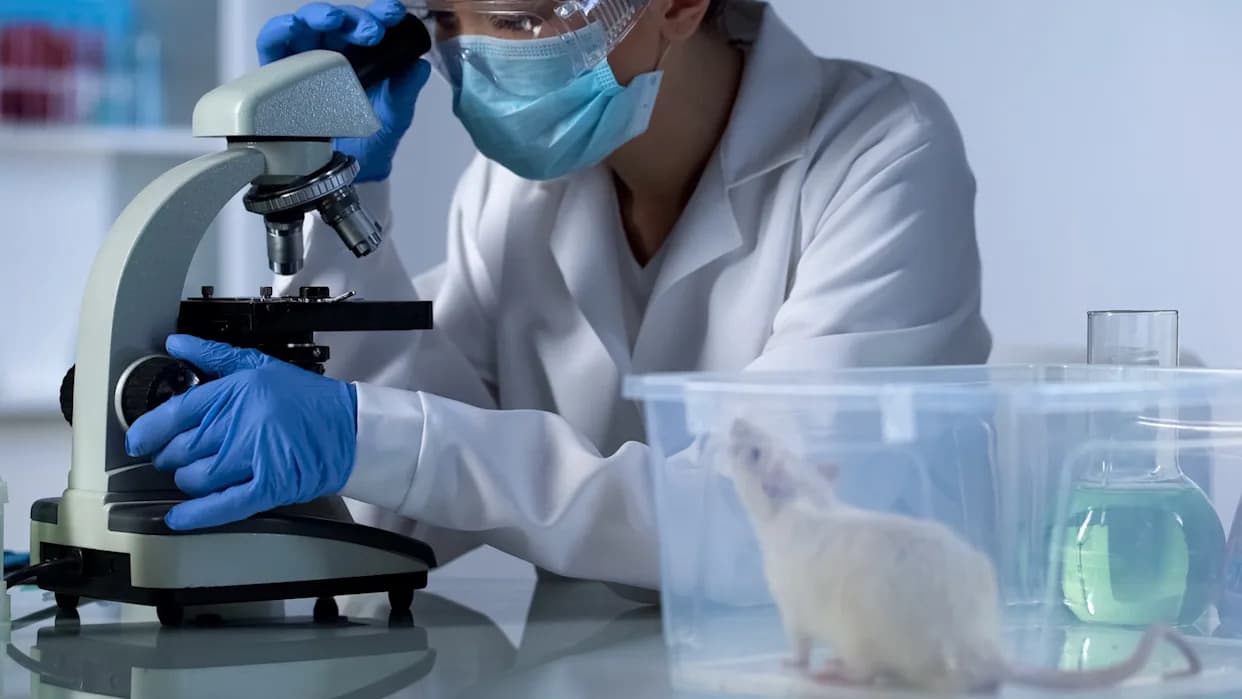
Photo Credit: iStock
A team at Kingston University in London has demonstrated a noninvasive way to locate microplastics inside living tissue, using a technique called photoacoustic imaging. The approach lets researchers detect and track tiny plastic particles beneath the tissue surface in living animals without surgery or removed samples.
What the researchers did
The study, published in Advanced Science, applied short laser pulses to tissue and recorded the resulting sound waves. Because different materials absorb light differently across wavelengths, microplastics produce a distinct absorption fingerprint that the photoacoustic system can pick up. In experiments with mice, the method identified particles beneath the surface and allowed mapping with fine spatial detail.
"Everyone on Earth is exposed to microplastics," said Dr. Stephen Patrick, a member of the research team.
Why this matters
Microplastics are widespread in the environment, but tracking them inside living organisms has been challenging. Traditional methods usually require extracting tissue, which prevents repeated measurements over time. Noninvasive imaging enables longitudinal studies — observing how particles move, where they accumulate, and how long they persist — all without sacrificing animals or performing surgery.
Limitations and context
The current results come from mice, not humans. That means the study does not by itself show that microplastics in tissue cause specific illnesses in people. It does, however, provide a promising tool that could accelerate research into biological distribution and potential effects. Further work will be needed to test the method across different particle types, sizes and concentrations and to adapt it for safe and effective use in humans.
How people encounter microplastics
Microplastics can enter bodies through the air we breathe, the food and water we consume, and everyday consumer products. Improved noninvasive detection inside living tissue could help scientists move beyond confirming exposure and toward understanding real-world health implications and exposure risks.
Bottom line
The study introduces photoacoustic imaging as a valuable research tool for mapping microplastics in living tissue. While it does not establish direct human health effects, it opens a path to better, repeated measurements that could inform future health guidance.
Help us improve.