
The United States and Iran signed a 14‑point memorandum of understanding at the G7 intended to halt active hostilities and open negotiations. President Trump called the agreement "historic" but warned of military action if Iran violates the pact. Many Iranians expressed cautious relief but doubt the MOU will solve deep economic and political problems as inflation soars and unemployment rises. Human rights groups report executions and thousands killed in earlier protests; the rial strengthened roughly 10% after news of the deal.
Survival and Skepticism: Iranians React to US‑Iran 14‑Point Memorandum Ending Hostilities
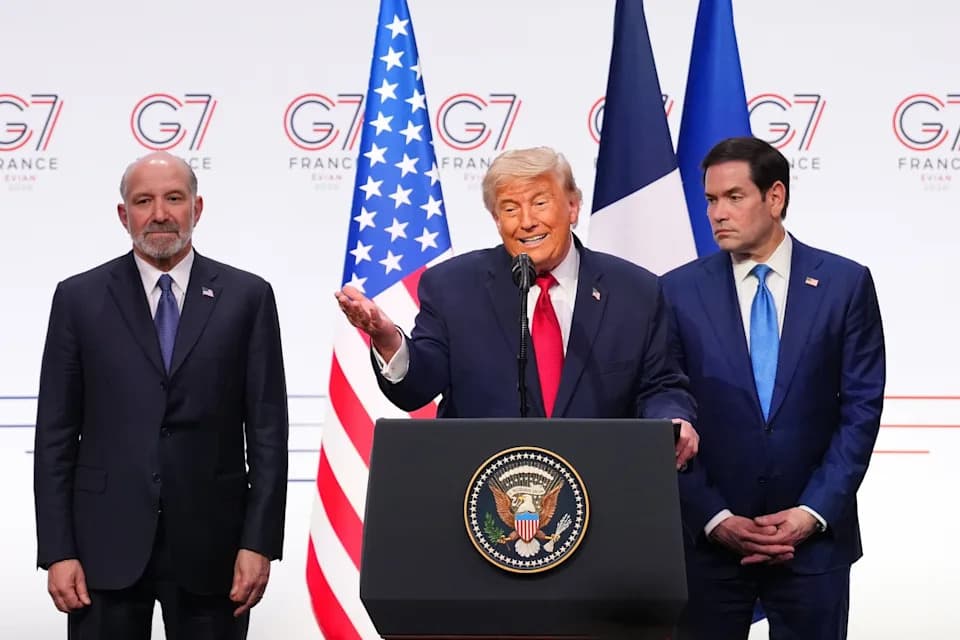
Vadim Ghirda/AP Photo - PHOTO: President Donald Trump speaks during a media conference at the end of the G7 summit in Evian-les-Bains, France, June 17, 2026.
The United States and Iran signed a 14‑point memorandum of understanding (MOU) intended to halt active hostilities and open the door to further negotiations. President Donald Trump formalized the agreement on the sidelines of the G7 summit in France, calling it "historic" and "strong," but he also warned of possible military action if Tehran were to violate the pact: "We're going to bomb the hell out of them if they violate the agreement," he told reporters.
Mixed Reactions on the Ground
Across Iran, reaction to the MOU has been muted and cautious. Several people interviewed by ABC News welcomed an end to active fighting but expressed deep skepticism that the agreement will address long‑standing political and economic problems.
"I feel numb. I feel suspended. I can't let myself believe anything good can happen," said 36‑year‑old Sohrab, a fitness instructor in Semnan. "[Even] if they get it through the MOU and the talks, I am sure they won't fix people's problems. They will not invest in infrastructure or creating jobs. They kill us. They don't care about us."
Sohrab and others described sharp declines in livelihoods: clients stopped coming to businesses, jobs disappeared and prices rose daily. Sahar, a 29‑year‑old software developer in Tehran who lost her job when the conflict began, said she has borrowed heavily from friends and family to survive. "Thank God I don't have to pay rent. I don't know how people with rent and kids are surviving this situation," she said.
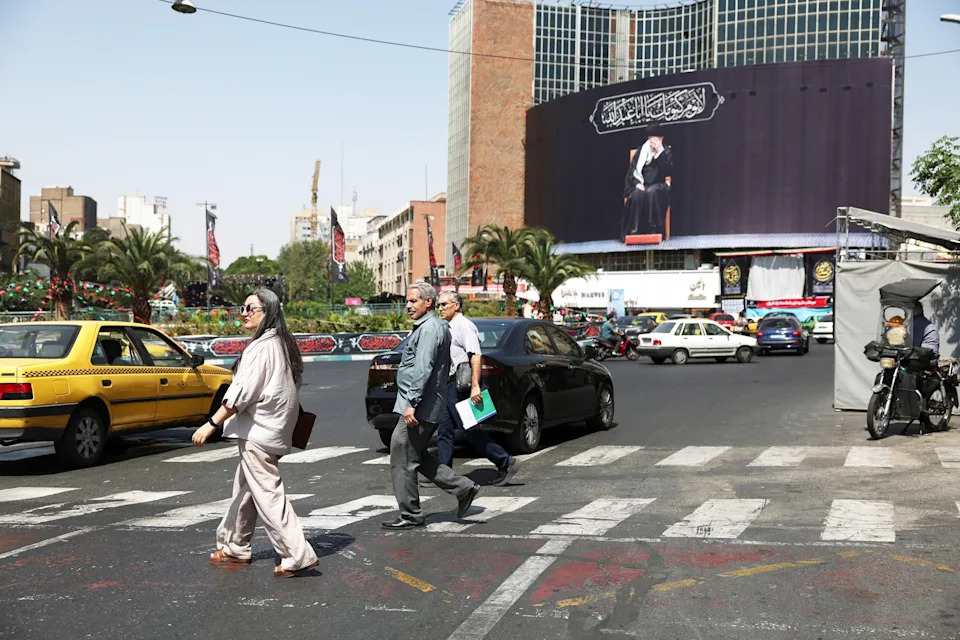
Majid Asgaripour/WANA via Reuters - PHOTO: People walk past a billboard with a picture of the Iran's late Supreme Leader Ayatollah Ali Khamenei, in Tehran, Iran, June 17, 2026.
Economic Toll
Years of sanctions and months of conflict have compounded an already severe cost‑of‑living crisis. The International Monetary Fund (IMF) has forecast that Iran's inflation will average 68.9% this year — one of the highest rates in modern history — while the economy is contracting and the rial has weakened to record lows. Since news of the MOU, Iranian currency markets reported the rial strengthened by roughly 10% against the dollar, a modest relief for many.
"The pressure of the inflation is so unbearable, and it is like a non‑stop marathon of trying not to commit suicide on [a] daily basis," said Ramin, 38, a teacher in Tehran caring for his elderly mother and an unemployed brother. "My only concern at this point is to try to get enough calories and hopefully enough protein for myself and my family members."
Violence, Repression and Leadership Questions
Mass protests earlier this year were met with a harsh security response. The U.S.‑based Human Rights Activists News Agency (HRANA) reported more than 7,000 people killed in those protests, including at least 6,488 demonstrators; ABC News could not independently verify those numbers. Amnesty International has reported dozens of executions since February and warned that many others remain at risk.
Claims about Iran's leadership remain contested. U.S. officials have alleged that Supreme Leader Ali Khamenei was killed in a missile strike at the onset of the conflict and that his son, Mojtaba Khamenei, has taken a central role — assertions that have not been independently confirmed. Mohammad‑Bagher Ghalibaf, speaker of Iran's parliament, has emerged as a visible negotiator in talks with the United States.
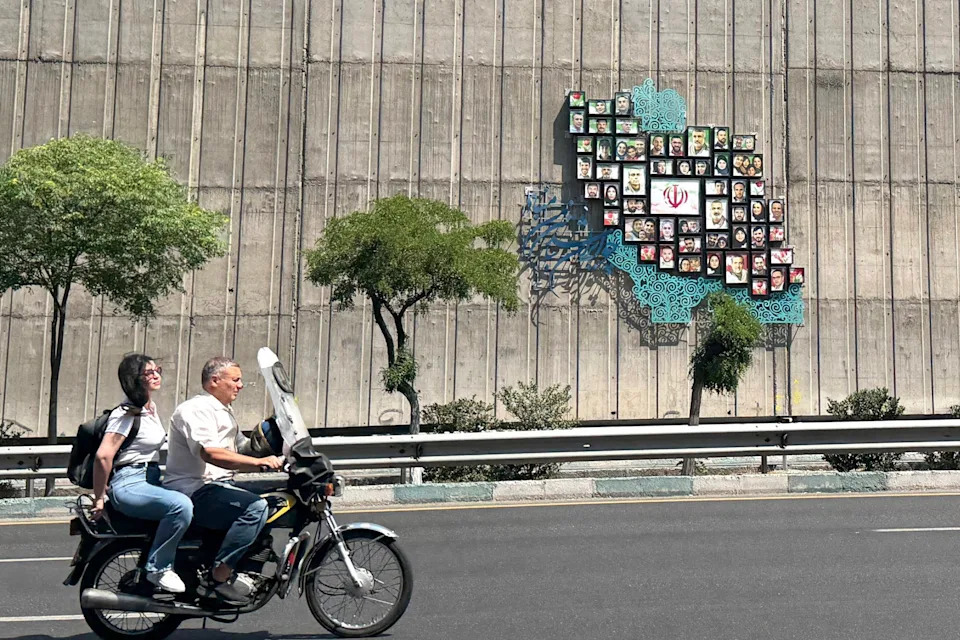
Atta Kenare/AFP via Getty Images - PHOTO: A man and woman ride their motor bike past a map of Iran with the images of some of those killed in the Israeli-US war against the nation, erected on a wall along the highway in Tehran, on June 17, 2026.
Cautious Hope Amid Survival Priorities
Many Iranians told reporters they oppose the war and are focused on basic survival rather than politics. "No one here liked the war. Even those who celebrated the bombardment were frustrated with the regime's crimes," Sahar said. "We were all disappointed and in pain with the killings and suppression. But now it is like survival has become a priority."
As the MOU raises the prospect of reduced hostilities, some people allow themselves guarded optimism that the deal could bring short‑term economic relief, even if deeper political and structural problems remain unresolved.
Reporting notes: The article draws on interviews with Iranians and public reports from international organizations. Some casualty and leadership claims cited by officials and agencies have not been independently verified by ABC News.
Help us improve.





















