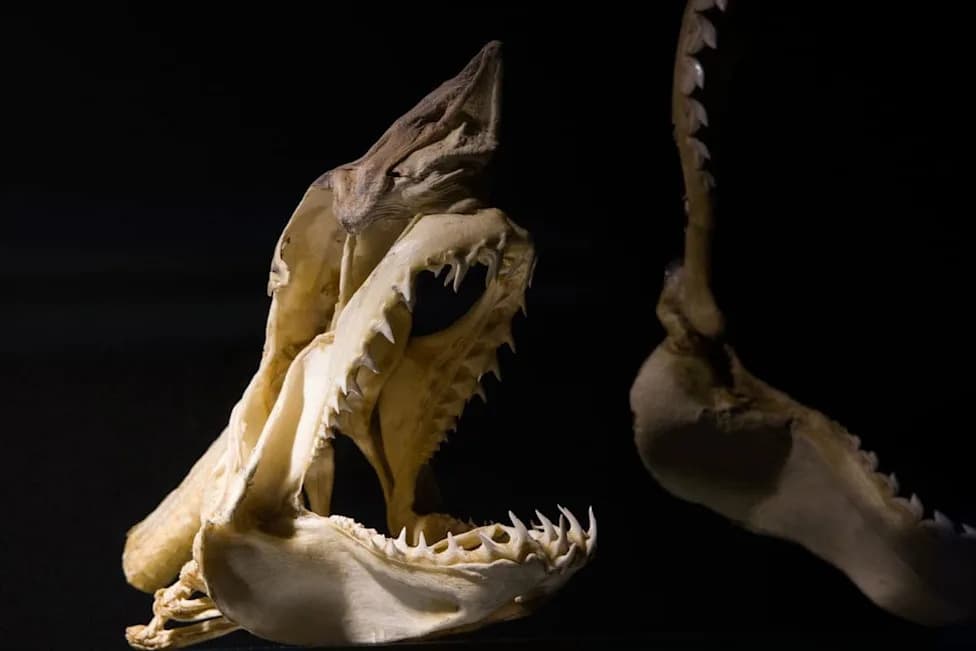
Researchers from the University of Hawaiʻi at Mānoa captured two rare videos of live goblin sharks during expeditions in 2024 and 2025, reported in the Journal of Fish Biology. One shark was observed nearly 2,300 feet deeper than the species' commonly cited depth of about 3,000 feet, expanding its known vertical range to roughly 5,300 feet (≈1,615 m). These recordings improve understanding of goblin shark distribution and behavior and inform deep‑sea conservation efforts.
Rare Deep‑Sea Footage Captures Two Goblin Sharks — One Found Nearly 2,300 Feet Deeper Than Expected
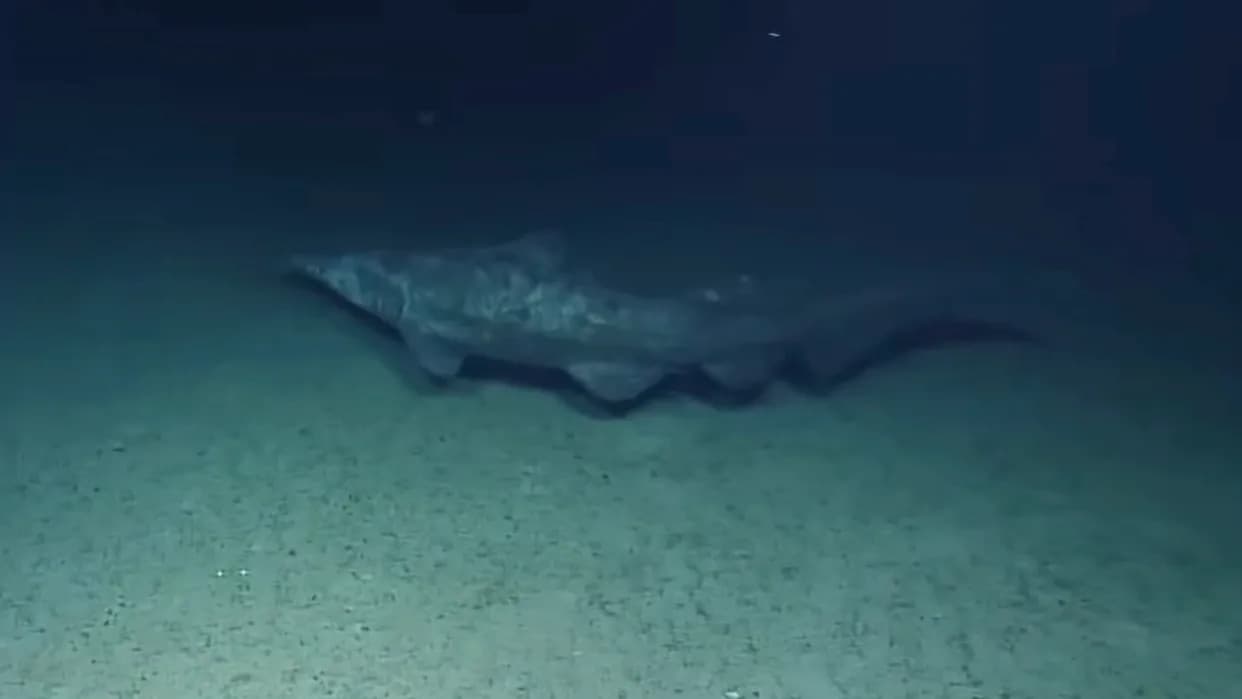
Photo Credit: YouTube
Newly released deep‑ocean footage has given scientists and the public a rare, close look at the goblin shark, one of the ocean's least frequently seen species.
Researchers from the University of Hawaiʻi at Mānoa documented two live goblin sharks in Pacific waters during separate expeditions in 2024 and 2025. The team described their observations in a paper published in the peer‑reviewed Journal of Fish Biology.
The clips show two independent encounters with the species in its natural habitat. In one case, a goblin shark was recorded at a depth nearly 2,300 feet (about 700 m) deeper than the commonly cited depth of roughly 3,000 feet (≈914 m), placing that sighting at about 5,300 feet (≈1,615 m). The other sighting extends the species' documented distribution into the Central Pacific.
What Makes the Goblin Shark Special
The goblin shark is easily recognized by its pinkish skin, elongated snout and highly protrusible jaws that can shoot forward to seize prey. Often called a "living fossil," it is the last surviving member of a shark lineage that dates back roughly 125 million years. Individuals may reach lengths of up to about 13 feet (≈4 m).
Scientific And Conservation Significance
Because goblin sharks are rarely observed alive, in‑situ video recordings are valuable. They help fill important gaps in knowledge about the species' vertical distribution, behavior and habitat preferences. This information is essential for understanding deep‑sea ecosystem structure, locating biodiversity hotspots and anticipating how marine life might respond to increasing environmental pressures.
Rare encounters like these allow researchers to refine maps of where deep‑sea species live and support conservation measures to protect fragile habitats before they are disturbed.
Maintaining healthy oceans supports coastal communities, global food systems and climate stability. Identifying where scarce animals live and how they survive makes it easier to design conservation strategies that protect deep‑sea ecosystems.
Help us improve.