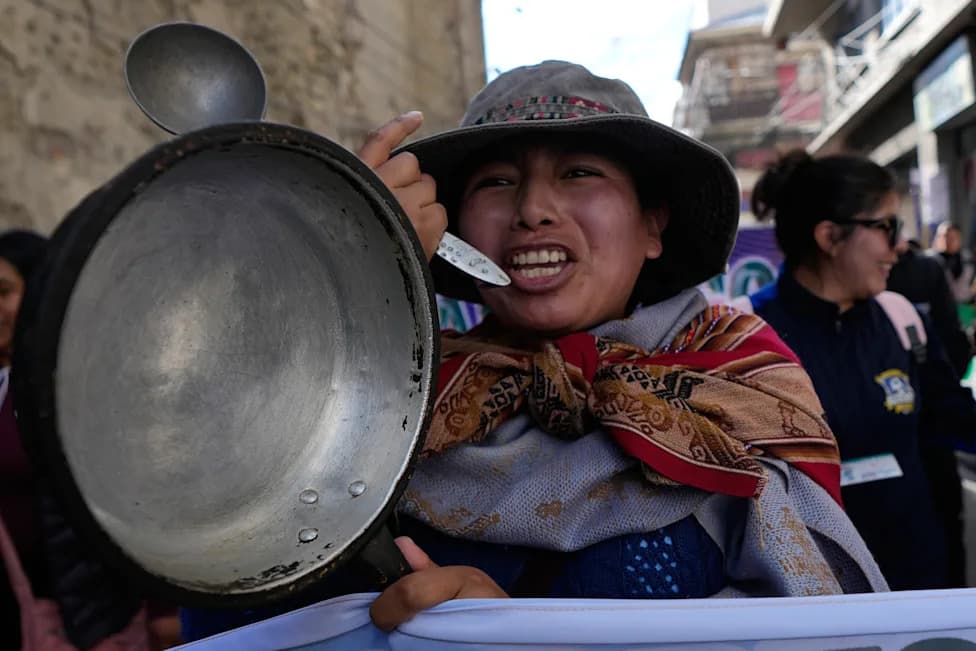
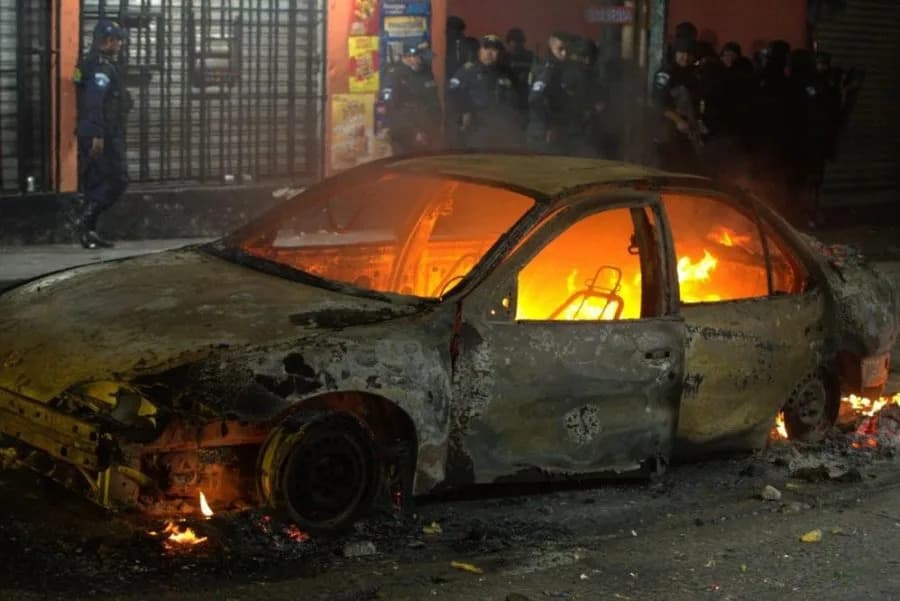
More than 5,000 truck drivers are stranded across Bolivia after protest roadblocks halted commercial traffic for over six weeks. Humanitarian groups — including the Ombudsman's Office, the Red Cross and the Catholic Church — have launched a relief caravan to assist drivers facing shortages and extreme cold. Three Paraguayan drivers are trapped near the Peru–Bolivia border at about 13,451 feet, each hauling roughly 26 tons of cargo; alternate routes would add nearly $3,000 in costs. The disruptions have caused estimated losses of $2.76 billion and continue to affect supply chains and regional trade.
Bolivia Roadblocks Leave 5,000+ Truckers Stranded — Humanitarian Aid Mobilized as Losses Top $2.7B
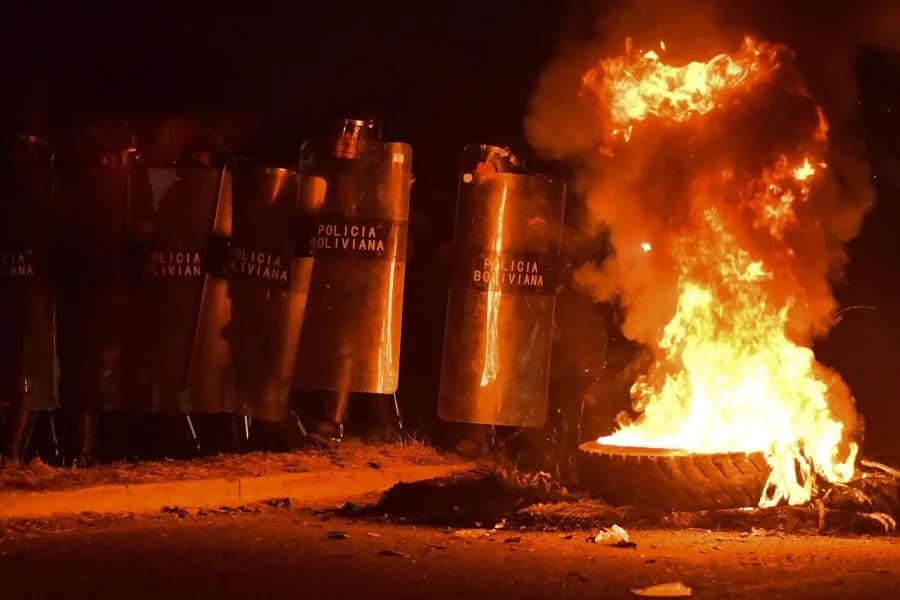
Bolivian Police clash with protesters during a roadblock clearance operation in Cochabamba, Bolivia, on June 8. Photo by Jorge Abrego/EPA
More than 5,000 cargo truck drivers remain stranded on Bolivian highways after roadblocks and protests demanding the resignation of President Rodrigo Paz halted commercial traffic across multiple departments, Bolivia's National Chamber of Transport says.
Humanitarian Response Underway
On Monday, Bolivia's Ombudsman's Office, the Red Cross and the Bolivian Catholic Church organized a humanitarian caravan to reach drivers who have faced shortages of food, medicine and basic hygiene supplies for more than six weeks (about 44 days).
Paraguayan Drivers Trapped Near Border
Among those affected are three Paraguayan truckers — Claudio Arrúa Miranda, Braulio Ibarrola and Óscar Ibarrola — who are stranded near the Peru–Bolivia border about 87 miles from La Paz at roughly 13,451 feet above sea level. The drivers say overnight temperatures fall as low as 14°F (-10°C), compounding the hardships.
The convoy was returning from Lima with freight bound for Paraguay. Each truck carries about 26 tons of merchandise, including raw materials for footwear, textiles and lubricants. With roads blocked, drivers have relied on support from relatives, fellow truckers and private donors; they say official assistance from Paraguayan authorities has been limited.
"Today marks 44 days that we've been stranded here, and the situation is difficult. We're at 13,451 feet above sea level and the cold is intense," Arrúa told Paraguayan television channel NPY.
Costs, Detours And Local Conditions
Drivers say an alternative route — traveling south through Peru, crossing into Chile, then into Argentina before returning to Paraguay — would impose nearly an additional $3,000 in costs per truck, making detours financially impractical for many operators.
The Sayari stretch on the Cochabamba–Oruro highway is among the hardest hit due to extreme winter cold. International heavy transport driver Fernando Herbas reported that approximately 250 drivers stuck in Sayari face critical shortages of drinking water, food and basic services. He said some convoys reached Sayari via partial humanitarian corridors but found local stores already depleted.
Herbas also alleged damage to roads caused by explosive devices and said those enforcing the blockades have restricted traffic and controlled movement in affected zones.
Economic Impact
Roadblocks maintained by demonstrators for more than six weeks have inflicted estimated economic losses exceeding $2.76 billion, the National Chamber of Industries said — roughly $60 million per day and equivalent to about 5.5% of Bolivia's GDP. The industrial sector alone has reportedly lost an estimated $12 million per day and a cumulative $552 million since the unrest began.
The business group counts about 50 active blockades across the departments of La Paz, Cochabamba, Oruro, Potosí and Santa Cruz and warns that continued restrictions are disrupting supplies, employment and regional trade.
Government Response
President Rodrigo Paz last week signed legislation regulating states of exception, but he has not authorized deployment of the Armed Forces to clear the highways. Authorities and business groups continue to weigh options as humanitarian needs and economic losses grow.
Help us improve.