
A June 3 study in a Nature research journal finds that queen bee development depends not only on royal jelly but also on the physical cell and the workers that tend the larva. Queens develop in enlarged, peanut-shaped, wax-lined cells whose chemistry retains warmth and moisture. Researchers also identified specialized "queen cell builders"—younger worker bees with higher body temperatures and distinct gene expression—that modify wax and assist development. Together, these environmental and social factors trigger gene expression and epigenetic changes that produce queens.
Not Just Royal Jelly: Where and Who Shape a Queen Bee
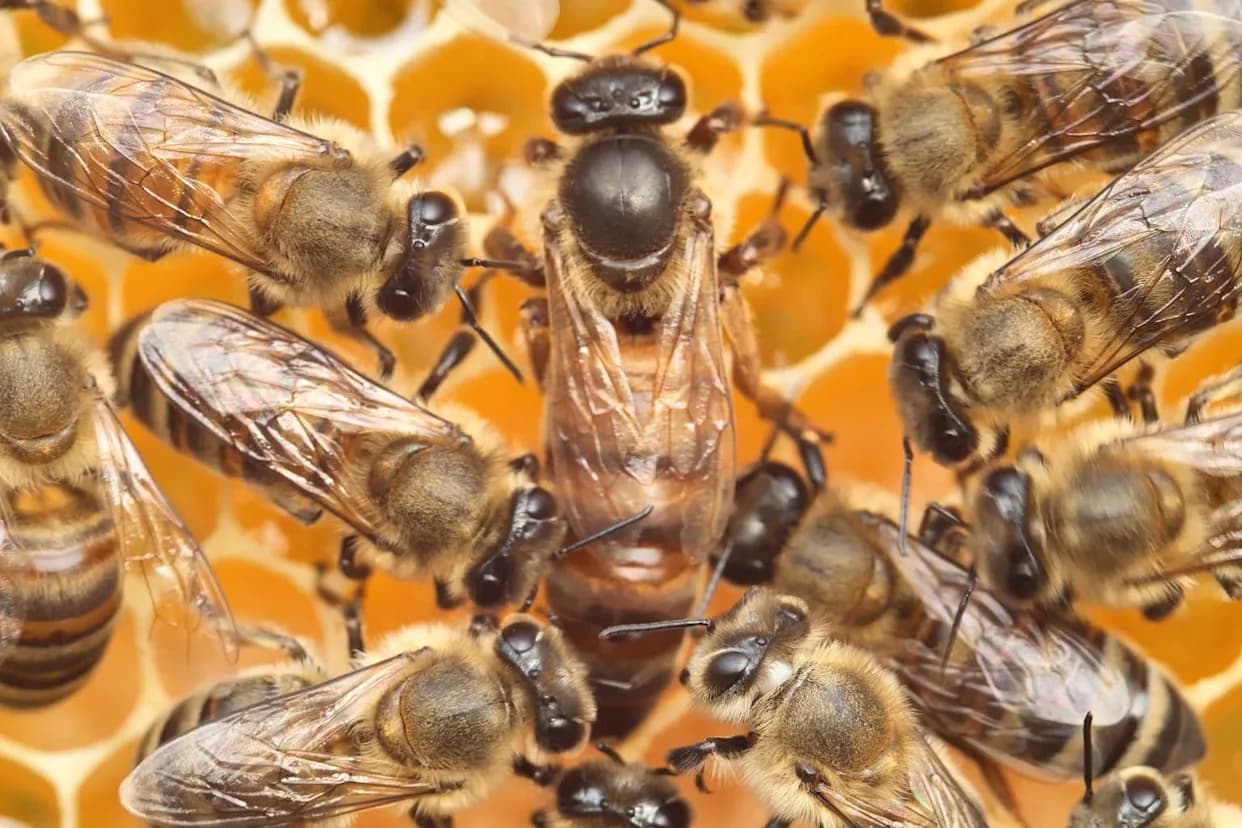
Every honeybee colony is led by a single queen that lays the colony’s eggs, but new research shows that diet alone does not determine which larvae become queens. A study published June 3 in a Nature research journal found that the physical cell where a larva develops and the workers that tend it are as important as royal jelly in steering a larva toward queen fate.
How One Genome Makes Many Castes
Queens, workers and drones share essentially the same genetic code, yet they follow very different life courses. This phenomenon—phenotypic plasticity—allows identical genomes to produce distinct adult forms and lifespans depending on environmental inputs.
The Role of Diet, Cell Shape and Wax
Queen-destined larvae do receive nutrient-rich royal jelly, but Baer and colleagues show that diet is only part of the story. Queens are reared in enlarged, peanut-shaped cells lined with a particular wax whose fatty acids and chemical properties make it less dense, more pliable and better at retaining warmth and moisture than the wax in ordinary hexagonal worker cells. That microenvironment helps developing queens grow larger, mature faster and live longer.
Meet the "Queen Cell Builders"
The researchers also identified a distinct subset of workers they call queen cell builders. These attendants are typically younger, maintain higher body temperatures while working, and display unique physiological flexibility. According to the study, they show specific gene-expression patterns linked to wax synthesis and fatty-acid metabolism and effectively act as specialized attendants who modify and enrich the wax lining of queen cells.
"These environmental differences trigger shifts in gene expression and epigenetic regulation, ultimately setting larvae on a different developmental path," says Boris Baer, an entomology professor at UC Riverside and co-author of the paper.
Molecular Signals and Long-Term Effects
Together, the larval diet, the physical and chemical properties of the queen cell, and the behavior and physiology of attendant workers produce combined environmental cues that alter gene expression and epigenetic marks. Those changes push larvae onto the queen developmental trajectory, producing larger adults with extended reproductive lifespans — a key factor in colony stability across generations.
What Remains Unknown
While the study advances our understanding of how queens are produced, researchers note that many molecular details and behavioral mechanisms remain to be explored. Future work will aim to pinpoint the exact signals and pathways that integrate diet, cell chemistry and worker behavior to produce a queen.
Originally published by PetHelpful on Jun 16, 2026.
Help us improve.





















