Researchers in Shark Bay found that female Indo-Pacific bottlenose dolphins recognize male signature whistles and often swim away from males with higher historical consortship rates. Playback experiments using 34 male whistles (recorded 2013–2017) with hydrophones and drone footage revealed that fertile females showed the strongest avoidance. The behavior appears to reflect population-wide male reputations and may help females reduce risks from coercive mating or infanticide.
Female Dolphins Use 'Names' To Avoid Coercive Males, Study Finds
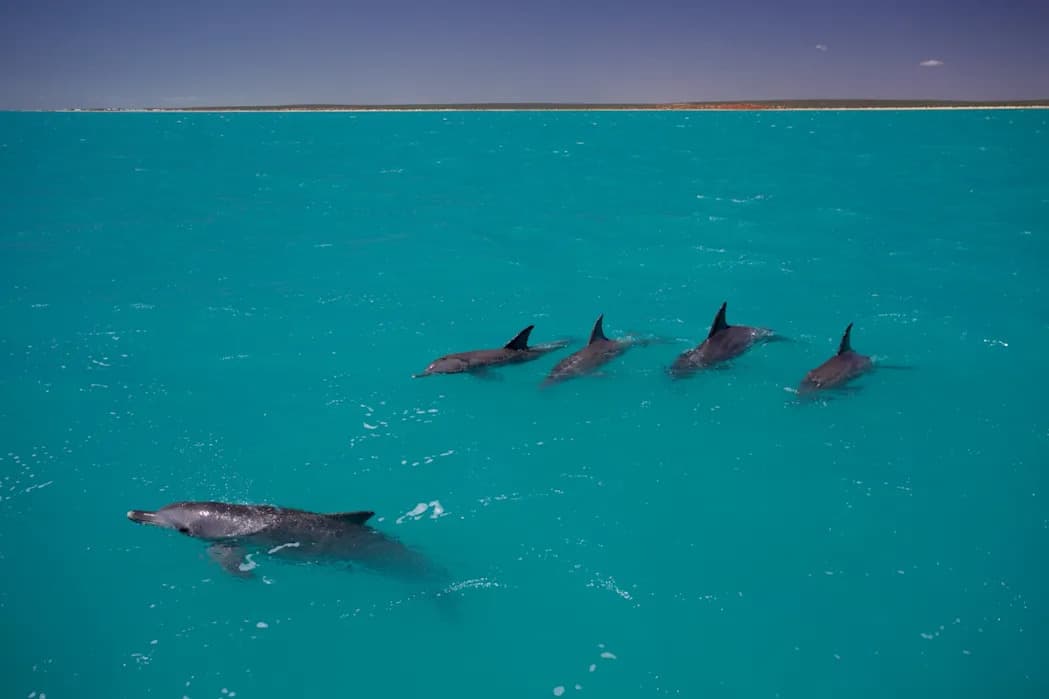
Four male bottlenose dolphins line up behind an female in Shark Bay, Western Australia. Male bottlenose dolphins sometimes form alliances to help one another pursue a mate—during which they may bite, hit, or charge the female. A new study suggests females keep tabs on those males.Simon J Allen / Shark Bay Dolphin Research
A new study from Shark Bay, Australia, shows that female Indo-Pacific bottlenose dolphins use males' unique signature whistles—essentially acoustic 'names'—to recognize and avoid males with a history of coercive mating behavior.
Consortships and coercion. In Shark Bay, some male dolphins form alliances and engage in consortships: cooperating males herd and keep a female close for days or weeks to increase mating opportunities. During these events, males may bite, strike, charge, chase or produce threatening vocalizations that appear to intimidate and control females' movements.
Signature whistles as individual ID. Bottlenose dolphins produce signature whistles—distinctive calls that function like names and allow individuals to identify one another. Because researchers have decades of monitoring data, they can match whistles to identified dolphins and reconstruct each male's social and mating history.
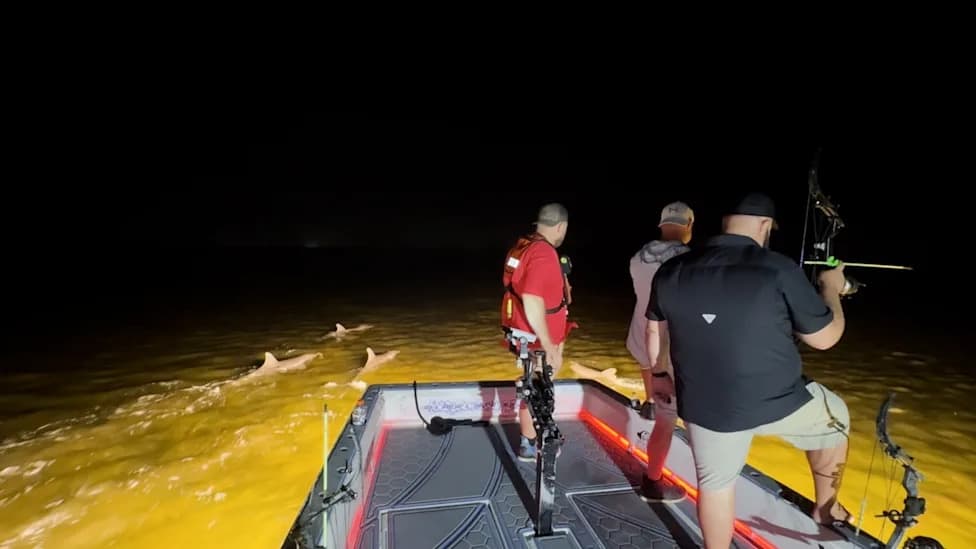
Playback experiments and methods. Lead author Alice Bouchard and colleagues selected 34 signature whistles recorded from male dolphins between 2013 and 2017. When small groups of females were resting or traveling, the team broadcast those whistles underwater using boat-deployed hydrophones while drones filmed behavioral responses and recorded additional acoustics. Playback work is logistically difficult, requiring precise timing, favorable weather and coordinated ship and drone operations.
Key findings. The females rarely responded vocally, but their movements were telling. Females tended to swim away from the playback of males who had higher historical rates of participating in consortships. Importantly, female avoidance reflected a male's population-wide consortship history—not only the female's own past encounters with that male.
'When we were playing back these male whistles, sometimes the females freaked out and they really left and went away,' said Bouchard. Researchers also noted that females who were physiologically capable of conceiving (based on age and reproductive stage) moved farther away in response to high-consortship males.
Interpretation and implications. The stronger avoidance by potentially fertile females suggests this behavior may reduce the risk of coercive mating or infanticide and improve reproductive outcomes. Another possible explanation is that females avoid males they've already mated with, supporting a strategy of mating with multiple males to obscure paternity and protect calves.
Context and next steps. The research team leveraged roughly 40 years of consistent Shark Bay monitoring, and senior author Stephanie King notes that clear evidence of male coercion appears in about half of documented consortships; the true rate may be higher because many interactions occur underwater and out of sight. The study also found that some females approached certain males in response to their whistles, a pattern that requires further investigation to distinguish attraction from avoidance. Future work will examine which male traits make them attractive or aversive and whether female preferences affect paternity outcomes.
Publication and credits. The study, led by Alice Bouchard with senior author Stephanie King, was published in Proceedings of the National Academy of Sciences. Janet Mann and Laela Sayigh provided expert commentary on the work in the original reporting. The article was reported by Bethany Augliere for National Geographic.
Help us improve.