
Waves of US and Israeli airstrikes during the campaign reportedly eliminated a large portion of Iran's top political and military leadership, beginning with Supreme Leader Ayatollah Ali Khamenei on February 28. Iran quickly named successors for several posts and continued operations despite claims by President Donald Trump that the strikes had produced "regime change." A ceasefire announced Monday halted fighting, though many details and casualty confirmations remain subject to verification.
Iran's Leadership Decimated In US–Israeli Campaign — Who Was Reportedly Killed
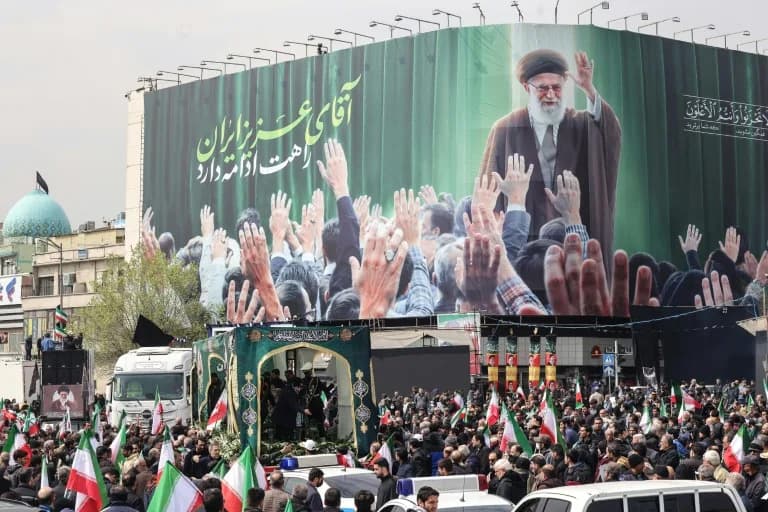
Supreme leader Ayatollah Ali Khamenei was killed at the very start of the war (Atta KENARE)(Atta KENARE/AFP/AFP)
Across the US–Israeli campaign against Iran, successive waves of airstrikes reportedly removed a broad tier of the Islamic Republic's political and military leadership, beginning with Supreme Leader Ayatollah Ali Khamenei.
President Donald Trump had said in March that the operation had produced "regime change," but Iranian institutions moved quickly to name replacements and continued to sustain operations against US and Israeli forces. With Washington and Tehran announcing a deal on Monday to halt hostilities, below is a concise recap of the principal figures reported killed during the conflict, based on state media and other reports.
Key Figures Reported Killed
Supreme Leader Ayatollah Ali Khamenei — Reported killed in the first hour of the war on 28 February in a strike on a meeting of senior officials in Tehran. Reports say the attack also killed close family members. His son, Mojtaba Khamenei, reportedly survived with injuries and has been named successor but has not yet made a public appearance. State media reported a funeral set for July 9 in Mashhad following ceremonies in Tehran and Qom.
Security Chief Ali Larijani — A long-serving pillar of Iran's political system (though not a cleric), Larijani was reportedly killed in an Israeli strike near Tehran on 17 March. Reports indicate family members were also killed. He had appeared publicly at a pro-government rally shortly before his death.
Revolutionary Guards Commander Mohammad Pakpour — Former head of the Guards' ground forces and appointed commander-in-chief in June 2025 after Hossein Salami's death, Pakpour was reported killed on the opening day of the war. Reports say he has been succeeded by former interior and defence minister Ahmad Vahidi.
Guards Naval Chief Alireza Tangsiri — A veteran of the Iran–Iraq war, Tangsiri led the IRGC navy since 2018 and was described by Israel's defence minister as tied to operations in the Strait of Hormuz. He was reported killed in the campaign.
Adviser Ali Shamkhani — A longstanding security figure, Shamkhani was reported killed in an airstrike on the campaign's opening day and later given a public funeral in Tehran's Tajrish Square. He had previously been seriously wounded and initially reported dead in an earlier strike but had reappeared.
Intelligence Minister Esmail Khatib — A cleric who served as intelligence minister since 2021, Khatib was reported killed by an Israeli strike in Tehran early on 18 March. Human rights groups had previously cited him in allegations concerning harsh suppression of protests.
Defence Minister Aziz Nasirzadeh — A veteran of the 1980s Iran–Iraq war and defence minister since 2024, Nasirzadeh was reported killed on the opening day of the campaign.
Basij Commander Gholamreza Soleimani — Leader of the Basij volunteer paramilitary force, known for its role in internal security and protest suppression, Soleimani was reported killed in an airstrike on 17 March.
Guards Spokesman Ali Mohammad Naini — Reported killed in March in an attack the IRGC described as carried out by the United States and Israel. Before confirmation of his death, state news agencies quoted him discussing Iran's missile production.
Head of the Supreme Leader's Military Office Mohammad Shirazi — Tasked with coordinating among Iran's security branches at the supreme leader's office, Shirazi was reported killed on the opening day of the war.
Armed Forces Chief Abdolrahim Mousavi — Appointed in June 2025 to the senior post coordinating the IRGC and the regular army after Mohammad Bagheri's death, Mousavi was reported killed on the campaign's first day.
Context and Caveats
Many reports come from Iranian state media and other sources close to the parties involved; details remain subject to confirmation and may change as additional information emerges. The campaign inflicted substantial leadership losses but Iran's swift appointments illustrate institutional resilience. The recent ceasefire announcement between Washington and Tehran paused active hostilities while questions about long-term stability and regional repercussions remain.
Help us improve.





















