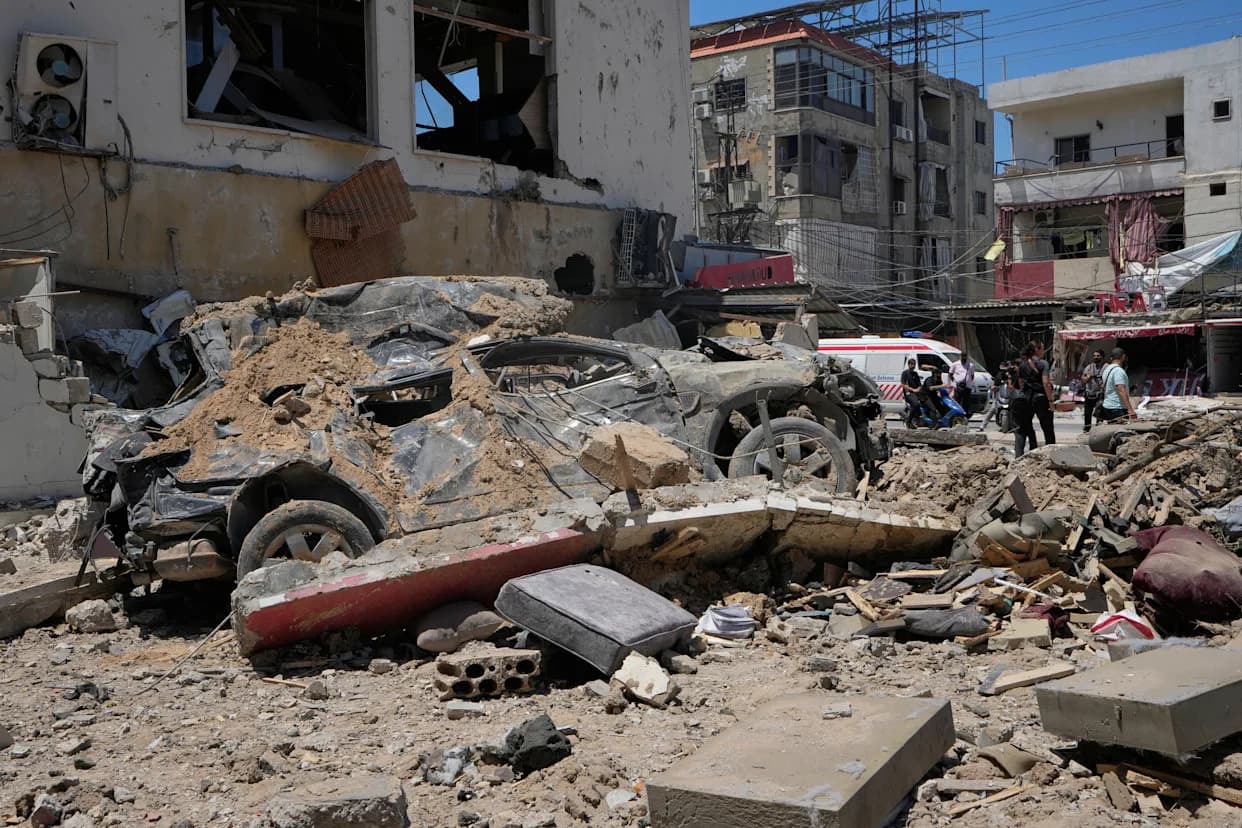
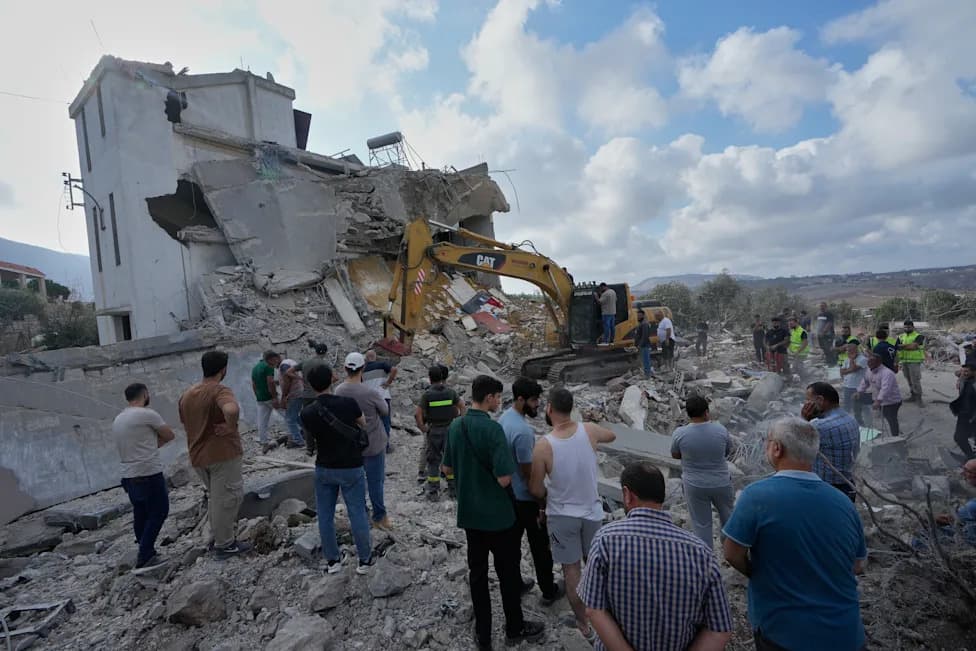
The Lebanese army on Saturday withdrew its forces from a barracks in the southern village of Kfar Tebnit after Israeli troops advanced nearby, a senior military official told The Associated Press. The pullback came as the Israeli military issued evacuation notices for roughly 20 locations, including the southern city of Nabatiyeh and surrounding villages.
Lebanon’s state-run National News Agency reported airstrikes on several villages near Nabatiyeh on Saturday and said two people were killed in Deir al-Zahrani. The agency also reported that Nabatiyeh came under artillery shelling.
A senior Lebanese military official, speaking on condition of anonymity in line with regulations, said the army repositioned its forces at Kfar Tebnit following what he described as an incursion by Israeli units into the area. He did not provide further operational details.
Strategic Objective: Ali Taher Hill
Israeli forces appear to be aiming to seize the Ali Taher hill on Kfar Tebnit’s edge, a vantage point that overlooks much of Nabatiyeh and key roads connecting the city with nearby towns. Israeli troops held Ali Taher for 18 years until their withdrawal from southern Lebanon in May 2000.
In late May, Israeli forces captured a nearby strategic mountain topped by the Crusader-era Beaufort Castle — described by analysts as the deepest incursion into Lebanon since 2000.
Diplomacy Continues Amid Fighting
The push near Kfar Tebnit came as diplomats reported progress toward a broader de-escalation: Pakistan’s prime minister said the United States and Iran had agreed on the wording of a proposed accord to end the wider regional war, and mediators were working to finalize the deal. Iranian Foreign Minister Abbas Araghchi told state television both sides were working toward signing an initial agreement to declare an end to the war "on all fronts, including Lebanon."
Senior Hezbollah official Hussein Haj Hassan told Al Jazeera that Iranian officials had informed Hezbollah that Lebanon would be included in any future ceasefire deal between the U.S. and Iran. Iran has long been Hezbollah’s main backer, providing weapons and financial support over decades.
Ceasefire Status and Casualties
Despite a ceasefire that went into effect on April 17 and has been renewed several times, clashes and strikes have continued. The arrangement has largely been described as a ceasefire in name only, as both Israel and Hezbollah have carried out operations and exchanges of fire.
According to the Lebanese Health Ministry, more than 3,700 people have been killed in Lebanon in the recent fighting. Israeli officials say 30 Israeli soldiers and a defense contractor have been killed in or near southern Lebanon, and two civilians were killed in northern Israel, the office of Prime Minister Benjamin Netanyahu said.
The latest round of Israel-Hezbollah hostilities began on March 2, when Hezbollah fired rockets into northern Israel — an action reported to have occurred days after U.S. and Israeli strikes against Iranian targets were carried out.
Note: Reporting during active conflict is fluid. Casualty figures, territorial control and diplomatic developments may change as more information becomes available.