
NASA revealed the Artemis 3 crew at Johnson Space Center on June 9 after a surprise in-person announcement to five astronauts. The primary crew — Randy Bresnik (commander), Luca Parmitano (pilot), Frank Rubio and Andre Douglas (mission specialists) — will train to launch on Orion/SLS and spend roughly two weeks in low Earth orbit to rendezvous and dock with two lunar lander designs. Bob Hines will serve as the single backup and train to substitute for any crewmember. NASA is targeting the latter half of 2027, but delays to Starship and Blue Moon add complexity and shorten the crew’s effective training timeline.
How a Surprise Calendar Invite Revealed NASA’s Artemis 3 Crew
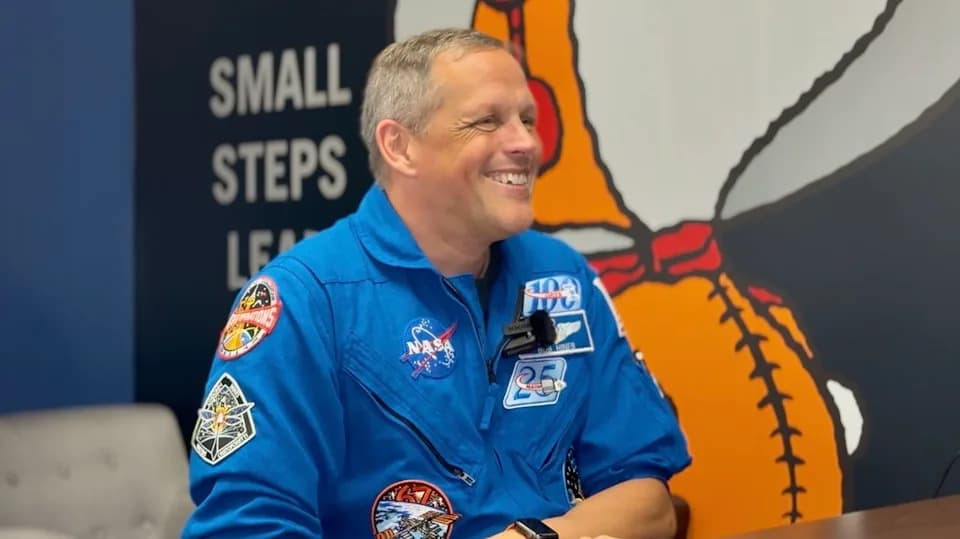
NASA astronaut and backup crew member for Artemis 3, Bob Hines. | Credit: Space.com / Josh Dinner
Ever had an unexpected meeting with management appear on your calendar and felt a moment of dread? That exact moment happened at NASA — but it wasn’t an HR meeting. Instead, a small group of astronauts was quietly gathered to learn their roles on Artemis 3, the agency’s next mission in its campaign to return humans to the Moon.
About two weeks before NASA made the selection public, five astronauts who do not normally meet as a unit were called into a room at Johnson Space Center. Rather than bad news, they were told they would form the Artemis 3 team: four primary crew members and one backup.
Official Crew Announcement
NASA announced the Artemis 3 crew at a public ceremony at Johnson Space Center on June 9. The roster includes:
- Randy Bresnik — Mission Commander
- Luca Parmitano (European Space Agency) — Pilot
- Frank Rubio — Mission Specialist
- Andre Douglas — Mission Specialist
- Bob Hines — Backup Crew Member
According to Hines, NASA’s chief astronaut Scott Tingle convened the group and told them, “Look around. This is your Artemis 3 crew.” The informal, in-person reveal left a strong impression on the astronauts and underscored the weight of the assignment.
Mission Overview and Training
The four primary crew members will launch aboard an Orion spacecraft atop NASA’s Space Launch System (SLS). They are scheduled to spend roughly two weeks in low Earth orbit to rendezvous and dock with two different lunar lander designs, testing those vehicles’ compatibility with Orion in space. Artemis 3 follows Artemis 2 — which carried a four-person crew on a 10-day mission around the Moon — and precedes Artemis 4, the program’s first planned lunar landing mission.
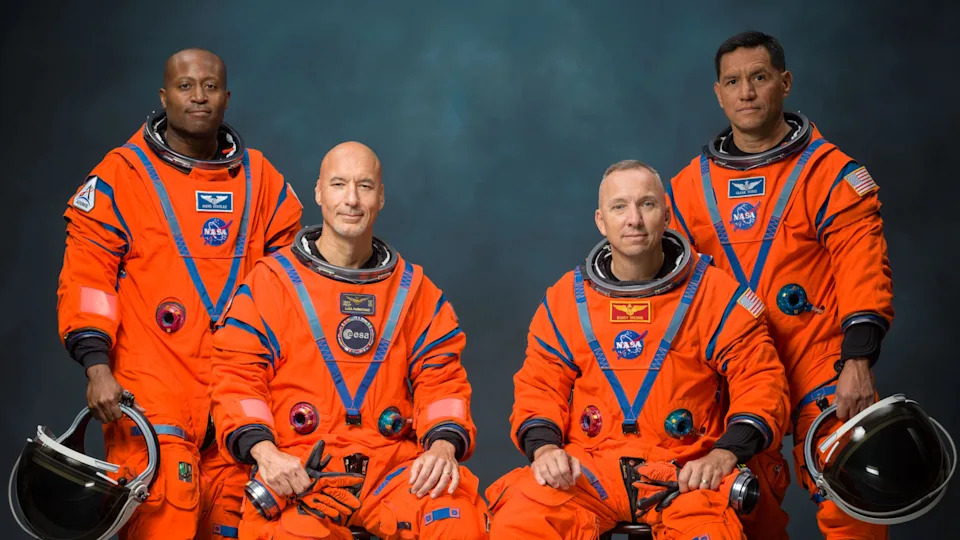
Primary crew of NASA's Artemis 3 mission. (from left) Andre Douglas, Luca Parmitano, Randy Bresnick and Frank Rubio. | Credit: NASA/Bill Stafford
NASA is targeting the latter half of 2027 for Artemis 3. That timetable gives the new crew a shorter training window than Artemis 2’s team: the Artemis 2 crew was announced in 2023 and had about three years to prepare, while Artemis 3’s window will be effectively shorter if the launch date holds.
Backup Role and Crew Dynamics
Although Hines is the official backup, he and the primary crew regard themselves as a single five-person unit. As the sole backup, Hines will train broadly so he can substitute for any crewmember at short notice. “The intent is that I can substitute in for anybody if they drop out at any time,” he said, noting the breadth of skills required.
NASA first named an 18-person pool for Artemis consideration in 2020. Since then, eligibility has expanded as the astronaut corps gained experience; only one member of the original 18, Frank Rubio, was assigned to Artemis 3.
Technical Challenges
Both proposed lunar landers for the Artemis program — SpaceX’s Starship and Blue Origin’s Blue Moon — have experienced significant development delays and neither has yet reached orbit. That increases the technical complexity of Artemis 3, which will require Orion to rendezvous, dock and perform maneuvers with two relatively unproven spacecraft. NASA leaders and the crew have emphasized urgency and careful preparation as they move into mission training.
Hines said he is proud to serve in whatever role helps the mission succeed, and noted that serving as backup could position him for future flight assignments. “The best mission is the current mission, and the next best mission is the next mission,” he said, adding that contributing to a successful return to the Moon remains the priority.
Help us improve.





















