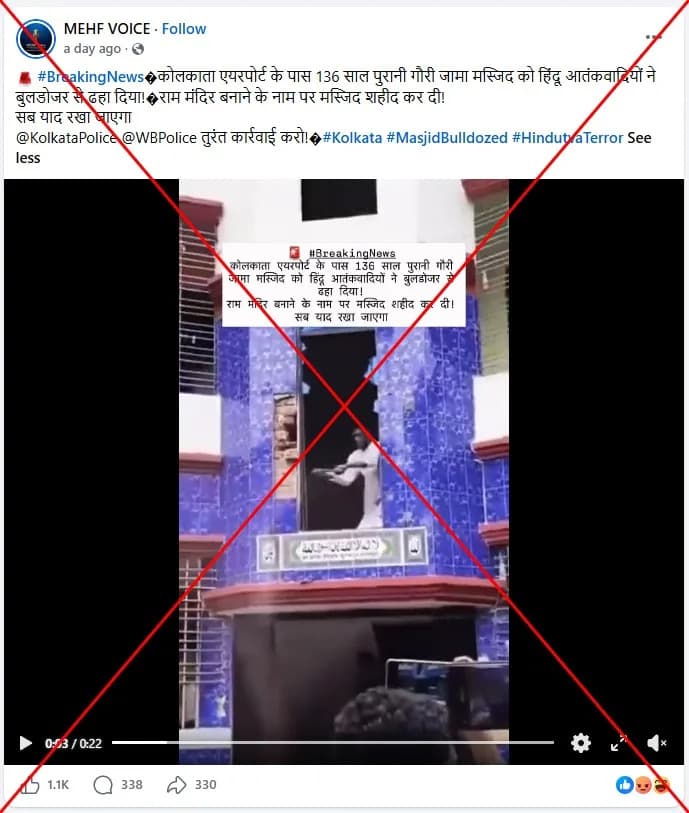
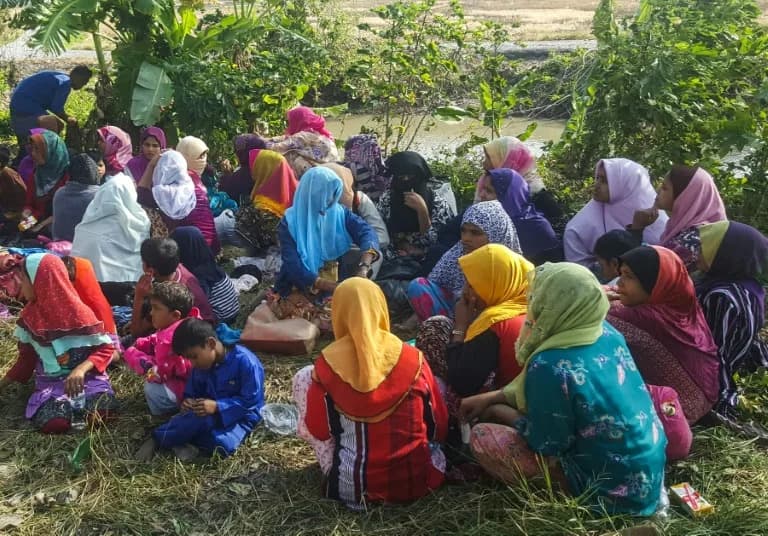
West Bengal’s new BJP-led state government has launched a campaign to detain and deport undocumented migrants, with authorities saying many of those targeted are Bangladeshi nationals. Thousands have reportedly been rounded up, biometrically recorded and placed in newly established holding centres while diplomatic tensions with Dhaka rise. Human rights groups warn of discriminatory application, inadequate due process and the risk of wrongful expulsions.
West Bengal Detentions and Deportations: Muslim Bangladeshis Sent to Border Amid Rising Tensions
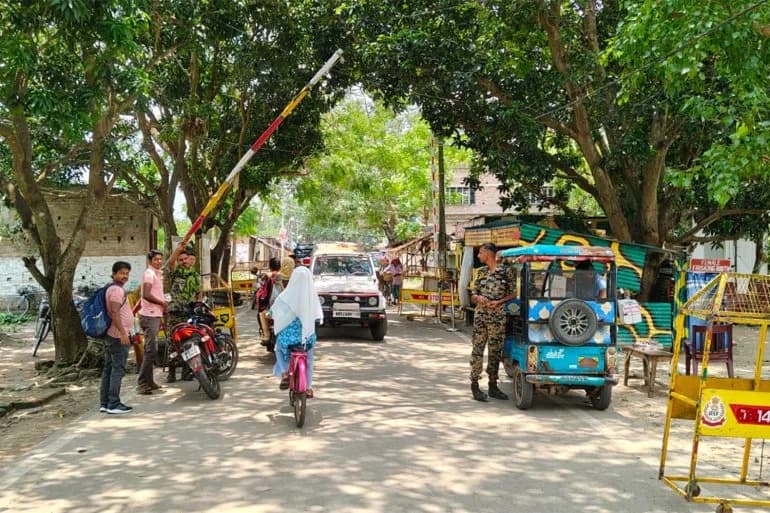
The Hakimpur crossing along India-Bangladesh border in West Bengal state [Gurvinder Singh/Al Jazeera]
Hakimpur, India — Under a blistering sun at a checkpoint in Hakimpur village on the India–Bangladesh frontier, Raisul Islam waits with his wife and two teenage sons as authorities process dozens of people gathered there.
His wife, 36-year-old Rebeka Khatun, and their sons Riad, 14, and Jubair, 16, sit in an unfinished brick-and-cement structure where heat, humidity and a lack of drinking water make the cramped room unbearable. Those packed into the building are Muslim migrants from Bangladesh who have been labeled "illegal infiltrators" by West Bengal’s new government and transported to border villages under a campaign described by authorities as "detect, delete and deport."
What Is Happening
After a decisive election victory in West Bengal, the Bharatiya Janata Party (BJP) state administration moved to identify and deport undocumented migrants. Officials say they are constructing "holding centres" in districts across the state to detain people pending nationality verification and deportation to Bangladesh.
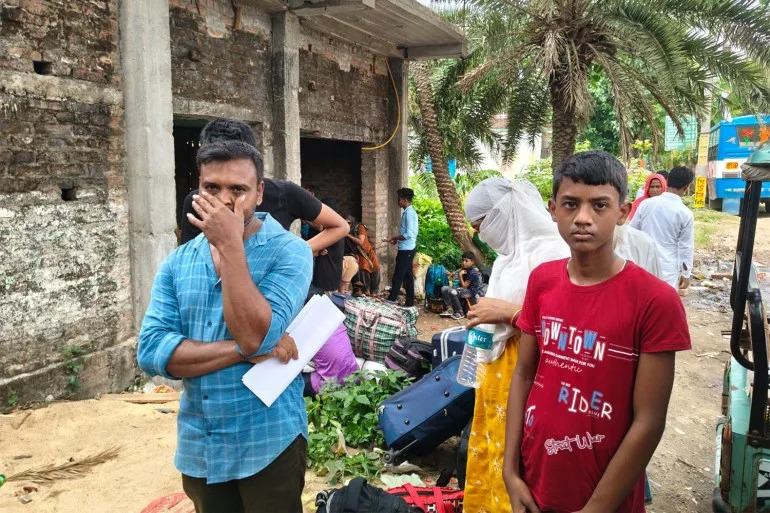
Raisul Islam, left, stands with his family at Hakimpur, West Bengal, India [Gurvinder Singh/Al Jazeera]
Authorities at border checkpoints such as Hakimpur, about 80 km (50 miles) from Kolkata, report hundreds of arrivals daily. A local police official speaking on condition of anonymity told reporters that roughly 250–300 undocumented refugees and migrants have been arriving each day, and that biometric details are being recorded to create a digital registry.
Voices From The Ground
Many of those detained say they crossed years earlier seeking work or medical care. Islam, 38, from Satkhira district in Bangladesh’s Khulna division, said he came two years ago for his wife’s treatment and stayed after finding better wages in India. He told reporters he paid about $250 to a middleman to cross the border and that he and his wife earned around $10 a day working as masons.
“We came to India to give our children a better life. We had no other motive. But constant harassment and humiliation forced us to leave with bitter memories,” Islam said, as security forces later placed his family into a vehicle bound for a detention centre.
Other families at the checkpoint told similar stories of economic hardship and fear of harassment by locals and police after the new state government announced its campaign.
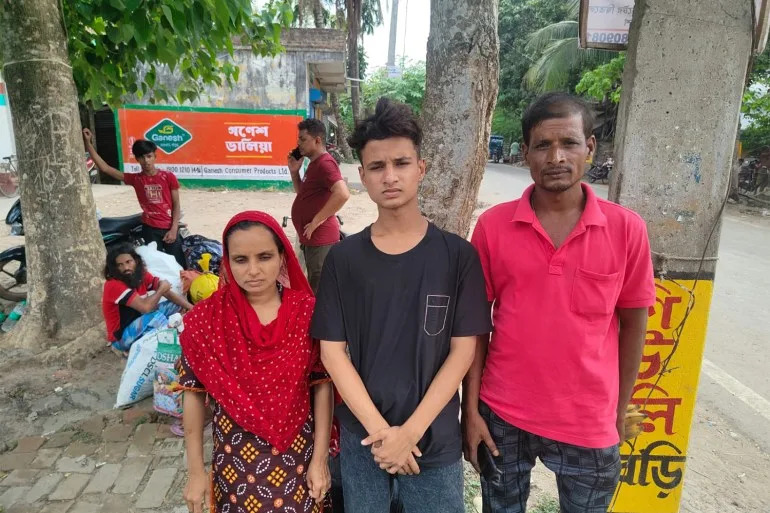
Mirazul Ghazi, right, with his wife Sabina Yasmin and son Nayem at Hakimpur [Gurvinder Singh/Al Jazeera]
Legal And Diplomatic Context
The state government says the drive targets undocumented migrants. Critics and rights groups, however, say the effort is being applied primarily to Muslim Bangladeshis and amounts to religious discrimination. West Bengal’s chief minister has publicly stated the deportation campaign will focus on migrants of certain faiths — a position that has drawn condemnation from human rights organisations.
In December 2025, the Supreme Court of India issued rulings and observations that, according to several reports, have narrowed the constitutional protections available to some foreign nationals; rights groups say this has further complicated legal recourse for people detained as undocumented migrants. The state government has also indicated that detained migrants may not be brought before ordinary criminal courts prior to deportation, placing the burden on individuals to prove their right to remain.
The expulsions have strained relations between New Delhi and Dhaka. Bangladesh has urged India to follow established bilateral verification procedures for nationality checks and has communicated its concerns to Indian authorities. The Bangladesh foreign affairs adviser said Dhaka has sent multiple letters to New Delhi asking that the proper mechanism be used to verify identities before any deportations proceed.
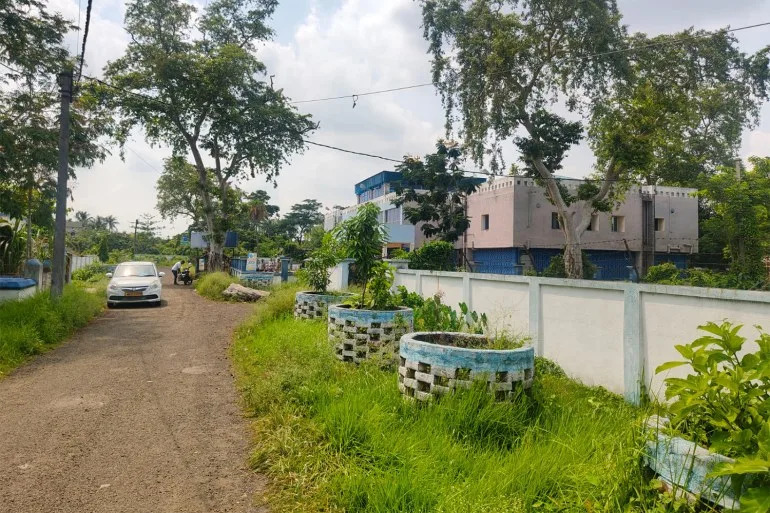
A detention centre in West Bengal’s North 24 Parganas district [Gurvinder Singh/Al Jazeera]
Responses And Concerns
India’s foreign ministry says it has submitted thousands of suspected Bangladeshi cases to Dhaka for verification and that there are laws to deal with undocumented foreign nationals in India. New Delhi maintains it seeks bilateral cooperation to confirm nationality before deportation.
Human rights organisations have criticised the campaign. Elaine Pearson, Asia director at Human Rights Watch, said detainees should be given legal representation and due process to avoid wrongful expulsions. Activists also warn of arbitrary detentions, inadequate conditions in holding centres and the risk that Indian citizens could be improperly caught up in deportation drives.
Critics further argue that the focus on Muslim migrants feeds broader religious tensions in West Bengal, where nearly a quarter of the population is Muslim. Observers note the campaign follows a longer pattern of political rhetoric and policy moves that have disproportionately affected Muslim communities in several parts of India.
Outlook
Thousands have reportedly been detained in recent weeks, with official statements citing several thousand deportations and hundreds still held in holding centres. Talks between border forces and diplomatic channels are ongoing as Bangladesh presses for verified procedures and India continues to assert its legal measures against undocumented migrants.
The human impact remains stark: families like Islam’s face detention, loss of livelihood and uncertainty about their legal status while the political and diplomatic debate continues.
Help us improve.