Forced conscription since 2024 has bolstered junta ranks and helped government forces regain territory, while rebels in many regions have shifted from offense to defense. Increased air power and drone deployments after a security pact with Russia, plus China-mediated ceasefires and restricted arms flows, have strained resistance logistics. Field hospitals face severe shortages, and landmines continue to exact a heavy human toll.
Forced Conscription Fuels Junta Counteroffensive as Myanmar Rebels Lose Ground
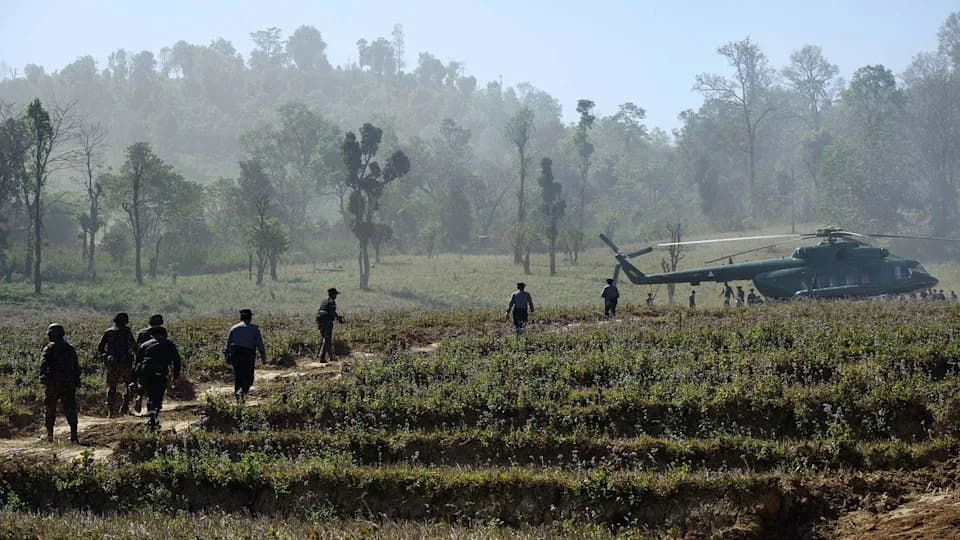
Myanmar's military is much better armed than the rebel forces it is fighting [Getty Images]
Four young men hiding in a rebel encampment deep in jungle-covered mountains say they never wanted to join Myanmar's civil war — and did not volunteer for the junta either. One was a chef grabbed from the street for lacking ID, another was detained after a late-night karaoke outing, a third was arrested while working for the forestry department, and a fourth says he was framed with drugs and forced to enlist.
“Before we even understood what was happening, we were sent straight to the front lines,” one of the deserters, aged between 19 and 25, told the BBC. “They made us do all kinds of things we didn't want to do. The conscripts had to do everything, while the regular soldiers hardly had to work.” The BBC agreed to conceal their identities to protect their families from reprisal.
How Conscription Has Changed the War
After the junta enacted a conscription law in 2024 requiring a minimum two-year term, forced enlistment has substantially expanded the military’s manpower. Rebel commanders say the influx of unwilling recruits — even if poorly motivated at first — has allowed the armed forces to sustain larger offensives and retake territory.
Frontline Pressure and Territorial Shifts
Once mostly on the offensive, resistance forces in many regions are now under sustained pressure. The military still does not fully control half the country, but it has recaptured key townships and a strategic road linking Mandalay to Myitkyina. Thousands of soldiers are reported to be advancing to reassert control of border areas in Kachin, Chin and Karen states.
PDF battalion commander Ko Kaung says conscription became the “main challenging factor” on the battlefield because it has created near-limitless manpower for the junta. He and his fighters captured Hpapun two years ago, but say as many as 2,000 soldiers are now advancing toward the town.
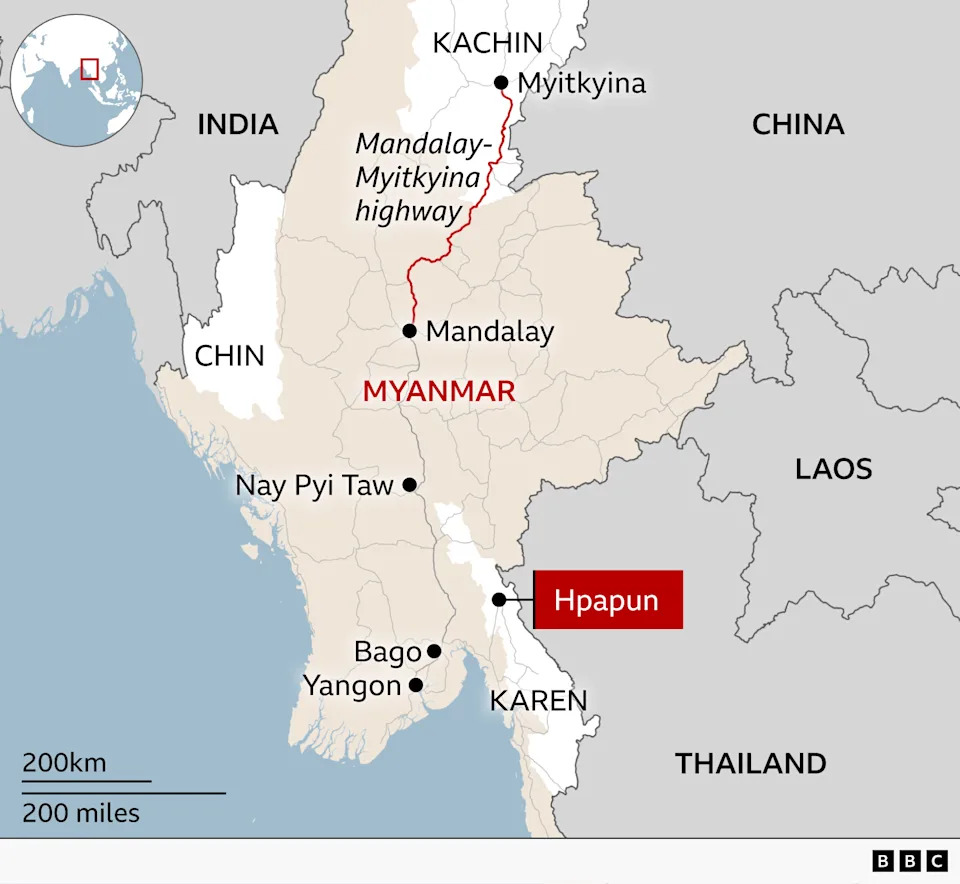
The army is trying to re-establish control of several border areas including Kachin, Chin and Karen states [BBC]
Tactics, Air Power and Drones
Rebel commander Da Wa, a former political activist, reports a tactical shift after a security pact with Russia: the junta is deploying more aircraft in pairs and a growing fleet of armed drones. Both Da Wa and Ko Kaung say drone attacks and improved air capabilities are tilting the tactical balance, and that the resistance badly needs electronic countermeasures such as jammers.
Regional Politics and Supply Constraints
China has brokered ceasefires with some ethnic groups while simultaneously restricting weapons and ammunition flows to resistance forces, according to commanders. As a result, many rebel units face acute shortages of weapons, ammunition and spare parts — a critical handicap against larger, better supplied columns and sustained air campaigns.
Human Cost: Wounded Fighters and Makeshift Hospitals
Platoon commander Kyar Soe lies in a jungle clinic after surgeons rebuilt his right leg, largely destroyed by a landmine. Myanmar remains heavily mined: last year 745 people were killed or injured by landmines, roughly a quarter of them children. Despite repeated surgeries and pain, Kyar Soe vows to return to the fight.
Dr Saung runs a field hospital made of bamboo and wood huts with an operating theatre powered by solar panels and a backup generator. The hospital has no ambulance and works on a shoestring budget, but staff treat fighters, families and civilians and exhort young recruits to persist in the struggle for democracy.
During the reporters' visit a fighter, Yine Chit, and his wife welcomed a baby girl, Sue Paye — “fulfilled wish.” The couple, who cannot return to their village in junta-held territory, dream of a free and democratic Myanmar for their daughter once the fighting ends.
Outlook
Commanders interviewed say the junta’s conscription drive, increased air and drone capacity after the Russian security pact, and China’s role in brokering local ceasefires and controlling supply lines have combined to squeeze rebel momentum. Still, many resistance fighters and medics remain determined despite shortages and mounting risk.
Note: Reporting was conducted without permission from Myanmar authorities to access rebel-held areas. Some names and identifying details have been withheld to protect families and sources.
Help us improve.