The U.N. Office of the High Commissioner for Human Rights documented 249 cases of extrajudicial punishment in Gaza from August 2024 to January 2026, including 108 deaths, stating many acts were publicized to instill fear. The report says Hamas-affiliated militants and police were implicated in nearly one-quarter of the cases and that recorded abuses — including public executions outside Shifa Hospital and in Gaza City — may amount to war crimes. It also condemns a surge in Israeli settler violence in the West Bank, where the U.N. records 1,098 Palestinian deaths since the war began. The commission urges accountability and protection for civilians and hospitals under international law.
U.N. Report: Hamas-Affiliated Forces and Gaza Police Carried Out Public Executions and Maimings — 249 Cases Documented
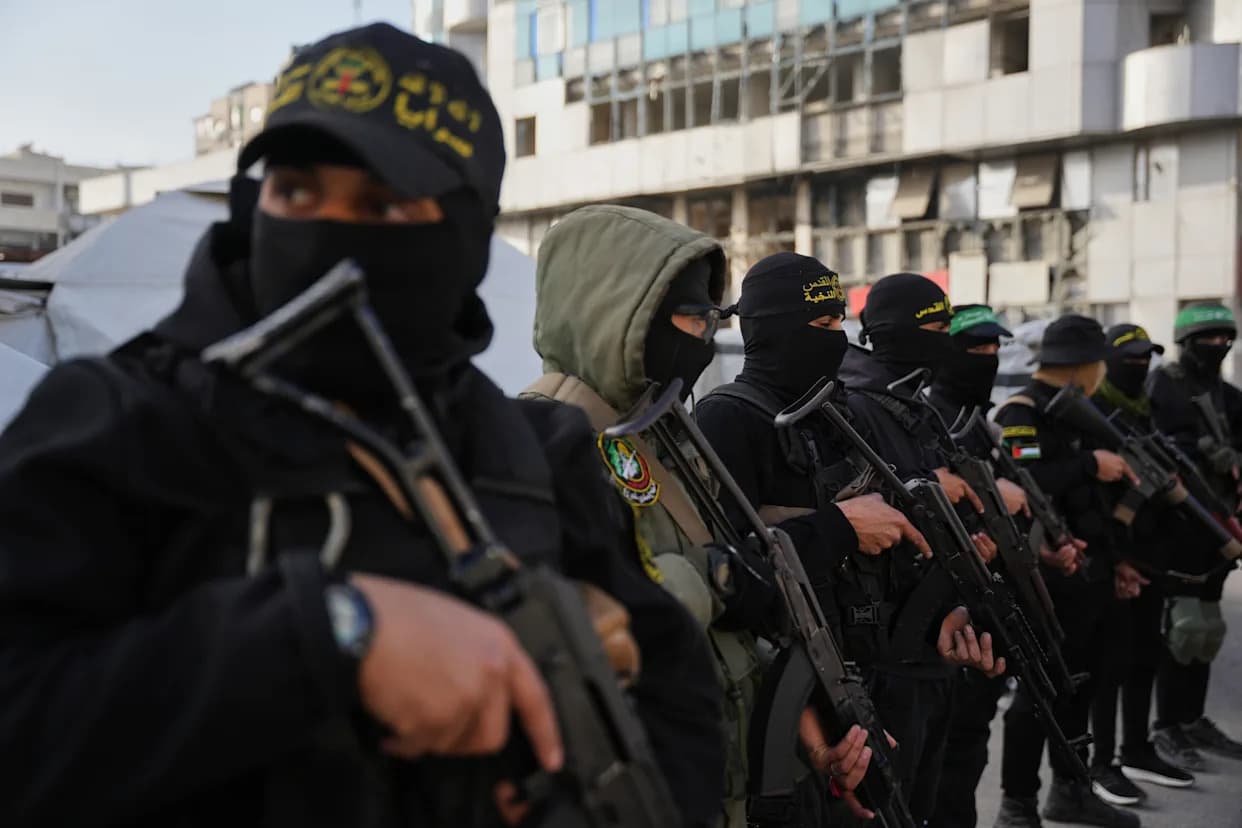
FILE - Armed Palestinian militants from Hamas and Islamic Jihad gather next to Eid al-Fitr prayers in Gaza City, March 20, 2026. (AP Photo/Abdel Kareem Hana, File)(AP Photo/Abdel Kareem Hana)
RAMALLAH, West Bank (AP) — A United Nations report released Tuesday says that Hamas-affiliated militants and police units in Gaza beat, maimed and publicly executed dozens of Palestinians during the territory's war with Israel, in incidents the U.N. says amount to war crimes.
Key Findings
The U.N. Office of the High Commissioner for Human Rights (OHCHR) documented 249 cases of extrajudicial punishment in Gaza between August 2024 and January 2026, including 108 deaths. Many of the incidents were carried out in public or later circulated on video or social media, the report says, appearing intended to spread fear among the population.
The documented punishments included executions, kneecapping, bone-breaking with metal pipes or cement bricks, beatings and various forms of public shaming. Perpetrators framed these actions as penalties for alleged collaboration with Israel, looting humanitarian aid, theft, drug-related offences or ties to internal rivals.
OHCHR commission chair Srinivasan Muralidhar said the abuses unfolded in an environment he described as 'engineered by Israel,' where Hamas-affiliated forces exploited a vacuum created by sustained Israeli attacks and widespread destruction.
Documented Incidents
The commission recorded several incidents captured on video, including a September 2025 execution in which three blindfolded men were shot by masked assailants outside Shifa Hospital before a crowd, and an October 2025 case in which eight men were dragged into a Gaza City public square and shot. Both groups were accused of spying, treason or collaboration, according to the report.
Witnesses reported that punishments also occurred inside hospital compounds, including the Nasser Medical Complex in Khan Younis. The commission emphasised that these activities — which targeted Palestinians rather than Israeli forces — do not remove hospitals' protection under international law.
Legal Assessment and Context
The commission concluded that the documented executions and other punishments amount to the war crime of murder and violate international humanitarian and human rights law, including the right to life, liberty and security and the right to a fair trial.
Investigators found that Hamas-affiliated militants and police forces were implicated in nearly one-quarter of the documented cases. The commission also recorded abuses attributed to other armed groups that emerged in areas where Hamas control weakened during the conflict.
According to Gaza's Health Ministry, the wider war has killed nearly 73,000 Palestinians. The U.N. report stresses that the reported abuses occurred amid extensive destruction across Gaza and a breakdown in security and judicial systems.
West Bank Violence and Responses
The report also condemned a growing wave of violence by Israeli settlers in the occupied West Bank, saying it 'functions as a means of implementing Israeli state policy' and that state actors and violent settler groups share objectives such as entrenching settlements and displacing Palestinians. The U.N. cites 1,098 Palestinians killed in the West Bank since the start of the Israel‑Hamas war, including at least 240 children.
Representatives of Hamas did not respond to requests for comment about the report's findings. Israel's Foreign Ministry did not respond to questions about the allegations in the report. The U.N. rights office has previously issued reports critical of both parties; Israel has repeatedly accused the office of bias.
Conclusion
The OHCHR report documents serious violations that, according to the commission, may constitute war crimes. It calls for accountability for extrajudicial killings, torture and other abuses, and underscores the urgent need to restore lawful protections for civilians, including in hospitals and other protected sites.
Help us improve.