Thirteen commemorative plaques will be unveiled across the UK to mark Beagle 2, the first British and European spacecraft to reach Mars after touching down on 25 December 2003. The lander was presumed lost until January 2015, when NASA images confirmed it had landed. Investigators believe a single solar panel that failed to fully deploy blocked the communications antenna, causing the loss of contact. Plaques will be installed at institutions including The Open University, the National Space Centre, the Science Museum, Jodrell Bank and Airbus Stevenage.
Beagle 2 Honoured: 13 Plaques Across the UK Celebrate Britain's First Mars Lander
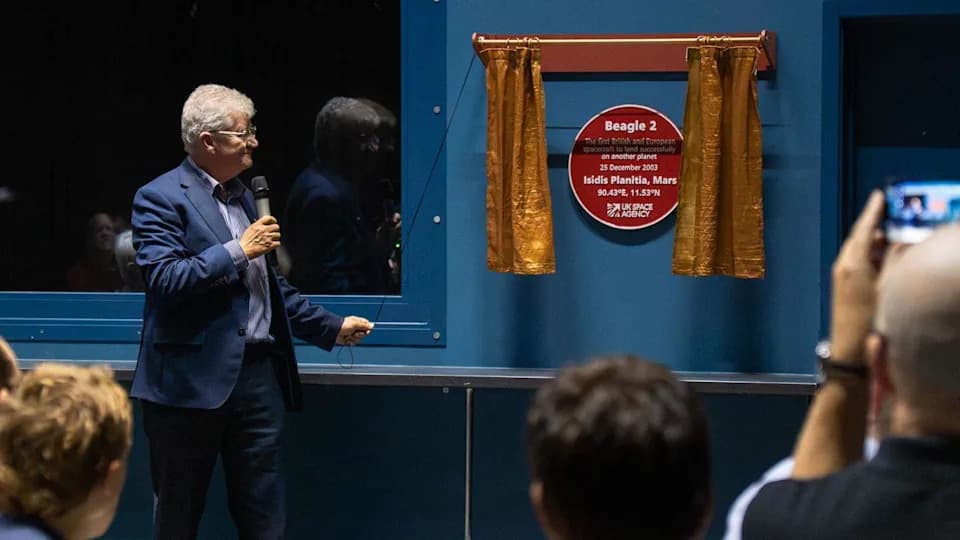
Chris Lee, former Chief Scientist at the UK Space Agency, unveiled a plaque at the National Space Centre [Department for Science, Innovation and Technology]
Thirteen commemorative plaques will be unveiled across the United Kingdom to celebrate Beagle 2, the first British and European spacecraft to reach the surface of another planet.
The lander touched down on Mars on Christmas Day 2003 but was long presumed lost after a communications failure. In January 2015, images from NASA's Mars Reconnaissance Orbiter confirmed that Beagle 2 had indeed reached the Martian surface.
Scientists concluded that the probe most likely lost contact because a single solar panel failed to deploy fully and blocked the communications antenna, preventing transmission back to Earth.
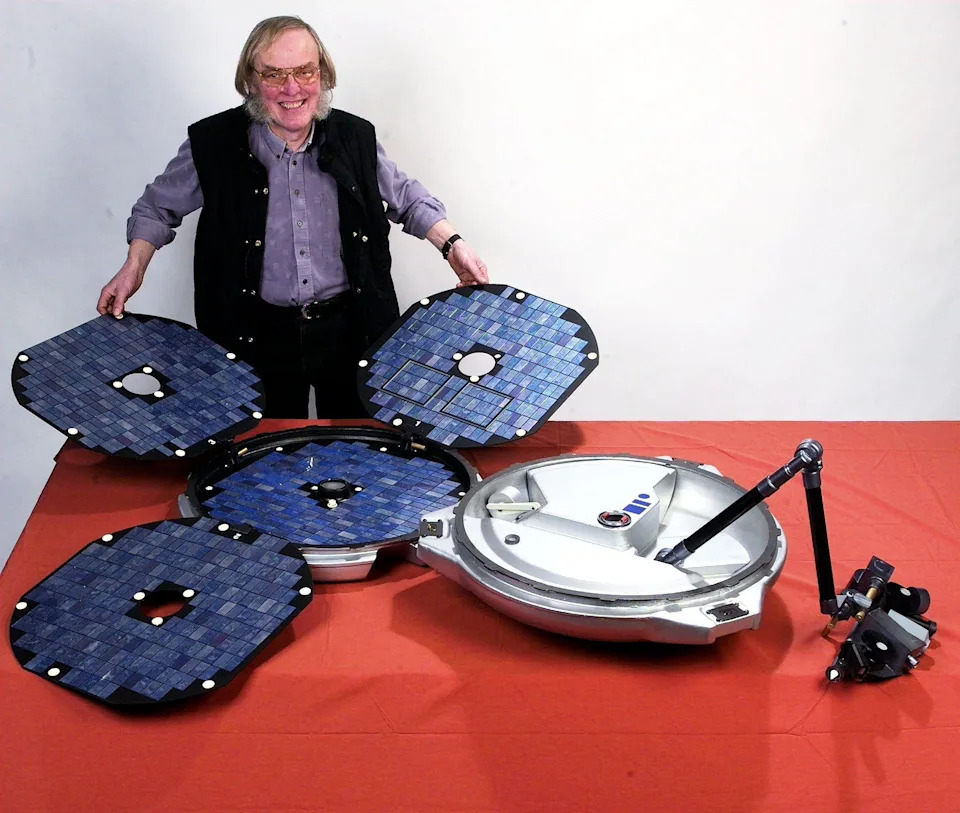
Colin Pillinger died before he could learn about the successful landing of Beagle 2 [BBC]
Where The Plaques Will Be Located
One plaque will be installed at The Open University in Milton Keynes, where Professor Colin Pillinger conceived the mission. Other plaques are planned for prominent UK institutions involved with the project, including the National Space Centre in Leicester, the Science Museum in London, Jodrell Bank in Cheshire and Airbus in Stevenage, Hertfordshire.
Voices And Legacy
Space Minister Liz Lloyd said: "Beagle 2 captured the imagination of the nation, and it is one of the great stories of British science and engineering. I hope this initiative inspires a new generation to look up and ask what we might achieve next."
Professor Colin Pillinger, who conceived Beagle 2, died in 2014, months before the 2015 confirmation that the lander had reached Mars. The project was a collaboration between The Open University and the University of Leicester.
Professor Mark Sims, mission manager at the University of Leicester at the time, described working on Beagle 2 as "one of the most extraordinary experiences of my life" and welcomed the plaques as recognition of the thousands of hours contributed by scientists, engineers and technicians across industry and academia in the UK.
These commemorative plaques will honour the mission's technical ambition and the people behind it, and aim to inspire future generations of UK scientists and engineers.
Help us improve.