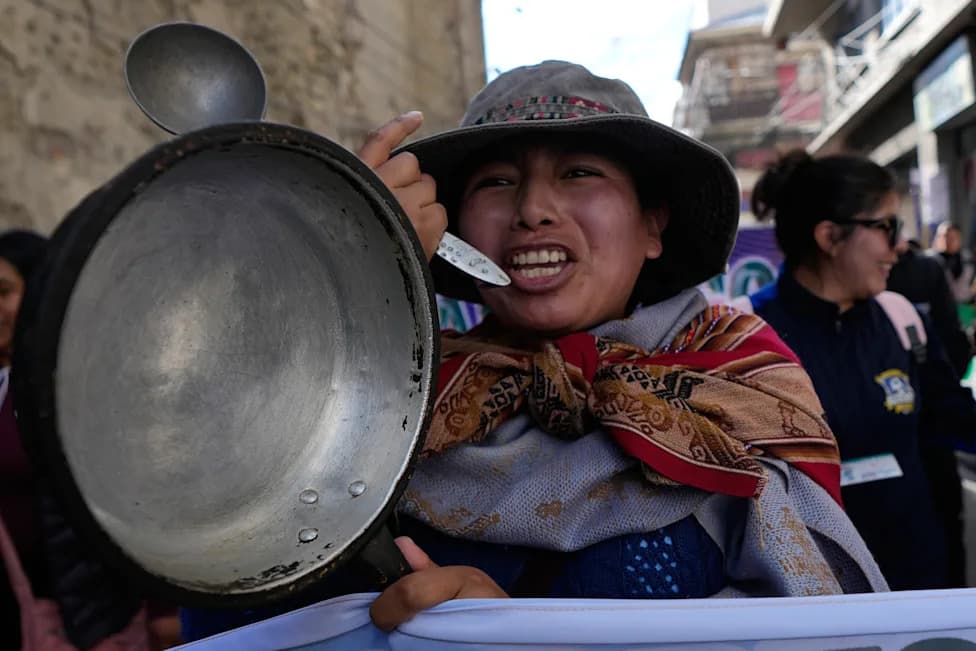
Protests in Bolivia have intensified after President Rodrigo Paz signed a law that could lower the threshold for declaring a state of emergency, potentially enabling a harsher crackdown. Around 90 blockades by unions, farmers and Indigenous groups are disrupting transport and causing shortages. An ombudsman reported 10 deaths, 37 injuries and 365 arrests from May 1 to June 2; the government attributes seven deaths to lack of medical care and says investigations are ongoing. Paz has not yet issued the separate decree needed to activate emergency powers.
Bolivia Unrest Escalates After President Signs Law That Could Enable Harsher Crackdown
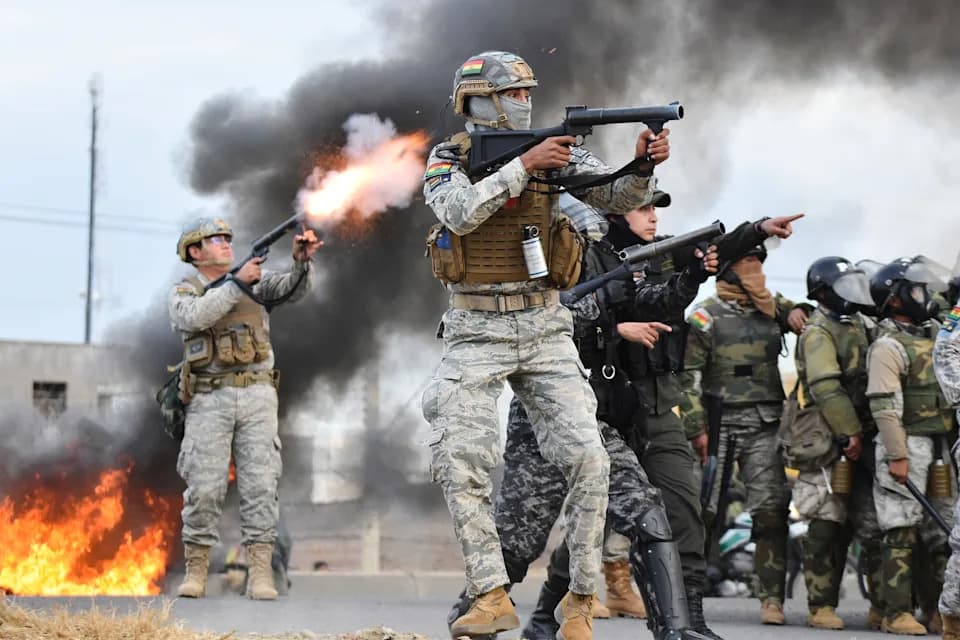
Police fire tear gas at anti-government protesters blocking a highway in Vinto, Bolivia, Monday, June 8, 2026. (AP Photo/Dico Soliz)(AP Photo/Dico Soliz)
LA PAZ, Bolivia — Protesters demanding the resignation of conservative President Rodrigo Paz clashed violently with police on Monday after the president signed legislation that could ease the way for a tougher government response. Demonstrators hurled firecrackers, stones and sticks while police deployed tear gas; dozens were arrested as some 90 road blockades continued to paralyze large parts of the Andean nation.
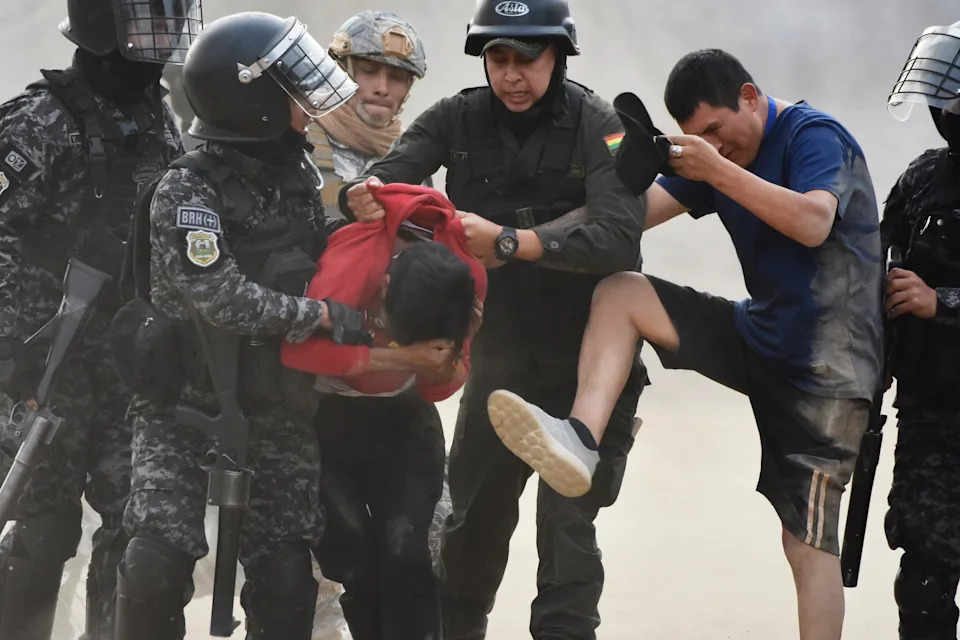
Police detain demonstrators during an anti-government protest in Vinto, Bolivia, Monday, June 8, 2026. (AP Photo/Dico Soliz)(AP Photo/Dico Soliz)
Renewed Clashes and Widening Disruptions
The most intense confrontations unfolded in the central city of Cochabamba, where farmers tried to cut off a bridge connecting the region to western Bolivia. Police said they detained 23 people there after spraying tear gas to disperse demonstrators who threw stones and, according to authorities, even dynamite. In El Alto, crowds stormed a public transport union office, prompting at least 28 arrests amid mounting anger over fuel shortages.
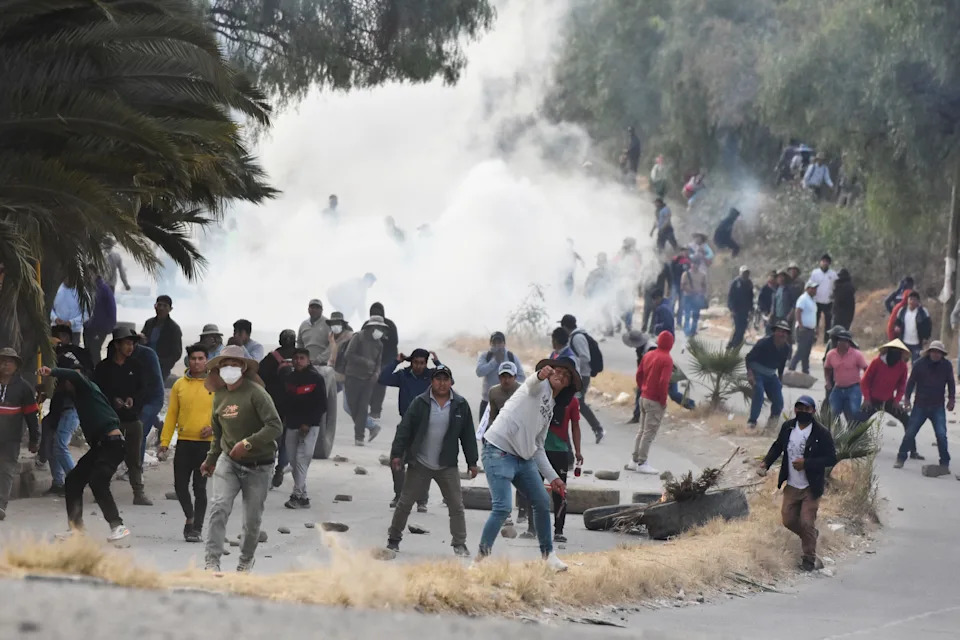
Anti-government protesters blocking a highway sling stones at military police during clashes in Vinto, Bolivia, Monday, June 8, 2026. (AP Photo/Dico Soliz)(AP Photo/Dico Soliz)
Who Is Protesting — And Why
Bolivia’s national workers' union, peasant farmers and Indigenous organizations from the highlands have built roughly 90 blockades on major routes nationwide. The coalition says it is outraged by Paz's decision to scrap fuel subsidies and frustrated by his failure, in his first seven months in office, to resolve deep-rooted economic problems. Rising inflation and stagnant wages have left many protesters saying they feel abandoned despite having helped elect Paz.
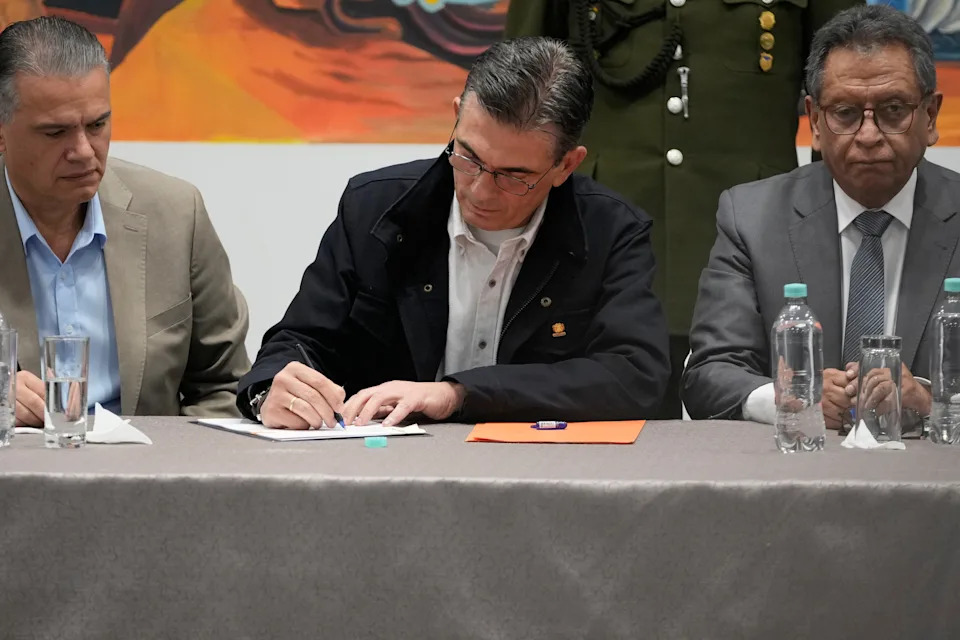
Bolivian President Rodrigo Paz signs legislation approved by Congress establishing the legal framework for a state of emergency at the government palace, accompanied by his Defense Minister Ernesto Justiniano, left, and Minister of Government Marco Antonio Oviedo in La Paz, Bolivia, Monday, June 8, 2026. (AP Photo/Juan Karita)(AP Photo/Juan Karita)
Casualties, Arrests and Oversight
An independent public ombudsman report released over the weekend said the unrest from May 1 to June 2 resulted in 10 deaths, 37 injuries and 365 arrests. The government says seven of those deaths were caused by a lack of medical attention and has said all incidents are under investigation.
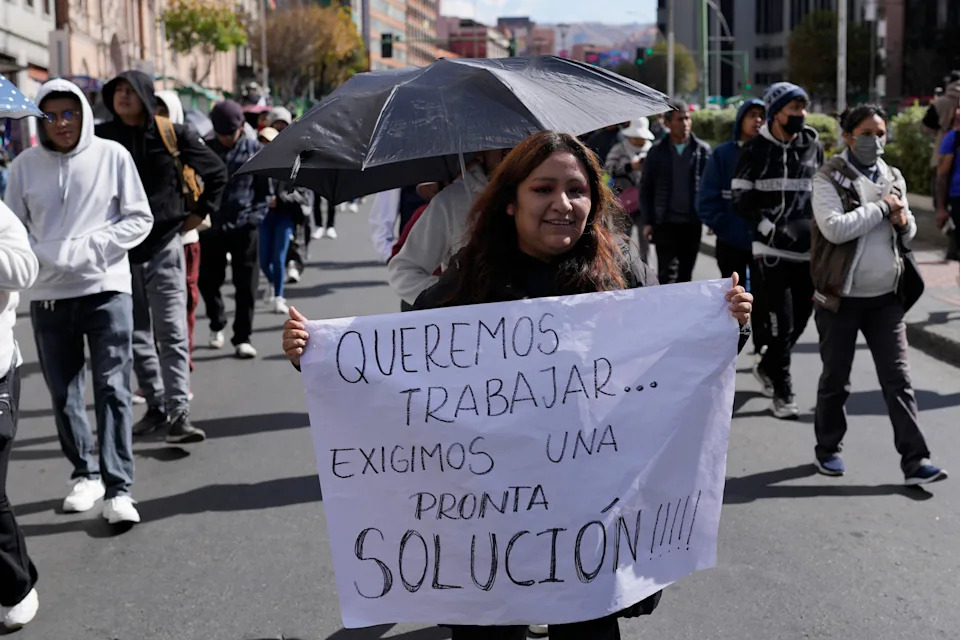
A vendor carries a sign reading in Spanish "We want to work, we demand a prompt solution," during a march against protesters who are blocking access to La Paz, Bolivia, Monday, June 8, 2026. (AP Photo/Juan Karita)(AP Photo/Juan Karita)
The New Law And Its Implications
On Monday, President Paz signed legislation that lowers the threshold for declaring a state of emergency — a change that could allow the government to suspend certain constitutional protections and empower the military to restore order and clear blockades. For such emergency powers to take effect, Paz must issue a separate presidential decree; it remains unclear whether he will do so given Bolivia’s history of violent military interventions that have toppled presidents.
"This law is to protect the majority of the country from the narco-terrorism that is instigating the protests," Paz said in a national address after signing the measure. "I extend my hand to the social organizations that have legitimate demands and reiterate my willingness to engage in dialogue."
The president has said he is willing to negotiate and urged restraint in the use of force, but demonstrators have largely refused to sit down with him and continue to demand his resignation just seven months after his election, which ended nearly 20 years of uninterrupted rule by the Movement Toward Socialism (MAS).
Outlook
Tensions remain high across Bolivia as shortages of fuel, food and medical supplies spread and the standoff between the government and a broad coalition of social groups shows little sign of resolution. Observers warn that any decision to activate emergency powers could further inflame the situation and risk wider unrest or international concern.
Help us improve.